

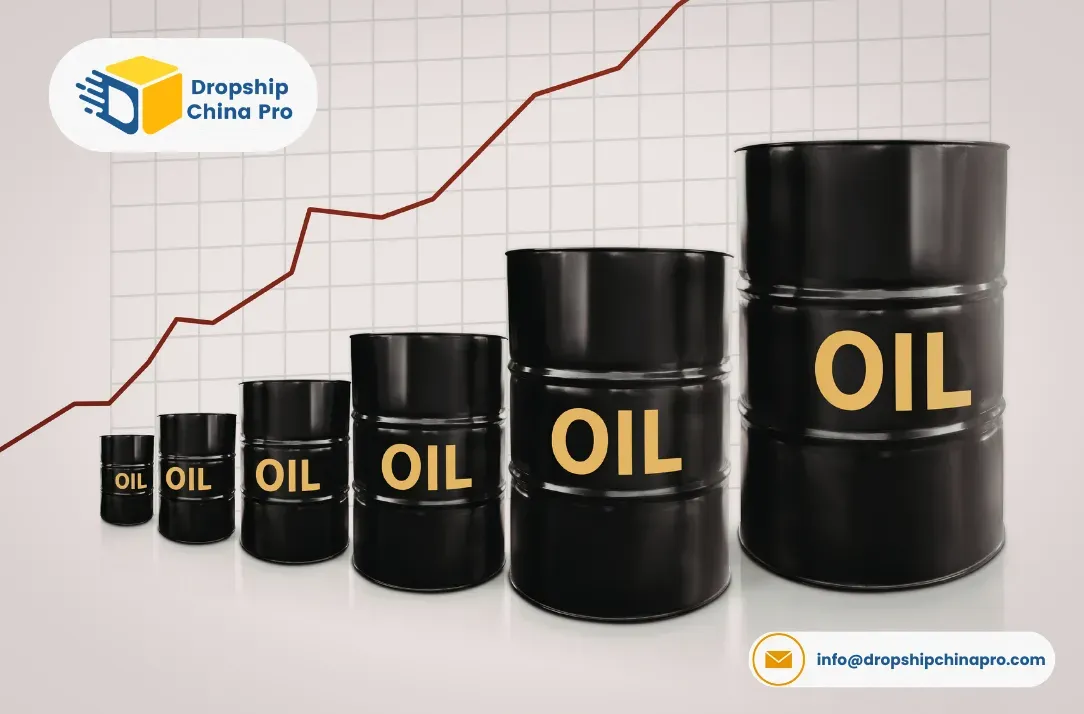
If you run an e-commerce business that relies on international shipping, you have probably already noticed something changing in the past two weeks. Freight quotes are climbing. Carrier surcharges are being revised. Delivery estimates are getting longer. The reason behind all of it is the same: oil prices have surged past $100 per barrel for the first time since 2022, and the effects are now filtering through every layer of the supply chain.
This post breaks down what is happening with oil prices, why it matters for e-commerce shipping costs and what online sellers should be doing right now to protect their margins.

Why Oil Prices Are Rising
The conflict in the Middle East that escalated in late February 2026 has effectively shut down the Strait of Hormuz, one of the most important shipping corridors in the world. Roughly 20% of the world’s daily oil supply normally passes through this narrow waterway between Iran and Oman (CNBC, 2026).
Since the outbreak of hostilities, tanker traffic through the strait has dropped to near zero. Major oil-producing nations, including Kuwait, Iraq and Saudi Arabia, have been forced to cut output. Iran has made at least 21 confirmed attacks on merchant ships as of mid-March (Wikipedia, 2026).
Oil Price Timeline
| Date (March 2026) | Brent Crude Oil Price |
|---|---|
| Before conflict (late Feb) | ~$72 per barrel |
| March 2 (early trading) | Above $82 per barrel (+13%) |
| March 8 (peak) | Surpassed $100, peaked near $119 |
| March 11 | ~$91 per barrel |
| March 16 | ~$102 per barrel |
Sources: Fortune, CNBC, World Economic Forum (March 2026)
The result has been sharp and immediate. Brent crude oil reached approximately $102 per barrel on March 16, 2026, roughly $30 higher than at the same time last year (Fortune, 2026). At its peak earlier in March, prices briefly surged above $119 per barrel.
We covered the broader impact of the Middle East conflict on global shipping in a recent post: Middle East Conflict Is Disrupting Global Shipping Routes. This article focuses specifically on how the oil price surge is now translating into higher costs for e-commerce businesses.
How Oil Prices Affect Shipping Costs
The connection between oil prices and shipping costs is direct and unavoidable. Diesel powers the trucks that move goods across countries. Marine fuel powers the container ships that move goods across oceans. Jet fuel powers the aircraft that handle express and air freight. According to the U.S. Energy Information Administration, crude oil accounts for roughly half the retail price of diesel fuel, meaning increases in oil prices feed quickly into transportation costs (Digital Commerce 360, 2026).
For e-commerce businesses, this means higher costs at every stage of the fulfillment process: from inbound shipments arriving at warehouses to last-mile deliveries reaching customers.
Ocean Freight
The price of heavy fuel oil at the world’s top 20 refuelling hubs has nearly doubled since the U.S. and Israel launched strikes in late February, according to data from Ship & Bunker (The Canadian Press, 2026).
Container Spot Rates
| Route (per 40ft Container) | Spot Rate Increase |
|---|---|
| Shanghai to Rotterdam | Up 19% to $2,443 |
| Shanghai to Genoa | Up 10% to $3,120 |
| Shanghai to Los Angeles | Up 4% to $2,503 |
| Shanghai to New York | Up 3% to $3,080 |
| Intra-Asia (average) | Up 18% to $651 |
Source: Drewry World Container Index and Intra-Asia Container Index, March 2026
Container shipping rates have followed. The Drewry World Container Index rose 12% in the two weeks ending March 13, 2026 (The Canadian Press, 2026). On specific routes, the increases are even steeper:
- Shanghai to Rotterdam spot rates increased 19% to $2,443 per 40ft container (Drewry, 2026).
- Shanghai to Genoa spot rates increased 10% to $3,120 per 40ft container (Drewry, 2026).
- Shanghai to Los Angeles spot rates increased 4% to $2,503 per 40ft container (Drewry, 2026).
- Intra-Asia routes surged 18% in the first week of March, with the biggest jumps on routes heading toward the Middle East and South Asia (Drewry, 2026).
Carriers such as MSC and CMA CGM have already announced higher FAK (Freight All Kinds) rates effective March 22, and Drewry expects spot rates to continue rising in the coming weeks.
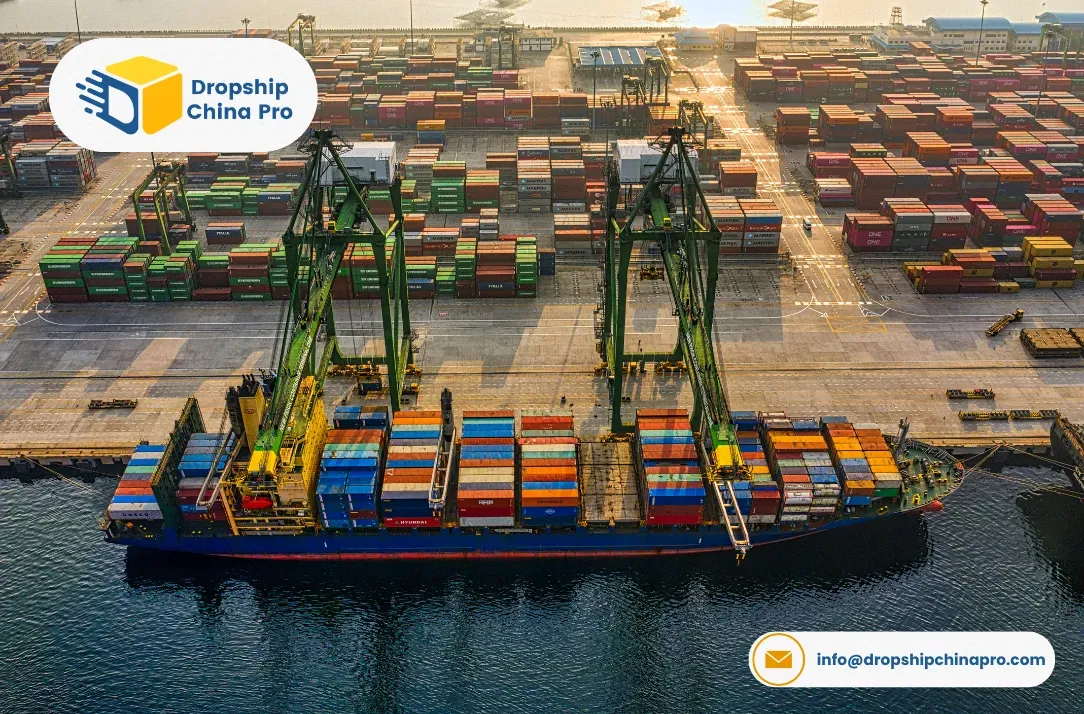
On top of that, Maersk announced on March 10 that it will introduce a temporary Emergency Bunker Surcharge (EBS) from March 25. The surcharge is set at $200 per 20ft container and $400 per 40ft container on primary headhaul routes (Reuters, 2026). Maersk said the ongoing closure of the Strait of Hormuz has significantly disrupted global access to fuel and that the surcharge is necessary to maintain service stability.

Air Freight
Air cargo has not been spared. Jet fuel prices have increased sharply alongside crude oil. Middle East airspace restrictions have forced airlines to reroute or cancel flights entirely, reducing available air cargo capacity. Flexport noted in early March that extensive airspace closures across the Middle East are challenging connectivity between the Indian subcontinent and both North America and Europe (Supply Chain Dive, 2026).
For e-commerce businesses that use express shipping services for time-sensitive orders, this means longer transit times and higher costs per kilogram.
Last-Mile and Parcel Delivery
The effects are reaching parcel carriers as well. FedEx and UPS both entered 2026 with a 5.9% General Rate Increase (GRI), but independent audits suggest the real impact for e-commerce brands is closer to 8% to 12% once layered surcharges are factored in (3PL Center, 2026).
Carrier Surcharges and Rate Changes
| Carrier / Surcharge | What Changed |
|---|---|
| Maersk EBS (from March 25) | $200 per 20ft / $400 per 40ft container |
| FedEx Middle East surcharge | $0.50/lb exports, $0.70/lb imports |
| UPS fuel surcharge index | +1% increase effective March 9 |
| FedEx and UPS 2026 GRI | 5.9% headline, 8-12% effective |
| MSC and CMA CGM FAK rates | Higher rates effective March 22 |
Sources: Reuters, FedEx, Supply Chain Dive, TransImpact, Drewry (March 2026)
On top of the GRI, several conflict-related surcharges have been introduced:
- FedEx introduced a new international demand surcharge on March 5 for shipments moving between the U.S. and the Middle East (Zone K): $0.50 per pound for exports and $0.70 per pound for imports (FedEx, 2026).
- UPS announced a 1% increase to its domestic fuel surcharge index, effective March 9 (TransImpact, 2026). This widened the gap between UPS and FedEx domestic fuel surcharges.
These surcharges are in addition to the weekly fuel surcharge adjustments that both carriers make based on diesel and jet fuel price benchmarks published by the U.S. Department of Energy. As oil prices remain elevated, these weekly rates will continue to climb.

What Maersk’s CEO Said About Consumer Prices
It is worth paying attention to what the people running the world’s largest shipping companies are saying. In a BBC interview, Maersk CEO Vincent Clerc confirmed that higher fuel and logistics costs will be passed on to customers and ultimately to consumers. He described it as an automatic mechanism: when fuel prices rise, Maersk’s pricing adjusts accordingly, and those increases flow through the supply chain (BBC via SupplyChainBrain, 2026).
Clerc estimated that the additional costs from rerouting vessels around the Cape of Good Hope currently amount to roughly $200 per standard 20ft container. This could translate into a 15% to 20% increase in freight charges on some routes (Lifestyle via Swish Interactive, 2026).
Other major carriers, including MSC and Hapag-Lloyd, have also raised shipping fees in response to the disruptions.
What This Means for E-Commerce Businesses
If your business sources products from China or other parts of Asia and ships them to customers in Europe, the United States or elsewhere, here is how this situation is likely to affect you:
Higher landed costs. The combination of rising ocean freight rates, emergency surcharges and increased fuel surcharges on parcel carriers means that your cost per unit shipped is going up. For businesses with tight margins, this can quickly erode profitability.
Longer delivery times. With major carriers rerouting around the Cape of Good Hope instead of using the Suez Canal and Strait of Hormuz, transit times on Asia-to-Europe routes have already increased by 10 to 15 days (GCCA, 2026). Express shipping is also affected by airspace closures and reduced capacity.
Unpredictable surcharges. Both ocean and parcel carriers are adjusting surcharges on a weekly or even ad hoc basis. This makes it harder to forecast shipping costs accurately and creates risk for businesses that have locked in product prices without accounting for rising logistics expenses.
Pressure on pricing. At some point, these cost increases need to go somewhere. Businesses will either absorb them (reducing margins) or pass them on to customers (risking lower conversion rates). Neither option is ideal, but understanding the numbers early gives you more time to make informed decisions.
What E-Commerce Businesses Should Do Right Now
The situation is still evolving and there is genuine uncertainty about how long oil prices will remain at these levels. But there are practical steps you can take now to limit the impact on your business.
- Review your shipping cost assumptions. If you set your product prices or shipping fees based on rates from January or February, those numbers may already be outdated. Run a fresh calculation on your landed costs using current freight quotes and surcharge schedules.
- Talk to your logistics partner. If you work with a fulfillment or freight partner, ask them for an updated outlook on rates and timelines. The best partners will already be monitoring this closely and can help you plan around it.
- Consider your inventory timing. If you are planning a restock, factor in the possibility of further rate increases and longer transit times. Placing orders slightly earlier than usual can help you avoid the worst of any capacity crunch.
- Evaluate your shipping offer. If you currently offer low-cost or complimentary shipping, consider whether your margins can sustain it at current freight levels. Adjusting thresholds or introducing tiered shipping options may be worth exploring.
- Keep an eye on fuel surcharge updates. Both FedEx and UPS publish their fuel surcharge rates weekly. Monitoring these can help you anticipate cost changes before they hit your invoices.
- Diversify where possible. Businesses that rely on a single shipping corridor or carrier are more exposed to disruptions like this one. Having relationships with multiple logistics providers or using fulfillment centres in different regions can reduce your vulnerability.
A Note on What Comes Next
Nobody knows exactly how long this situation will last. Oil prices are driven by a complex mix of geopolitical events, production decisions and market psychology. Goldman Sachs has warned that oil could remain above $100 if the supply disruption continues, and Qatar’s Energy Minister has suggested prices could reach $150 within weeks if tanker traffic remains blocked (Loyalty Logistics, 2026).
On the other side, governments are taking action. The International Energy Agency agreed to a record 400 million-barrel coordinated release of strategic reserves, the largest collective drawdown in its history (Trans.info, 2026). Whether this will be enough to stabilize prices remains to be seen.
What is clear is that this is not a situation that will resolve overnight. The shipping industry was already dealing with Red Sea disruptions from renewed Houthi attacks, carrier overcapacity concerns and ongoing tariff uncertainty. The oil price surge adds another layer of cost pressure on top of an already fragile supply chain.

Frequently Asked Questions
How do oil prices affect e-commerce shipping costs?
Oil is the primary fuel source for container ships, cargo planes and delivery trucks. When crude oil prices rise, carriers face higher operating costs and pass those increases on through fuel surcharges and rate adjustments. For e-commerce businesses, this means higher costs at every stage of the supply chain, from factory to warehouse to customer doorstep.
Why are shipping costs rising in March 2026?
The Middle East conflict that escalated in late February 2026 has effectively closed the Strait of Hormuz, a corridor that normally handles roughly 20% of the world’s daily oil supply. This has pushed Brent crude oil above $100 per barrel, nearly doubled heavy fuel oil prices at major refuelling hubs and triggered emergency surcharges from carriers including Maersk, FedEx and UPS.
How much have container shipping rates increased?
According to the Drewry World Container Index, global container shipping rates rose 12% in the two weeks ending March 13, 2026. On specific routes, increases are even steeper. Shanghai to Rotterdam spot rates jumped 19% to $2,443 per 40ft container, and Shanghai to Genoa increased 10% to $3,120 per 40ft container.
Will shipping costs go back down?
That depends largely on how the conflict develops and how long oil prices remain elevated. Goldman Sachs has warned that oil could stay above $100 if supply disruption continues. The International Energy Agency has agreed to a record release of strategic reserves, but analysts caution this may only provide temporary relief. E-commerce businesses should plan for elevated costs in the short to medium term.
What can e-commerce sellers do to manage rising shipping costs?
The most important steps are reviewing your landed cost calculations, communicating with your logistics partner for updated rate forecasts, considering earlier inventory restocks to avoid further price increases and evaluating whether your current shipping offer to customers is still sustainable at these freight levels. Diversifying carrier relationships and fulfilment locations can also reduce exposure to disruptions like this one.
Keeping Your Store Running Smoothly
If your store sources products from China and you are concerned about how rising shipping costs may affect your margins and delivery timelines, Dropship China Pro‘s team is monitoring freight rates, carrier surcharges and route updates closely.
References
- 3PL Center. (2026). UPS and FedEx 2026 rate increases and surcharge changes. 3plcenter.com
- CNBC. (2026, March 2). The Strait of Hormuz crisis explained: What it means for global shipping. cnbc.com
- Digital Commerce 360. (2026, March 9). How $100 oil forces B2B sellers to rethink delivery, freight costs. digitalcommerce360.com
- Drewry. (2026, March 12). World Container Index. drewry.co.uk
- FedEx. (2026, March 6). Demand surcharges: U.S. international. fedex.com
- Fortune. (2026, March 16). Current price of oil as of March 16, 2026. fortune.com
- Global Cold Chain Alliance. (2026, March 12). Middle East conflict disruption updates and situation report. gcca.org
- Reuters via Sahm Capital. (2026, March 10). Maersk introduces emergency surcharge as fuel prices soar. sahmcapital.com
- Supply Chain Dive. (2026, March 12). FedEx, UPS up fuel fees, levy Middle East surcharges amid Iran war. supplychaindive.com
- SupplyChainBrain. (2026, March). Maersk says it will pass war costs on to customers. supplychainbrain.com
- Swish Interactive / Lifestyle. (2026, March). Shipping costs from Iran conflict will be passed to consumers, Maersk CEO says. lifestyle.swishinteractiv.com
- The Canadian Press. (2026, March 17). Consumers set to pay the price as soaring fuel costs hit shipping industry, predict experts. nationalobserver.com
- Trans.info. (2026, March 12). Maersk warns shipping could run short of fuel. trans.info
- TransImpact. (2026, March). Parcel carrier updates. transimpact.com
- Wikipedia. (2026). 2026 Strait of Hormuz crisis. wikipedia.org

Hi, I’m Yavuz. I help e-commerce businesses grow through strategic content. Here, I share insights on fulfillment solutions, 3PL partnerships, and digital marketing strategies based on real data and industry trends.