Selling products is straightforward. Building a brand that people return to is a different discipline entirely. The distinction matters more now than it ever has in dropshipping, because the market has changed in a way that makes it permanent.
Generic stores selling commoditized products at thin margins are being squeezed from every direction: rising ad costs, better-informed customers, and increased competition from sellers sourcing the same products from the same suppliers. The dropshippers who are building durable businesses in 2026 are the ones who treat brand as an operational strategy rather than a marketing afterthought.
This guide covers how to build that strategy, from the fundamentals of what a dropshipping brand actually is to the practical steps of constructing one that earns customer loyalty and justifies higher pricing.
Key Takeaways for Branding Strategy in Dropshipping
- Branded and private label dropshipping achieves gross margins of 25 to 45%, compared to 15 to 30% for generic stores (EasyApps, 2026)
- Loyal customers spend 67% more in their third year than they did in their first six months with a brand (SellersCommerce, 2025)
- The probability of selling to an existing customer is 60 to 70%, compared to just 5 to 20% for a new prospect (SellersCommerce, 2025)
- A 5% increase in customer retention correlates with a 25% increase in profit (TrueLoyalty, 2025)
- 62% of customers shop almost exclusively from brands they trust (SellersCommerce, 2025)
- Customers who highly trust a brand are 88% more likely to buy again (SellersCommerce, 2025)
- Branded dropshipping is now the dominant trend in profitable stores, with generic store models being phased out as the bar rises (GroPulse, 2026)
What a Dropshipping Brand Actually Is
A brand is not a logo. It is not a color palette or a tagline. These are the outputs of branding, not the thing itself.
A brand is the sum of what customers believe about you before they buy and what they remember after. It is the reason someone chooses your store when a cheaper alternative is one search result away. It is the reason they return without needing to be reminded.
In dropshipping specifically, a brand solves a structural problem. When you source from open marketplaces, other sellers have access to the same products you do. The only way to escape that price competition permanently is to make your store the destination rather than the product. That requires building something a customer feels connected to, not just something they transact with.
The practical implications are significant. Branded and private label dropshipping generates gross margins of 25 to 45%, while generic store operations typically sit at 15 to 30% (EasyApps, 2026). That margin difference is not just about pricing power. It reflects the fact that branded stores retain customers at higher rates, generate more repeat revenue per customer, and spend less per acquisition over time because word of mouth and loyalty reduce dependence on paid traffic.
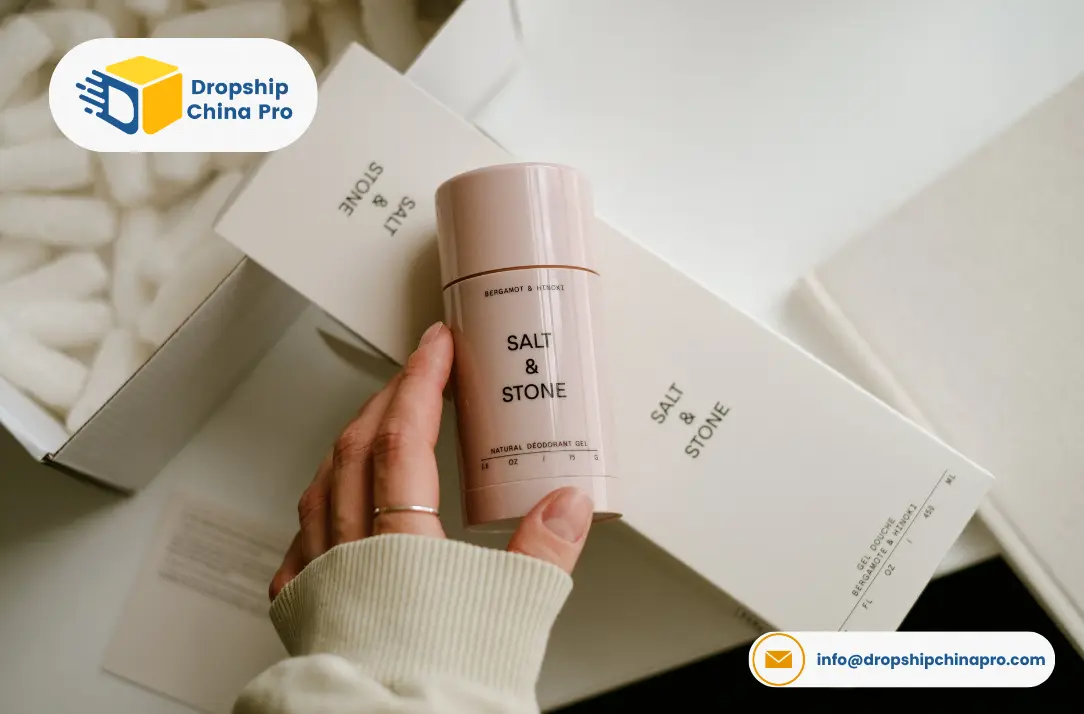
Why Brand Building Is Now a Survival Requirement
The dropshipping market was valued at $365.67 billion in 2025 and is projected to reach $1.25 trillion by 2030, growing at a 22% compound annual rate (Grand View Research, 2025). That growth creates opportunity, but it also creates noise. More sellers, more ads competing for the same attention, higher CPMs on every platform.
Facebook CPM averaged around $8.77 in 2026, up from $4 to $5 just a few years ago (FluentCart, 2026). TikTok CPM ranges from $5 to $12. Getting a customer’s attention costs more. Keeping them costs less, but only if you have built something worth returning to.
Between 80% and 90% of Shopify stores fail within their first year (GroPulse, 2026). The consistent differentiator between those that fail and those that survive is not product selection or ad spend. It is whether the store has a clear identity, a specific audience, and a reason for customers to prefer it over the alternatives.
A Quora thread on what separates long-term dropshipping success from short-term wins surfaced a pattern that experienced sellers describe repeatedly: the stores that cycle through products constantly never build the retention infrastructure that makes a business sustainable. Every new product means starting the acquisition process from scratch. A brand means each successful customer has the potential to generate future revenue without additional ad spend.
The Foundation: Niche and Audience First
Every branding decision flows from two prior decisions: the niche you operate in and the audience you serve. Neither can be chosen arbitrarily and neither can be easily changed once you have committed resources.
Niche selection determines the competitive landscape you are entering, the suppliers you can access, the price points available to you and the type of customer you will be building relationships with. A niche that is too broad means your brand has no specific identity. A niche that is too narrow may have insufficient demand to sustain a business.
The practical test for a viable niche: can you describe your ideal customer in one sentence, including what problem they have and why they would choose your brand over a general retailer? If you cannot, the niche is either too broad or too generic.
Audience understanding is what converts a niche into a brand. Knowing that you sell fitness accessories is not enough. Knowing that your customer is a working parent who exercises at home before 6 am, values compact equipment and responds to content about efficiency over aesthetics, is the foundation for every messaging decision you make.
The questions worth answering before committing to a brand direction:
- What specific problem does this audience have that is not being solved well by existing options
- What do they read, watch, and trust when making purchase decisions
- What would make them share your product or recommend your store
- What would make them leave and not come back
These are not marketing questions. They are product and operations questions too. The answers determine what you stock, how you package it, what you write on product pages and how you handle customer service issues.

Building Your Brand Identity
Brand identity is the system of elements that makes your store recognizable and consistent across every touchpoint a customer encounters. It is not decoration. It is the visual and verbal language through which you communicate what your brand stands for.
Name and Logo
Your store name and logo are the first thing a customer sees and, in most cases, the first thing they forget. Making them memorable requires being specific rather than generic. A name that communicates your niche or your brand’s personality is easier to remember than a made-up word or a generic descriptor.
Your logo does not need to be complex. Some of the most recognizable brand marks in e-commerce are simple. What matters is that it works at small sizes, that it reproduces clearly on packaging, product pages and social profiles, and that it is consistent with the tone of the brand you are building.
Color and Visual Consistency
Color carries psychological associations that influence how customers perceive your brand before they have read a single word. Blue communicates trust and reliability. Black communicates premium quality. Green communicates sustainability and health. These associations are not rules, but they are worth understanding before making choices.
More important than any individual color choice is consistency. Research shows that using a consistent signature color across all brand touchpoints increases brand recognition by up to 80% (Reboot, 2021). Customers who see the same colors, fonts and visual style across your website, packaging, ads and emails recognize you faster and develop familiarity more quickly.
Brand Voice
How you write determines how customers feel about your brand before they have received a product. A clinical, feature-focused tone communicates a different brand than a warm, conversational one. Neither is objectively better. The question is which one fits the audience you have chosen.
Define two or three words that describe how your brand should sound and apply them as a test to every piece of copy you write: product descriptions, email subject lines, social posts, error messages on your checkout page. Consistency in voice is as important as consistency in visuals.
The Product Layer: Where Branding Becomes Tangible
Brand identity exists at a store level. Product branding brings it into the physical world and is where the customer’s experience of your brand becomes real.
Custom Packaging
Packaging is the first physical interaction a customer has with your brand. A generic brown box with no brand elements communicates something very specific: that you are a dropshipper, not a brand. That perception affects whether the customer considers returning before they have even opened the product.
Custom packaging does not require large minimum order quantities or significant upfront investment. The accessible options include:
- Custom poly bags with your logo printed, suitable for clothing and soft goods
- Branded mailer boxes for products where the unboxing experience is visible or shareable
- Logo stickers applied to standard packaging, the most accessible entry point for branding any order
- Printed tissue paper inside boxes, which adds a premium feel at a low cost
- Thank you cards with your brand name, a brief personal message and an incentive for a second purchase
The economics of branded packaging are straightforward. A product that commands even $3 more in perceived value due to a branded presentation easily justifies $0.50 to $0.75 in additional packaging cost. The lifetime value improvement from customers who associate your brand with quality compounds that return significantly (Dropship China Pro, 2025).
Logo on Product
Where the product itself allows it, adding your logo or brand name is one of the most cost-effective branding steps available. A custom label, an embroidered logo on a garment, or a printed card inside a product box all transform a generic item into a branded one.
This requires working with a supplier who offers customization services alongside standard fulfillment. Not all suppliers do, and vetting this capability before committing to a product is part of the selection process.
Product Quality as Brand Signal
Nothing undermines a brand faster than a product that does not do what it claims to do. Every return, every negative review and every dispute is a brand event. A customer who receives a poor-quality product does not just stop buying. Research shows that 30% of customers who leave a brand do so silently, without a complaint, making the damage invisible until it shows up in retention metrics (Wiserpopup, cited in TrueLoyalty, 2025).
Ordering samples before listing any product is not optional if you are building a brand. It is the minimum standard of quality control available to a dropshipper.
Brand Building Checklist by Stage
| Stage | Priority Action |
|---|---|
| Starting Out | Define niche, choose name and logo, set up essential store pages |
| First Orders | Add logo stickers or insert cards, send tracking emails |
| Consistent Sales | Upgrade to custom packaging, build post-purchase email flow |
| Scaling | Introduce loyalty incentives, move to dedicated fulfillment partner |
| Established Brand | Local warehouse fulfillment, branded unboxing experience across all SKUs |
What Brand Building Looks Like in Practice
Consider a seller in the home accessories space who started dropshipping generic candle holders sourced directly from a marketplace supplier. The product was competitively priced and converted reasonably well from paid ads. The problem was that every time the ad campaign paused, revenue stopped. No one was returning organically. No one was recommending the store.
The seller made three specific changes. First, they worked with their supplier to add a simple branded insert card inside every order, including the store name, a short message and a 10% code for a second purchase. Second, they updated all product photography to show the items styled in a consistent home environment rather than against a white background, giving the store a visual identity rather than a catalog appearance. Third, they wrote a short shipping policy page with realistic delivery windows and sent a tracking update email the moment every order was dispatched.
Within three months, the repeat purchase rate moved from under 10% to just above 22%. The ad cost per acquisition did not change, but the lifetime value of each customer increased enough that the same ad spend was producing better returns meaningfully.
None of those changes required a new product, a logo redesign, or a significant investment. They required the decision to treat the store as a brand rather than a transaction channel.
This is the practical reality of a dropshipping branding strategy: the gap between a store that resets with every campaign and one that compounds is often smaller than it looks. The compounding starts when you give customers a reason to remember you.
Branded vs. Generic Dropshipping at a Glance
| Factor | Branded vs. Generic |
|---|---|
| Gross Margin | Branded: 25–45% / Generic: 15–30% |
| Customer Return Rate | Branded: higher repeat rate / Generic: one-time purchase driven |
| Price Competition | Branded: competes on identity / Generic: competes on price |
| Ad Dependency | Branded: reduces over time / Generic: constant spend required |
| Long-Term Viability | Branded: compounds / Generic: resets with every campaign |
The Customer Experience Layer
Brand is not only what you sell or how it looks. It is how customers feel at every stage of their interaction with your store. This includes stages that most dropshippers treat as administrative rather than brand-building opportunities.
The Checkout and Post-Purchase Experience
The period between a customer placing an order and receiving it is one of the highest-anxiety periods in the customer relationship. Customers who receive no communication during this window default to uncertainty, which defaults to distrust.
A branded confirmation email, a shipping notification with tracking and a delivery follow-up are three touchpoints that cost almost nothing and communicate that your brand is competent, reliable, and attentive. Stores that provide consistent tracking updates see 25% fewer refund and cancellation requests (ZIK Analytics, 2025). That is a brand outcome as much as an operational one.
Returns and Problem Resolution
How you handle problems defines your brand reputation more than how you handle smooth transactions. Customers who receive value from a service interaction have an 82% chance of making another purchase (Venn Apps, 2025). Customers who encounter a problem that is handled badly are 33% likely to switch to a competitor after a single experience (SellersCommerce, 2025).
A clear, visible return policy reduces disputes before they start. A fast, non-adversarial response to complaints converts a negative experience into a loyalty signal. The question to ask about every policy decision is not “does this protect the business?” but “does this tell the customer we are trustworthy?”
Rewarding Loyalty
The probability of selling to an existing customer is 60 to 70%, compared to just 5 to 20% for a new prospect (SellersCommerce, 2025). That arithmetic makes retention one of the highest-leverage activities available to a dropshipping brand.
Simple loyalty mechanisms available without complex infrastructure:
- A discount code is included in the delivery packaging for the next purchase
- An email follow-up 30 days after delivery with a relevant product recommendation
- Early access to new products for customers who have purchased before
- A referral incentive for customers who share or recommend
None of these requires a dedicated loyalty platform to begin. They require only the decision to treat existing customers as valuable rather than assuming the next sale will always come from someone new.
Entry-Level Branded Packaging Options
| Packaging Option | Best For |
|---|---|
| Logo Stickers | Any product type, lowest cost entry point |
| Custom Poly Bags | Clothing, soft goods and accessories |
| Branded Mailer Box | Higher-ticket items where unboxing matters |
| Insert Cards | All orders, drives repeat purchase with discount code |
| Printed Tissue Paper | Gift-oriented or premium product categories |
Branding at Scale: When Fulfillment Becomes a Brand Decision
As a dropshipping brand grows, the operational decisions around fulfillment become brand decisions. Delivery speed, packaging consistency and product quality at volume are all things that brand equity either reinforces or undermines.
The brands that manage this transition well are the ones that move from marketplace sourcing to dedicated fulfillment partners before the operational pressure forces it. A fulfillment partner who handles quality inspection, branded packaging and consistent shipping timelines removes the variability that erodes brand trust as order volumes increase.
For sellers whose customer base is primarily in the U.S. or Europe, local warehouse fulfillment reduces delivery times to 2 to 7 days, which directly affects the customer experience and the repeat purchase rate. Research shows that dropshippers using local U.S. or EU warehouses report up to 50% fewer customer complaints compared to those relying entirely on China-based shipping (ZIK Analytics, 2025).
If your store is at the stage where fulfillment consistency is starting to affect your brand reputation, the Dropship China Pro Shopify app is worth reviewing as a starting point for understanding what a managed fulfillment model looks like for your volume and geography.
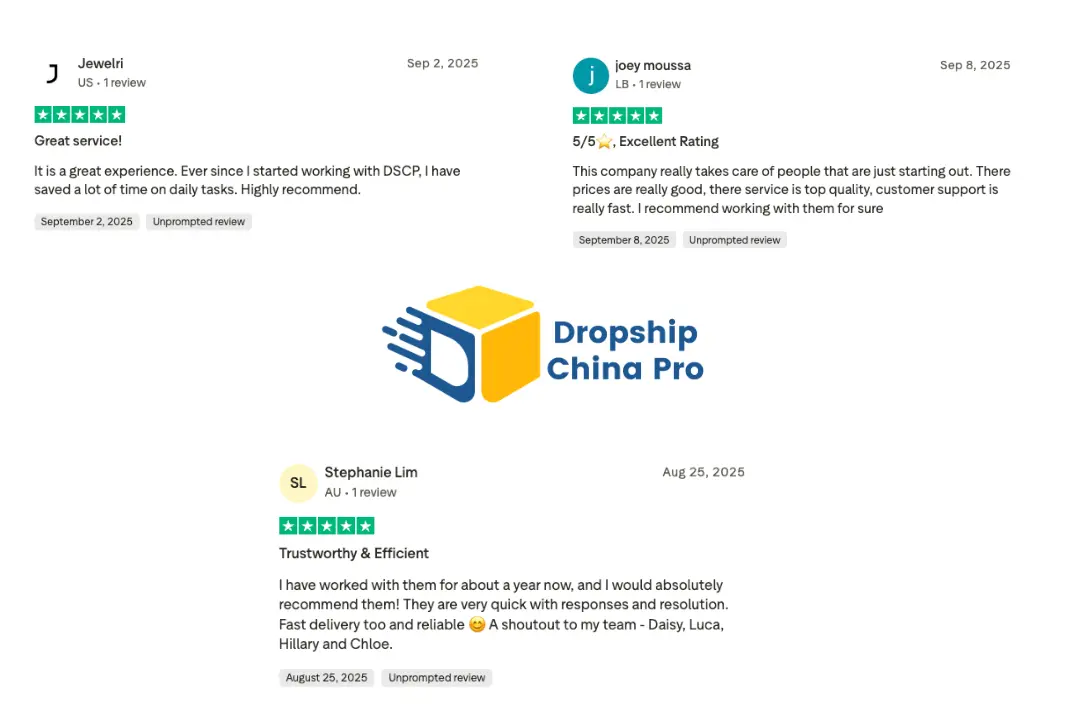
What Sellers Say About Working With Dropship China Pro
Building a brand requires a fulfillment partner who operates at the same standard you are trying to hold your brand to. Here is what sellers who work with Dropship China Pro say about the experience.
Stephanie Lim, an Australian seller who has worked with the team for over a year, describes the relationship as trustworthy and efficient. She highlights fast response times, reliable delivery and the kind of consistent support that comes from working with a dedicated team rather than an anonymous platform.
Jewelri, a US-based seller, notes that since starting with DSCP, the time spent on daily operational tasks has dropped significantly, freeing up focus for the parts of the business that actually build a brand.
Joey Moussa, based in Lebanon, points to the accessibility of the service for sellers who are earlier in their journey: competitive pricing, top quality service and customer support that responds quickly when it matters.
FAQs for Branding Strategy in Dropshipping
How is branded dropshipping different from regular dropshipping?
In standard dropshipping, you sell products as they come from the supplier, with no customization to the packaging, product, or brand presentation. Branded dropshipping means adding your own brand elements: custom packaging, logo on product, branded inserts and a consistent visual identity across your store and communications. The customer receives something that feels like it came from a real brand rather than an anonymous fulfillment operation.
How much does branded packaging cost to set up?
Entry-level branded packaging, such as logo stickers or printed poly bags, typically costs less than $0.50 per order at modest volumes. Custom mailer boxes and branded tissue paper add more cost but remain financially justified on products with margins above 30%. The investment is almost always recovered through higher repeat purchase rates and reduced returns from customers who perceive the brand as credible.
Do I need to create my own products to build a dropshipping brand?
No. Most branded dropshipping operations use existing supplier products with custom branding applied at the packaging, label, or insert level. Creating entirely original products is one path to brand differentiation, but it requires higher minimum order quantities and longer lead times. The more accessible starting point is finding a supplier who offers customization options on standard products.
What is the most important element of a dropshipping brand?
Consistency is the most important single element. A logo is not a brand. A color is not a brand. What builds brand recognition is the repeated, consistent experience of seeing the same visual identity, hearing the same voice, and receiving the same quality across every interaction. A customer who encounters your brand six times consistently knows who you are. A customer who encounters six different presentations of your store never builds that recognition.
When should I invest in branding vs. spending that budget on ads?
Branding and advertising are not competing investments. They serve different functions. Advertising brings people to your store once. Branding determines whether they come back without advertising. The practical answer is that basic branding, a clear niche, a consistent visual identity and a professional product presentation should be in place before you spend significantly on advertising. Advertising a store with no brand identity is paying to acquire customers you cannot retain.
How does brand building affect long-term profitability?
The compounding effect of brand building on profitability is significant and measurable. A 5% increase in customer retention correlates with a 25% increase in profit (TrueLoyalty, 2025). Loyal customers spend 67% more in their third year than in their first six months (SellersCommerce, 2025). Reducing dependence on paid acquisition by building organic return traffic and word of mouth changes the unit economics of the entire business over time.
Build a Brand That Fulfillment Can Support
A brand promise that your fulfillment operation cannot consistently deliver is not a brand. It is a liability. Dropship China Pro works with e-commerce sellers who are building brands that require reliable sourcing, quality inspection and consistent delivery timelines to US and European customers. Explore the Dropship China Pro Shopify app or get in touch directly to discuss your requirements.
Conclusion
Branding in dropshipping is not about aesthetics. It is about building a business that customers choose deliberately rather than accidentally, return to without prompting and recommend without being asked.
The mechanics are accessible. Custom packaging, a consistent visual identity, a clearly defined audience and a customer experience that delivers on what the brand promises are all achievable at modest cost. What they require is the decision to treat the brand as a strategic asset rather than something to address after the operational basics are working.
The businesses that built generic stores in the early years of dropshipping competed on price because that was the only available lever. The businesses building durable brands now compete on something much harder to replicate: the reason a specific customer chooses them.
References
- EasyApps. (2026). Dropshipping Statistics 2026: 30+ Industry Data Points. Retrieved from easyappsecom.com
- Grand View Research. (2025). Global Dropshipping Market Report 2025-2030. Retrieved from grandviewresearch.com
- FluentCart. (2026). Is Dropshipping Worth It in 2026?
- GroPulse. (2026). Shopify Success Rate 2026: Why 90% of Stores Fail. Retrieved from gropulse.com
- SellersCommerce. (2025). 51 Customer Loyalty Statistics. Retrieved from sellerscommerce.com
- TrueLoyalty. (2025). 100+ Staggering Customer Loyalty Program Statistics for 2025.
- ZIK Analytics. (2025). 60 Important Dropshipping Statistics for 2026.
- Venn Apps. (2025). 33 Customer Retention Statistics Every eCommerce Brand Should Know.
- Opensend. (2025). 7 Repeat Purchase Rate Statistics for eCommerce Stores.

Hi, I’m Yavuz. I help e-commerce businesses grow through strategic content. Here, I share insights on fulfillment solutions, 3PL partnerships, and digital marketing strategies based on real data and industry trends.