
Customer expectations for delivery speed have fundamentally transformed online retail. What once seemed like an exceptional service now represents the baseline standard that shoppers demand from every online store. The challenge is clear: implementing fast shipping for ecommerce without destroying profit margins or requiring massive infrastructure investments has become essential for survival in today’s competitive marketplace.
The reality is stark. Research shows that 49% of online shoppers have abandoned carts due to unsatisfactory shipping options, while 84% of consumers say they won’t return to a retailer after just one poor delivery experience (Voxware, 2024). These statistics underscore why shipping speed directly impacts both conversion rates and customer lifetime value.
This guide examines the methods, strategies, and infrastructure decisions that enable ecommerce businesses to achieve 2-4 day delivery consistently. Whether you operate a growing Shopify store processing hundreds of orders monthly or manage multiple sales channels requiring coordinated fulfillment, understanding these approaches helps you meet customer expectations while maintaining healthy margins.

Key Takeaways: Fast Shipping for Ecommerce
- Speed drives conversions: Delivery timeframes significantly influence purchase decisions, with 66% of consumers expecting delivery within 2-3 days for standard shipping (McKinsey, 2024).
- Multiple approaches exist: From hybrid fulfillment models to multi-warehouse strategies, businesses have several viable paths to achieve fast ecommerce shipping.
- Location matters strategically: Warehouse positioning relative to customer concentrations determines delivery speeds more than any other single factor.
- Technology enables efficiency: Real-time inventory management and automated order routing optimize fulfillment speed while reducing manual errors.
- Cost optimization is possible: Strategic approaches balance shipping speed with profitability through intelligent carrier selection and fulfillment network design.
- Customer communication enhances experience: Proactive tracking updates and transparent delivery expectations build trust even when circumstances create delays.
The Ecommerce Shipping Landscape in 2025
Why Speed Matters More Than Ever
The ecommerce market continues its explosive growth trajectory, with global sales projected to exceed $7.4 trillion by 2025 (Statista, 2024). This expansion brings intensified competition where customer experience increasingly differentiates successful businesses from struggling ones. Shipping speed has emerged as a critical competitive factor that directly impacts multiple business metrics. Conversion rates vary dramatically based on delivery options presented during checkout, with research indicating that offering expedited shipping options increases average order value by 15-20%, while slow shipping speeds or unclear delivery timeframes cause immediate cart abandonment. The impact extends beyond initial purchases to repeat business, with delivery experience ranking among the top three factors influencing customer loyalty.
Amazon has fundamentally reset expectations through Prime’s two-day standard, creating a benchmark that customers now expect from all online retailers. This expectation applies regardless of business size, meaning small and mid-size ecommerce sellers face the same delivery demands as large enterprises. The businesses thriving in this environment have discovered methods to meet these expectations without the massive fulfillment infrastructure that major retailers maintain.
Current Delivery Time Expectations
Customer expectations for shipping speed vary by product category, order value, and customer demographics, but clear patterns have emerged across the ecommerce landscape. For standard shipping, 66% of consumers expect delivery within 2-3 days, representing a significant compression from the 5-7 day expectations that were common just five years ago. Premium or expedited shipping now means next-day or same-day delivery in many markets. Geographic factors influence expectations, with urban customers typically expecting faster delivery than those in rural areas, though this gap continues narrowing as fulfillment networks expand into secondary markets. Product type also affects tolerance for delivery delays, with fashion and electronics purchases typically demanding faster shipping while furniture and specialized items allow more flexibility.
The cost sensitivity around shipping varies significantly by customer segment. Younger consumers often prioritize speed and convenience over cost, willingly paying premium shipping fees for rapid delivery. Price-conscious shoppers accept longer timeframes in exchange for reduced shipping costs. However, both groups share a common expectation: clear communication about actual delivery timeframes rather than vague promises.

What Is Fast Shipping for Ecommerce?
Fast shipping for ecommerce refers to delivery methods that get products to customers within 1-3 business days after order placement. This timeframe includes both order processing and transit time, representing the complete customer experience from clicking “purchase” to receiving their package. The definition has evolved considerably, with delivery speeds that seemed exceptional five years ago now representing baseline expectations.
Traditional ecommerce shipping often involved 5-7 business days for standard delivery, with expedited options offering 3-4 days at premium prices. This model has fundamentally shifted. Today’s fast shipping standard targets 2-3 day delivery for standard orders, with premium options providing next-day or even same-day delivery in major metropolitan areas. This acceleration reflects both improved logistics capabilities and intensified customer expectations driven by major retailers.
Several factors determine whether businesses can consistently deliver on fast shipping promises. Geographic positioning of inventory relative to customers, efficient order processing systems, strategic carrier partnerships, and effective inventory management all contribute to shipping speed. Businesses achieving consistent fast ecommerce shipping excel across these dimensions rather than relying on a single factor.
The Components of Fast Ecommerce Shipping
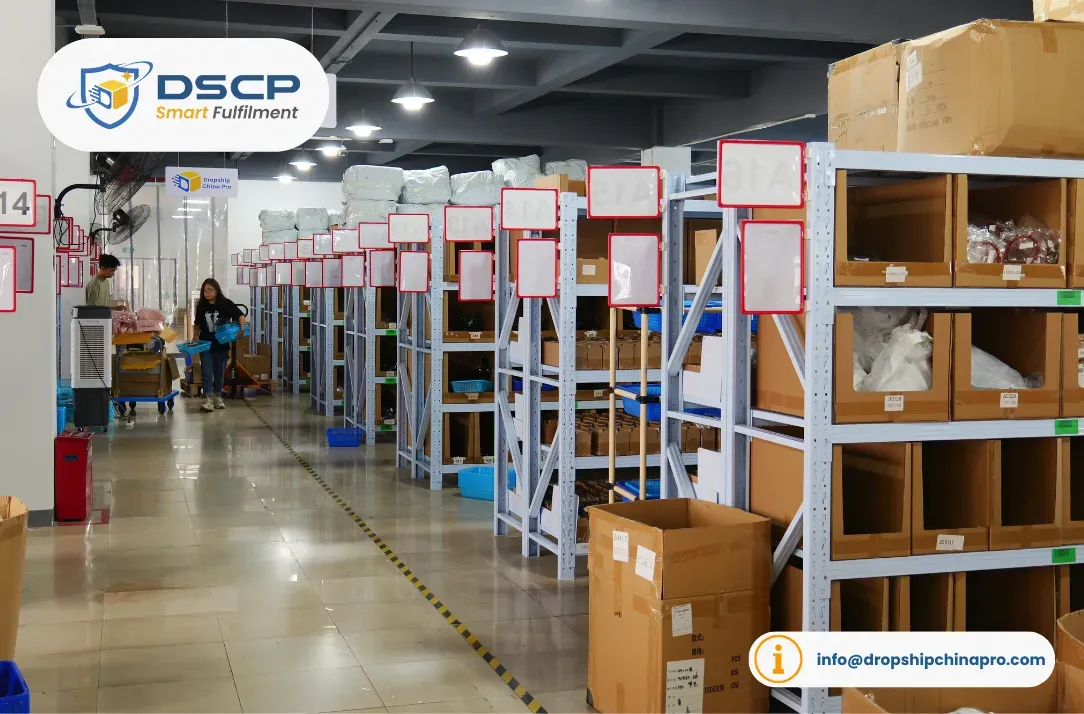
Fast shipping performance depends on optimizing multiple operational elements that work together to minimize total time from order to delivery. Order processing speed represents the first critical component. Efficient systems automatically route orders to appropriate fulfillment locations, generate picking instructions, and transmit tracking information without manual intervention. Businesses processing orders within 2-4 hours of receipt gain significant advantages over those requiring 24-48 hours for processing.
Picking and packing efficiency determines how quickly ordered items move from warehouse shelves to outbound shipping. Optimized warehouse layouts minimize travel distance for warehouse staff, while advanced systems use algorithms to batch compatible orders and determine optimal picking sequences. Professional fulfillment operations typically complete picking and packing within 4-8 hours of receiving order instructions.
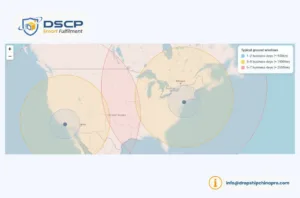
Carrier transit time represents the final component, determined by the physical distance between the fulfillment location and the delivery address. Ground shipping typically delivers within 1-3 days for distances under 500 miles, 2-4 days for medium distances, and 3-5 days for cross-country shipments. This geographic reality explains why warehouse positioning matters more than carrier selection for achieving consistent fast delivery.
Fast Shipping vs. Expedited Shipping
Understanding the distinction between fast shipping and expedited shipping clarifies customer expectations and pricing strategies. Fast shipping refers to standard delivery that consistently arrives within 2-3 days through optimized fulfillment practices and strategic warehouse positioning. This represents the default shipping option offered to customers, typically at standard shipping rates or included in the product price.
Expedited shipping involves paying premium prices for accelerated transit, usually through air freight or priority carrier services. Customers selecting expedited shipping pay significantly higher fees for next-day or two-day guaranteed delivery. This option serves customers with urgent needs or those willing to pay for maximum convenience, but it cannot serve as the primary fulfillment method for most ecommerce businesses due to cost considerations.
The strategic goal for ecommerce businesses should be to provide fast shipping as the standard rather than relying on expensive expedited options. This approach requires different infrastructure decisions but delivers superior competitive positioning. When standard shipping consistently arrives in 2-3 days, expedited options become less necessary, reducing both customer costs and operational complexity.
Shipping Speed Comparison
| Fulfillment Method | Typical Delivery Time |
|---|---|
| Hybrid Fulfillment (US Warehouses) | 2-4 days |
| Multi-Warehouse Strategy | 1-3 days |
| Regional 3PL Partnerships | 2-5 days |
| Direct from China (Express) | 7-15 days |
| Direct from China (Standard) | 14-30 days |
| Overnight/Express Shipping | 1-2 days |
5 Proven Methods to Achieve 2-4 Day Delivery
Method 1: Hybrid Fulfillment Model
The hybrid fulfillment model combines international sourcing economics with domestic fulfillment speed, addressing a fundamental challenge facing ecommerce businesses. This approach sources products from cost-effective manufacturing regions, typically China or Southeast Asia, then fulfills customer orders from domestic warehouses positioned near major customer populations. Products are shipped in bulk from manufacturing regions to domestic warehouses via ocean freight, dramatically reducing per-unit transportation costs compared to individual shipments. These warehouses then fulfill customer orders using domestic ground shipping that typically delivers within 2-4 days.
The economics prove compelling for businesses processing 100-2,000 orders monthly, with ocean freight costs representing a small fraction of per-unit expenses compared to air freight or direct shipping. A hybrid model serving US customers typically maintains inventory in West Coast and East Coast warehouses, providing coast-to-coast coverage with 2-4 day ground shipping to most addresses. Professional fulfillment services have made this model accessible to businesses that previously couldn’t afford the infrastructure investments required, providing warehousing, quality control, and fulfillment coordination through pay-as-you-go pricing structures.
Method 2: Multi-Warehouse Distribution Strategy
Strategic positioning of multiple warehouse facilities enables businesses to maintain inventory closer to customer concentrations, dramatically reducing average shipping distances and transit times. This geographic distribution strategy works particularly well for businesses with nationwide customer bases and sufficient sales volumes to justify inventory investment across multiple locations. For US-based businesses, positioning facilities on both coasts and potentially in central regions provides comprehensive coverage, with each warehouse serving surrounding states with 1-2 day ground shipping while collectively covering the entire country with 2-3 day delivery capability.
Inventory allocation across multiple warehouses requires sophisticated management to prevent stockouts while avoiding excessive inventory carrying costs, with advanced systems analyzing sales patterns by region to suggest optimal distribution. While operational complexity increases with multiple facilities and per-unit fulfillment costs may be higher compared to single-warehouse operations, the competitive advantages often justify these investments. Businesses using multi-warehouse strategies report 30-40% improvements in average delivery times compared to single-warehouse operations, directly impacting customer satisfaction and repeat purchase rates.
Method 3: Strategic 3PL Partnerships
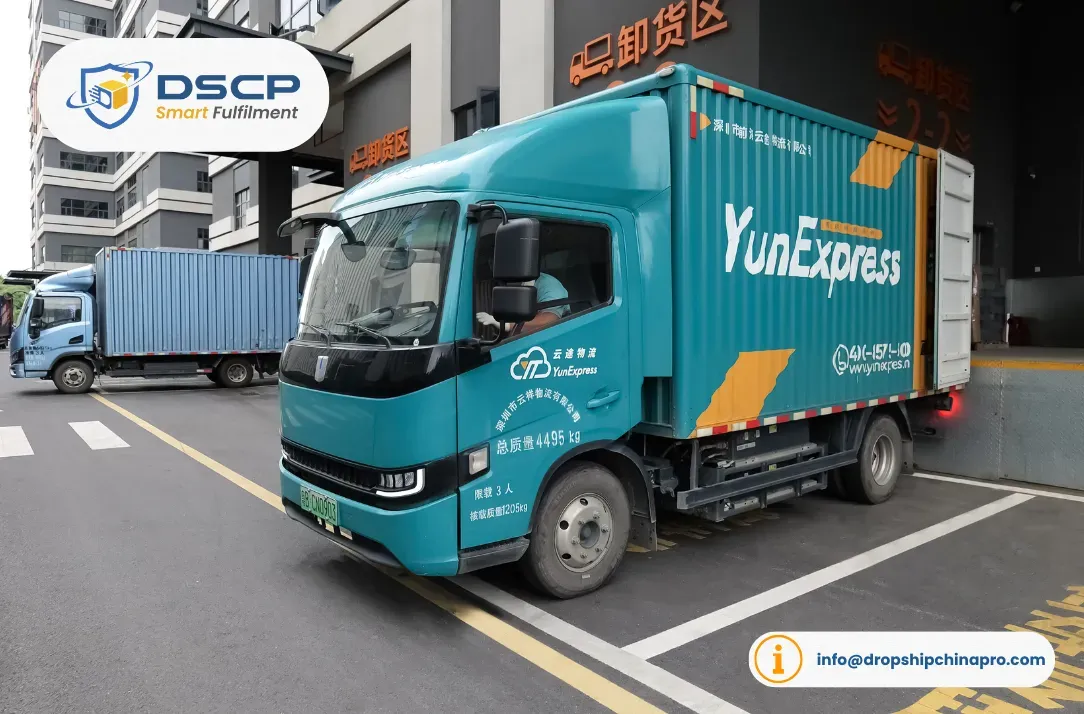
Third-party logistics providers offer fulfillment infrastructure and expertise that individual ecommerce businesses would find challenging to develop independently, providing access to warehouse networks, established carrier relationships, fulfillment technology, and operational knowledge without requiring major capital investments or long-term facility commitments. Selecting the right 3PL partner requires evaluating multiple factors beyond basic pricing, including warehouse locations that determine delivery speed capabilities, technology integration with your ecommerce platforms for seamless order flow, and service quality measured through metrics like order accuracy rates and on-time dispatch performance.
The best 3PL relationships function as strategic partnerships rather than transactional vendor arrangements, with providers offering dedicated account management, proactive problem-solving, and a willingness to accommodate your specific requirements. Cost structures vary significantly across providers, with most charging combinations of storage fees, pick-and-pack fees per order, and shipping charges. Understanding complete fee structures, including any setup costs, minimum commitments, or hidden charges, enables accurate cost comparisons where the cheapest option rarely provides the best value when considering service quality, technology capabilities, and reliability.
Method 4: Regional Carrier Partnerships
Building strategic relationships with regional carriers provides alternatives to national carriers that often deliver superior service at competitive prices for specific geographic areas. Regional carriers typically offer more flexible service, responsive customer support, and competitive pricing for shipments within their coverage areas, excelling in specific geographic markets where they maintain dense route networks and established delivery infrastructure. The key is matching carrier strengths to your customer distribution and delivery requirements, with businesses serving customers concentrated in particular regions leveraging carriers specializing in those areas for improved service and potentially lower costs.
Implementing multi-carrier strategies requires technology that automatically selects optimal carriers based on destination, package characteristics, delivery timeframes, and cost considerations, as manually choosing carriers for each shipment becomes impractical at meaningful sales volumes. Modern shipping software evaluates multiple options in real-time, selecting carriers that balance cost efficiency with service reliability. This diversification also provides operational resilience, allowing businesses to route shipments through alternative providers when one carrier experiences service disruptions due to weather, capacity constraints, or operational issues.
Method 5: Dropshipping with Fast Fulfillment Partners
Traditional dropshipping, where suppliers ship directly to customers from overseas locations, typically involves 14-30 day delivery timeframes that frustrate customers and generate negative reviews. However, modern dropshipping has evolved through partnerships with fulfillment providers that maintain domestic inventory while offering dropshipping’s low barrier to entry and minimal inventory investment. This evolved model works through fulfillment partners that source products internationally, maintain inventory in domestic warehouses, and fulfill orders on behalf of ecommerce sellers, with businesses operating without purchasing inventory upfront and only paying for products when customer orders arrive.
The advantages prove significant for businesses testing new products or markets without major inventory commitments, allowing launches of new product lines with minimal risk since inventory investment only occurs when customers validate demand through purchases. Performance depends entirely on the fulfillment partner’s capabilities and reliability, making it essential to evaluate potential partners based on their domestic warehouse locations, processing speed, quality control procedures, integration capabilities with your ecommerce platforms, and track record of on-time delivery before committing to significant business volumes.
Cost Comparison by Method
| Fulfillment Method | Relative Cost |
|---|---|
| Hybrid Fulfillment | Medium |
| Multi-Warehouse Strategy | Medium-High |
| Regional 3PL | Medium |
| Direct China (Express) | Medium-High |
| Direct China (Standard) | Low |
| Overnight/Express | Very High |
Cost Considerations for Fast Ecommerce Shipping
Understanding the True Costs
Fast shipping involves both obvious and hidden costs that businesses must understand to make informed decisions. The most visible expenses include carrier charges for transportation, fulfillment fees for picking and packing orders, and storage costs for maintaining inventory in warehouses. These direct costs vary significantly based on package weight and dimensions, shipping distance, carrier selection, and negotiated rates.
Less obvious expenses accumulate across the fulfillment operation. Packaging materials, including boxes, padding, tape, and branded elements, represent per-order costs that scale with sales volume. Technology costs for inventory management systems, shipping software, and ecommerce platform integrations enable efficient operations but require both initial setup investments and ongoing subscription fees. Returns processing and customer service related to shipping issues consume staff time and generate expenses that should factor into total shipping cost calculations.
The complete cost picture also includes opportunity costs from inventory investment. Products sitting in warehouses represent capital that could be deployed elsewhere in the business. Faster inventory turnover through efficient sales and fulfillment improves overall capital efficiency, making speed valuable beyond customer satisfaction considerations. Slow-moving inventory incurs storage costs while tying up working capital, creating compounding economic disadvantages.
Cost Comparison: Different Shipping Methods
Comparing costs across fulfillment methods requires analyzing total landed costs rather than simply comparing individual expense categories. Direct international shipping from suppliers typically offers the lowest per-unit product and fulfillment costs but incurs the longest delivery timeframes and often generates customer service expenses from shipping inquiries and complaints. The complete cost calculation must include the conversion rate impact from slow shipping and the customer lifetime value reduction from poor delivery experiences.
Hybrid fulfillment models involve higher per-unit costs than direct shipping due to warehousing, domestic fulfillment charges, and the inventory investment required to maintain domestic stock. However, these incremental costs typically prove worthwhile when considering improved conversion rates, reduced returns, and enhanced customer satisfaction, leading to repeat purchases. Total profitability calculations often favor hybrid models despite higher per-order costs.
Express shipping options deliver the fastest service, but at prohibitive costs for routine fulfillment. Overnight shipping can cost 3-5 times more than standard ground shipping for comparable packages, making it economically viable only for high-value items, emergency replacement shipments, or customers explicitly willing to pay premium fees. Building standard fulfillment strategies around express shipping creates unsustainable economics for most ecommerce businesses.
Implementation Roadmap: How to Set Up Fast Shipping
Phase 1: Analyzing Your Current Fulfillment
Understanding your existing fulfillment performance and customer distribution provides the foundation for improvement strategies. Begin by:
- Analyzing historical orders to identify where customers are located geographically
- Mapping order concentrations to visualize whether customers cluster in specific regions or distribute relatively evenly
- Examining current delivery performance across different regions
- Calculating average delivery times from order placement to customer receipt, segmented by destination zones
- Identifying areas receiving consistently slower service as opportunities for improvement
Evaluate existing costs comprehensively by calculating complete fulfillment expenses per order, including product costs, storage fees, fulfillment charges, shipping expenses, packaging materials, and technology costs. Understanding your current cost structure enables an accurate comparison with alternative fulfillment models. Many businesses discover that perceived savings from certain approaches evaporate when accounting for all associated expenses.
Phase 2: Choosing the Right Fulfillment Strategy
Selecting optimal fulfillment approaches requires matching methods to your specific business characteristics, customer base, and growth trajectory. Key considerations include:
- Current sales volumes and growth projections (certain strategies require minimum volumes for economic viability)
- Product characteristics (heavy or bulky items benefit from distributed warehousing)
- Product fragility and handling requirements
- Shelf life and obsolescence risks
- Customer expectations in your product category and price point
Luxury goods typically require faster shipping and superior presentation, while commodity products often compete primarily on price and convenience. Understanding what drives purchase decisions in your specific market helps prioritize investments in speed versus cost optimization.
Phase 3: Technology and Integration Setup
Modern fulfillment relies heavily on technology that connects sales channels, inventory management systems, fulfillment operations, and carrier services into cohesive workflows. Essential technology components include:
- Ecommerce platform integrations: Automatically transmit orders to fulfillment systems immediately upon customer purchase (Shopify App integrations enable seamless order flow)
- Inventory management systems: Track stock levels in real-time across all warehouses and sales channels
- Shipping software: Evaluate multiple carrier options for each shipment and automatically select optimal services
- Automated notifications: Generate shipping labels and transmit tracking information back to customers
Advanced systems use historical sales patterns to forecast demand and suggest optimal inventory levels that balance availability against carrying costs. For businesses selling across multiple channels, synchronized inventory prevents the common problem of selling products on one platform that are actually out of stock.
Phase 4: Monitoring and Optimization
Implementing fast shipping represents an ongoing process requiring continuous monitoring and refinement rather than a one-time setup. Track key performance indicators, including:
- Average delivery times segmented by destination zone
- On-time delivery rates
- Shipping costs as a percentage of order value
- Customer satisfaction metrics related to delivery experience
- Seasonal patterns and trends
Customer feedback provides valuable qualitative insights that complement quantitative metrics. Monitor reviews, support inquiries, and survey responses for mentions of delivery experience to identify friction points that quantitative metrics might miss. A/B testing different approaches provides empirical evidence of what works best for your specific business, allowing data to guide strategy refinement.
Common Shipping Mistakes
| Mistake | Business Impact |
|---|---|
| Sacrificing Reliability for Speed | Negative reviews and lost customers |
| Ignoring Regional Variations | Inconsistent customer experiences |
| Neglecting Packaging Quality | Damaged products and returns |
| Inadequate Communication | Customer anxiety and support overload |
Common Mistakes to Avoid
Mistake 1: Sacrificing Reliability for Speed
The pursuit of maximum shipping speed sometimes leads businesses to compromise reliability, creating worse customer experiences than slightly slower but consistent delivery. Common pitfalls include:
- Overpromising delivery timeframes to boost conversion rates
- Choosing carriers based solely on advertised speed without verifying actual performance
- Failing to test delivery performance during peak seasons
- Not accounting for geographic variations in carrier reliability
Focus on consistency rather than pursuing the absolute fastest possible delivery times. Customers value predictability highly, preferring to know confidently when packages will arrive rather than gambling on possibly fast but unreliable service. Under-promise and over-deliver creates positive experiences, while the inverse generates frustration even when deliveries meet technical commitments.
Mistake 2: Ignoring Regional Variations
Treating all customers and destinations identically overlooks important geographic variations that affect fulfillment performance and costs. Strategic approaches should account for:
- Different delivery timeframes for Alaska, Hawaii, and remote rural areas
- Higher costs for difficult-to-reach destinations
- Inconsistent carrier performance across different regions
- Variable customer expectations based on location
Strategic approaches segment customers or destinations based on fulfillment characteristics, applying appropriate strategies to each segment. Major metropolitan areas with high customer concentrations might warrant dedicated warehouse facilities and premium carrier services, while remote destinations might require adjusted delivery timeframe messaging or additional shipping fees that reflect the true costs of service.
Mistake 3: Neglecting Packaging and Handling
Shipping speed means little if products arrive damaged, creating immediate customer dissatisfaction and return requests. Critical packaging considerations include:
- Adequate protection with appropriate box sizes and padding
- Balance between protection and excessive packaging waste
- Unboxing experience and brand presentation
- Testing different packaging approaches based on product fragility
Small investments in appropriate packaging typically deliver substantial returns through reduced damage, improved customer satisfaction, and enhanced brand perception. Products arriving in generic, damaged, or excessively large boxes create poor first impressions regardless of shipping speed.
Mistake 4: Inadequate Communication and Tracking
Customers experience anxiety when packages disappear into shipping networks without visibility. Proactive communication strategies should include:
- Automated order confirmation immediately after purchase
- Tracking information once shipments leave fulfillment facilities
- Updates when packages are out for delivery
- Confirmation of successful delivery
- Immediate notification of any delays or issues
Handling exceptions well differentiates superior operations from mediocre ones. When delays occur due to weather, carrier issues, or inventory problems, immediate transparent communication maintains trust. Customers appreciate honesty about problems and realistic revised expectations far more than silence or vague reassurances.
Essential Shipping Metrics
| Mistake | Business Impact |
|---|---|
| Sacrificing Reliability for Speed | Negative reviews and lost customers |
| Ignoring Regional Variations | Inconsistent customer experiences |
| Neglecting Packaging Quality | Damaged products and returns |
| Inadequate Communication | Customer anxiety and support overload |
Measuring Success: Key Metrics for Fast Shipping
Essential Shipping Performance Metrics
Track these key performance indicators to measure fast shipping success:
- Average delivery time: Typical duration from order placement to customer receipt (target: 2-4 days for 70-80% of orders)
- On-time delivery rate: Percentage of orders arriving within promised timeframes (target: 95%+ during normal periods)
- Shipping cost percentage: Fulfillment expenses relative to order value (target: under 10-15%)
- Geographic performance variations: Delivery times segmented by destination zones
On-time delivery rate proves more important than raw speed, as consistently meeting commitments builds customer trust. Professional operations typically maintain on-time rates above 95% during normal periods and above 90% even during peak seasons.
Customer Satisfaction Indicators
Monitor these qualitative indicators alongside quantitative metrics:
- Customer reviews: Analyze mentions of shipping speed, package condition, and tracking quality
- Net Promoter Score: Track how delivery experience drives recommendation likelihood
- Repeat purchase rates: Measure the impact of delivery experience on customer loyalty
- Customer lifetime value: Compare values for customers receiving different delivery experiences
- Support inquiries: Monitor volume of shipping-related customer service contacts
Systematically analyze reviews for negative trends that indicate problems requiring attention, even if quantitative metrics appear acceptable. Compare repeat purchase rates and lifetime values for customers receiving different delivery experiences to quantify the business value of shipping performance improvements.

Real Success: How Fast Fulfillment Transformed an Ecommerce Business
From Frustration to Fast Growth
Mark launched his outdoor gear ecommerce store with enthusiasm but quickly encountered problems that threatened to derail his business entirely. Using direct shipping from Chinese suppliers, Mark struggled with 15-20 day delivery times that generated constant customer complaints. Reviews reflected frustration with shipping delays, and cart abandonment rates exceeded 75% when customers saw estimated delivery timeframes during checkout.
After four months of disappointing results, processing approximately 30 orders weekly, Mark reevaluated his fulfillment strategy. Research into alternatives revealed hybrid fulfillment models that could maintain competitive product sourcing while dramatically improving delivery times. He partnered with a fulfillment provider maintaining US warehouse facilities, transitioning his inventory gradually from direct shipping to domestic fulfillment.
The transformation required initial inventory investment and slightly higher per-order fulfillment costs, creating short-term financial pressure. However, Mark recognized these investments as necessary to build a sustainable business rather than expenses to minimize. He focused on his top 20 products for the initial transition, maintaining direct shipping for slower-moving items while testing the hybrid model’s performance.
The Measurable Results
Within 90 days of implementing hybrid fulfillment, Mark experienced dramatic improvements across every key business metric. Delivery times decreased from 18 days average to 3.2 days, immediately improving customer satisfaction, as reflected in reviews and support inquiry volumes. Cart abandonment rates dropped from 75% to 58%, indicating that shipping options significantly influenced purchase decisions.
Conversion rates improved 34% as customers responded positively to fast shipping options that met their expectations. This conversion improvement, combined with increased traffic from better reviews, drove monthly order volumes from 120 to 280. Revenue grew proportionally while customer acquisition costs remained relatively stable, significantly improving overall profitability despite marginally higher per-order fulfillment expenses.
Perhaps most importantly, repeat purchase rates nearly doubled from 12% to 23% within six months. Customers who received orders quickly developed confidence in Mark’s business, making them far more likely to return for additional purchases. This increase in customer lifetime value transformed business economics, enabling higher customer acquisition investments while maintaining healthy margins.
Mark particularly valued the peace of mind from professional fulfillment operations. Quality control procedures caught defective products before shipping, preventing customer disappointment and negative reviews. Dedicated account management provided strategic guidance and rapid problem resolution during challenges. The partnership enabled Mark to focus on marketing and product development rather than constantly firefighting fulfillment issues.
Fulfillment Method Selection Guide
| Monthly Order Volume | Recommended Method |
|---|---|
| Under 100 orders | Direct shipping or dropshipping |
| 100-500 orders | Hybrid fulfillment or regional 3PL |
| 500-2,000 orders | Multi-warehouse or national 3PL |
| 2,000+ orders | Multi-warehouse network |
Frequently Asked Questions About Fast Ecommerce Shipping
What is considered fast shipping for ecommerce?
Fast shipping for ecommerce typically means delivery within 2-4 business days after order placement. This timeframe includes order processing and transit time, representing the complete customer experience. The definition has evolved from the 5-7 day standard that was common previously, reflecting both improved logistics capabilities and increased customer expectations driven by major retailers.
How much does fast shipping cost for ecommerce businesses?
Fast shipping costs vary significantly based on fulfillment method, package characteristics, and shipping distances. Hybrid fulfillment models typically cost $3-8 per order for picking, packing, and domestic ground shipping, plus warehousing fees of $1-3 per cubic foot monthly. These costs prove significantly lower than express air shipping, which can cost $15-40+ per package. The most cost-effective approach balances speed with efficiency through strategic warehouse positioning rather than premium carrier services.
Can small ecommerce businesses afford fast shipping?
Yes, small ecommerce businesses can achieve fast shipping through modern fulfillment solutions that don’t require massive infrastructure investments. Hybrid fulfillment services and 3PL partnerships provide access to warehousing networks and established carrier relationships without requiring businesses to lease facilities or maintain minimum order volumes. Pay-as-you-go models eliminate traditional barriers, making fast fulfillment accessible to businesses processing 100+ orders monthly.
What’s the difference between fast shipping and expedited shipping?
Fast shipping refers to standard delivery that consistently arrives within 2-3 days through optimized fulfillment and strategic warehouse positioning. This represents the default shipping option at standard rates. Expedited shipping involves paying premium prices for accelerated transit through priority carrier services like overnight or two-day air. Fast shipping provides better long-term competitive positioning by making rapid delivery the standard rather than a premium option.
How do I choose between different fast shipping methods?
Choose fast shipping methods based on your sales volumes, customer distribution, product characteristics, and growth trajectory. Businesses processing 100-500 orders monthly often benefit from hybrid fulfillment or regional 3PL partnerships. Higher volumes (500+ orders monthly) may justify multi-warehouse strategies. Analyze your customer geographic distribution to determine whether concentrated or dispersed patterns exist, as this influences optimal warehouse positioning.
Does fast shipping really impact sales and customer satisfaction?
Research consistently demonstrates that shipping speed significantly influences both conversion rates and customer loyalty. Studies show that 66% of consumers expect delivery within 2-3 days for standard shipping, and 49% abandon carts due to unsatisfactory shipping options (McKinsey, 2024; Voxware, 2024). Fast delivery not only drives initial purchases but also increases repeat purchase rates by 15-30% through improved customer satisfaction.
What shipping carriers work best for fast ecommerce shipping?
The best shipping carriers depend on your geographic distribution and fulfillment locations. For US-based fulfillment, combinations of UPS, FedEx, and regional carriers typically provide optimal coverage. The key is maintaining relationships with multiple carriers and using technology that automatically selects the best option for each shipment based on destination, cost, and delivery timeframe. Multi-carrier strategies improve both pricing and reliability.
How can I offer fast shipping internationally?
International fast shipping presents greater challenges than domestic fulfillment due to customs clearance, longer distances, and varied regulations. The most effective approach involves maintaining inventory in target international markets through international fulfillment partners, enabling domestic shipping within those regions. For businesses not yet ready for international warehousing, express international carriers provide 3-7 day delivery to major markets, though at premium prices.
Partner with Proven Fulfillment Excellence
The Challenge of Achieving Fast Shipping Consistently
Delivering fast ecommerce shipping consistently requires more than simply choosing expedited carrier services. It demands strategic infrastructure decisions, operational excellence, technology integration, and continuous optimization across every aspect of fulfillment operations. Many ecommerce businesses lack the scale, resources, or expertise to build this capability independently while maintaining focus on their core competencies in product selection and marketing.
The complexity increases for businesses managing multiple sales channels, international sourcing, quality control requirements, or rapid growth trajectories. Attempting to manage these dimensions internally diverts resources from revenue-generating activities while often producing suboptimal results. Professional fulfillment partnerships provide immediate access to infrastructure, expertise, and established processes that would take years to develop independently.
The DSCP Smart Fulfillment Solution
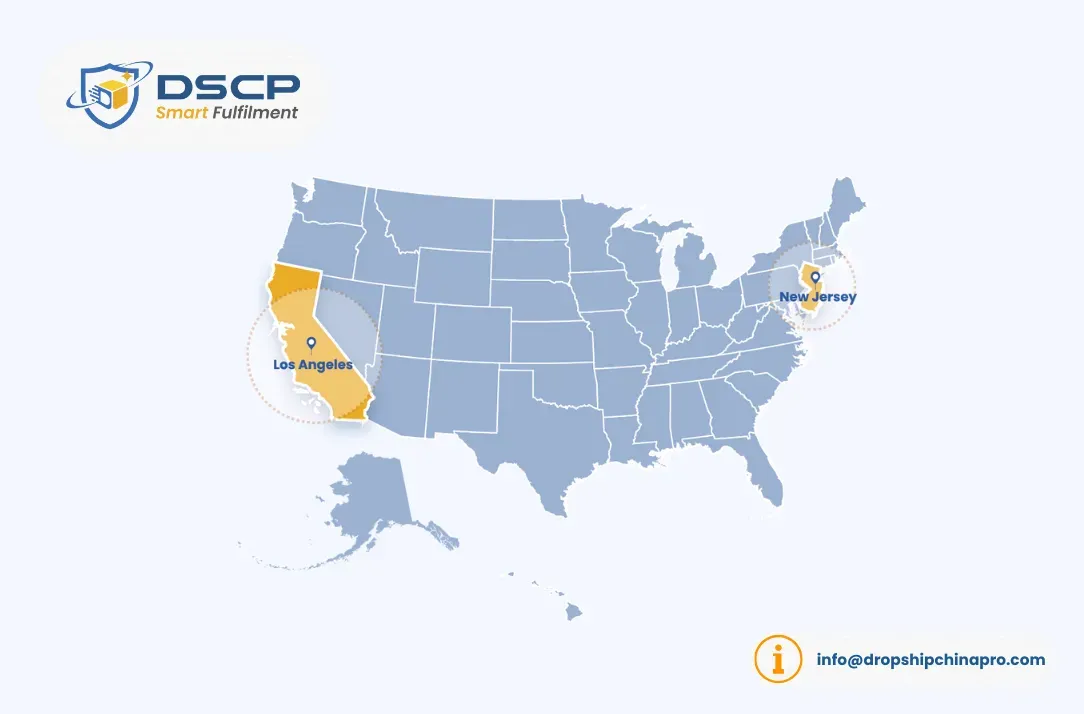
DSCP Smart Fulfillment addresses these challenges through a proven hybrid model that combines China sourcing advantages with domestic US fulfillment speed. Strategic warehouse positioning in Los Angeles and New Brunswick enables 2-4 day delivery to most US customers via ground shipping, meeting customer expectations while maintaining sustainable economics. This infrastructure has supported over 2,500 active stores since 2016, processing more than 30,000 parcels daily.
The service maintains comprehensive quality control throughout the fulfillment process, inspecting products at multiple points from factory receipt through final shipment. This systematic approach prevents defective products from reaching customers, protecting brand reputation while reducing returns and customer service burdens. Dedicated account management provides strategic guidance and rapid problem resolution, functioning as an extension of your team rather than a transactional vendor.
Integration with major ecommerce platforms, including Shopify and WooCommerce, enables seamless order flow and inventory synchronization. Pay-as-you-go pricing eliminates minimums and long-term commitments that restrict access to professional fulfillment for growing businesses. Whether processing 100 or 2,000 orders monthly, the scalable infrastructure accommodates your current needs while supporting future growth.
Businesses working with DSCP Smart Fulfillment consistently report improved delivery times, reduced customer service inquiries, and enhanced customer satisfaction reflected in reviews and repeat purchase rates. The 4.9/5 Trustpilot rating demonstrates the service quality that helps ecommerce businesses compete effectively through fulfillment excellence.
Conclusion: Your Path to Fast Shipping Success
Fast shipping for ecommerce represents a competitive necessity rather than an optional enhancement in today’s marketplace. Customer expectations continue rising, driven by major retailers that have fundamentally reset delivery standards across all online shopping. Ecommerce businesses meeting these expectations through consistent 2-4 day delivery gain significant advantages in conversion rates, customer satisfaction, and repeat purchase rates that compound into sustainable competitive positioning.
The good news is that multiple proven approaches exist for achieving fast shipping regardless of business size or current infrastructure. Hybrid fulfillment models, strategic 3PL partnerships, multi-warehouse distribution strategies, and optimized carrier relationships all provide viable paths to delivery speeds that satisfy customers while maintaining healthy margins. The key is selecting approaches that match your specific business characteristics, customer distribution, and growth trajectory rather than pursuing one-size-fits-all solutions.
Success requires balancing speed with reliability, costs with service quality, and immediate results with long-term sustainability. The businesses thriving in competitive ecommerce environments excel across these dimensions through strategic thinking, operational excellence, and often partnerships with fulfillment providers that bring infrastructure and expertise they couldn’t develop independently. Your path to fast shipping success begins with understanding your current performance, evaluating available options systematically, and implementing improvements that deliver measurable results for your specific situation.
References
- McKinsey & Company. (2024). The State of Ecommerce Delivery and Customer Expectations. Retrieved from mckinsey.com
- Statista. (2024). Global E-commerce Sales Forecast 2025. Retrieved from statista.com
- Voxware. (2024). Ecommerce Fulfillment and Customer Behavior Study. Retrieved from voxware.com

Hi, I’m Yavuz. I help e-commerce businesses grow through strategic content and SEO. Here, I share insights on fulfillment solutions, 3PL partnerships, and digital marketing strategies based on real data and industry trends.