
Fulfillment companies for ecommerce have become essential partners for online retailers looking to scale their operations without the burden of managing warehouses and shipping logistics. These specialized third-party providers handle everything from inventory storage to order packing and delivery, allowing business owners to focus on growth, marketing, and customer relationships.
The ecommerce fulfillment landscape has evolved dramatically over the past decade. What once meant simple warehousing and shipping now encompasses sophisticated technology platforms, multi-channel integration, and specialized services tailored to different business models. Understanding what services these companies offer helps you identify which capabilities align with your business needs and growth objectives.
This guide provides a comprehensive overview of fulfillment services, explaining core operations, advanced capabilities, and specialized models that serve different ecommerce business types.
Key Takeaways for Fulfillment Companies for Ecommerce
- Ecommerce Fulfillment Importance: Fulfillment companies enable online retailers to scale by handling warehousing, order packing, and shipping logistics, letting businesses focus on growth and customer relationships.
- Comprehensive Fulfillment Services: Modern fulfillment providers offer core services like inventory storage, pick and pack, shipping, returns processing, advanced capabilities including technology platforms, multi-channel integration, and performance analytics.
- Cost and Efficiency Benefits: Outsourcing fulfillment reduces total logistics costs by leveraging volume discounts on shipping, improves delivery speed and order accuracy, and scales flexibly during peak demand without needing extra staff or warehouse space.
- Specialized Fulfillment Models: Options include traditional 3PL, hybrid fulfillment combining global sourcing with local delivery, direct-to-consumer fulfillment focusing on customer experience, and subscription/recurring order fulfillment tailored to predictable shipping cycles.
- Service Tiers by Business Size: Small businesses (under 500 orders/month) prioritize simplicity and low minimums, mid-size businesses (500-5,000 orders/month) require multi-location warehousing and custom packaging, while enterprises (5,000+ orders/month) need advanced technology, extensive networks, and custom agreements.
- Technology Integration Critical: Seamless ecommerce platform integration, real-time inventory tracking, and robust warehouse management systems are essential for operational efficiency and to prevent overselling across sales channels.
- Value-Added Services Enhance Brand: Custom packaging, gift wrapping, kitting, quality control, and product labeling create better customer experiences and operational advantages beyond basic fulfillment services.
- Key Evaluation Questions: When selecting fulfillment partners, ask about service coverage, technology capabilities, pricing transparency, contract terms, scaling capacity, and their approach to seasonal fluctuations and international shipping.
- Real-World Impact: Professional fulfillment allows business owners to focus on marketing and product development, reduces shipping complaints, lowers costs through volume negotiation, and supports expansion into new sales channels.
- Strategic Partnership Outlook: The right fulfillment partner provides scalable infrastructure, technology expertise, and operational support, becoming a key asset in competing effectively and growing sustainably in the ecommerce marketplace.
What Fulfillment Companies Do for Ecommerce Businesses
Fulfillment companies for ecommerce are third-party logistics (3PL) providers that manage the complete order fulfillment process for online retailers. They receive your products, store them in secure warehouses, process customer orders, pack items carefully, and coordinate shipping through various carriers. This outsourced approach frees business owners from daily logistics operations.
The relationship between ecommerce brands and fulfillment providers has become increasingly strategic. Modern fulfillment partners offer more than execution services—they provide technology platforms, performance analytics, and operational expertise that support efficient scaling. Many businesses discover that professional fulfillment services reduce total logistics costs while improving delivery speed and order accuracy.
The Complete Fulfillment Process Explained
The fulfillment cycle begins when you ship inventory to your provider’s warehouse facility. Their receiving team counts and inspects your products, then enters all items into their warehouse management system. Your inventory gets stored in designated locations optimized for efficient retrieval during order processing.
When customers place orders on your website, order data automatically transmits to the fulfillment center through integrated systems. Warehouse staff pick the correct items from storage locations, pack them according to your specifications, and apply shipping labels generated by the system. Packages then move through the selected carrier network to reach your customers, typically within two to seven business days, depending on the shipping method chosen.
Throughout this process, fulfillment companies provide real-time visibility into operations. You can monitor inventory levels, track order status, and access detailed reports on shipping costs and delivery performance. This transparency enables better decision-making about inventory purchasing, promotional planning, and customer service responses.
Why Ecommerce Brands Partner with Fulfillment Companies
Outsourcing fulfillment delivers multiple strategic advantages beyond avoiding the hassle of packing boxes yourself. Professional fulfillment companies leverage economies of scale to negotiate shipping rates that individual businesses cannot secure independently. According to industry research, established 3PL providers can reduce shipping costs by 15-30% compared to small businesses shipping directly (Armstrong & Associates, 2024). These savings often offset fulfillment service fees entirely.
Scalability represents another critical benefit. Your fulfillment partner can handle 500 orders one month and 5,000 orders the next without requiring you to hire additional staff, lease warehouse space, or purchase equipment. This operational flexibility proves invaluable during seasonal sales peaks, successful marketing campaigns, or periods of rapid business growth.
Geographic expansion becomes more manageable when working with fulfillment networks operating multiple warehouse locations. Storing inventory closer to customer concentrations reduces shipping costs and delivery times, helping smaller retailers compete with large companies offering expedited shipping options.

Core Fulfillment Services Every Ecommerce Business Needs
The global ecommerce fulfillment services market reached USD 123.68 billion in 2024 and is projected to grow to USD 272.14 billion by 2030, representing a compound annual growth rate of 14.2% (Grand View Research, 2024). This substantial growth reflects how critical fulfillment capabilities have become for ecommerce success. Understanding the fundamental services that power this industry helps you evaluate potential partners effectively.
Every competent fulfillment company should provide certain essential services. These core capabilities form the foundation of any successful fulfillment partnership and directly impact your ability to serve customers efficiently.
Warehousing and Inventory Storage Solutions
Secure product storage represents the most fundamental fulfillment service. Your inventory requires protection from damage, theft, and environmental factors while remaining readily accessible for order processing. Quality fulfillment centers maintain climate-controlled facilities with advanced security systems, proper fire suppression, and comprehensive insurance coverage protecting stored goods.
Storage costs are typically calculated based on space utilization, measured in cubic feet or pallet positions. Modern warehouses use vertical space efficiently through racking systems and implement organized layouts that minimize storage fees while maximizing accessibility. Some providers offer specialized storage for products requiring specific conditions such as temperature control for perishables, humidity control for sensitive items, or enhanced security for high-value merchandise.
Inventory management extends beyond physical storage locations. Effective fulfillment companies track your stock levels continuously through integrated software systems, send automated alerts when inventory reaches reorder points, and provide detailed reports on inventory turnover rates and aging stock. This visibility prevents costly stockouts that lose sales and helps you optimize purchasing decisions to improve cash flow.
Order Processing and Pick & Pack Services
Order processing efficiency directly impacts customer satisfaction and repeat purchase rates. When customer orders arrive at the fulfillment center, staff must locate the correct items quickly, verify accuracy, and prepare packages for shipping—all within tight timeframes, enabling same-day or next-day fulfillment promises.
The pick and pack process involves several coordinated steps. Warehouse workers receive picking instructions through handheld scanning devices or printed pick lists. They navigate warehouse aisles to collect ordered items, often following optimized routes minimizing walking distance and time. Items get scanned at each step to verify accuracy before moving to dedicated packing stations.
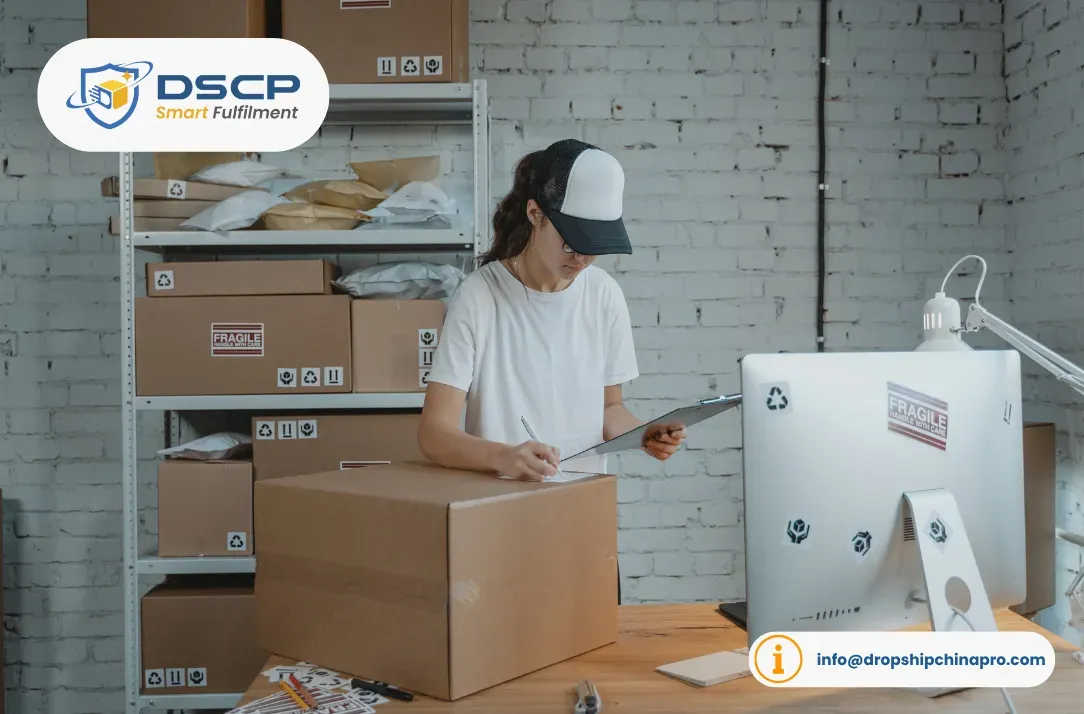
Packing quality matters significantly for customer experience and product protection. Professional fulfillment companies understand proper packaging techniques using appropriate cushioning materials, box sizes, and sealing methods. They accommodate special requirements, including fragile item handling, gift wrapping services, or branded packaging materials that enhance the unboxing experience customers increasingly value.
Shipping and Carrier Management
Coordinating with shipping carriers represents a critical fulfillment service capability. The best fulfillment companies for ecommerce maintain established relationships with multiple carriers, including USPS, UPS, FedEx, DHL, and regional providers. This carrier diversity ensures competitive shipping rates through volume discounts and provides service redundancy if one carrier experiences operational issues.
Shipping speed has become a competitive necessity in modern ecommerce. Research indicates that 48% of online shoppers abandon shopping carts due to unsatisfactory shipping costs or slow delivery times (Baymard Institute, 2024). Fulfillment partners help you offer multiple shipping options—from economical ground service taking 5-7 days to premium overnight delivery—giving customers choice while managing total logistics costs effectively.
Carrier management includes handling shipping exceptions, processing insurance claims for lost or damaged packages, and managing the complex logistics of international shipments across customs regulations. These administrative tasks consume significant time and require specialized knowledge when managed internally but become routine operational procedures when handled by experienced fulfillment professionals.
Returns Processing and Reverse Logistics
Returns management often receives insufficient attention when evaluating fulfillment services, yet it significantly influences customer satisfaction and lifetime value. A smooth, customer-friendly returns process encourages hesitant buyers to complete purchases and promotes repeat orders, while complicated returns create frustration that damages brand reputation.
Quality fulfillment companies provide comprehensive reverse logistics services. They receive returned packages, inspect items for damage or signs of use, determine restocking eligibility based on your policies, and update inventory counts accordingly. Products in resalable condition return to your available stock quickly, while damaged or used items get documented with photos and segregated for your review.
The returns process involves several operational decisions affecting customer experience and cost control. How quickly can returned items get processed and restocked for resale? What disposition procedures apply to damaged products? Who absorbs return shipping costs under different scenarios? Clear policies and efficient execution on these operational questions separate exceptional fulfillment partners from mediocre providers.

Advanced Services That Drive Growth
Beyond core fulfillment capabilities, advanced service offerings differentiate top-tier providers from basic warehouse operations. These enhanced capabilities help ecommerce businesses compete more effectively in crowded markets and scale operations more efficiently. Not every business requires all these services immediately, but understanding available options helps you identify opportunities for competitive advantage and operational improvement.
Multi-Channel Integration Capabilities
Modern ecommerce brands rarely limit sales to a single channel. Your business might operate a Shopify store, maintain Amazon seller accounts, list products on eBay or Walmart Marketplace, and fulfill wholesale orders—all requiring coordinated inventory management and order fulfillment. Multi-channel integration services synchronize operations across all your sales platforms through unified systems.
Strong integration capabilities prevent overselling situations where you sell the same product unit twice because inventory levels did not update quickly enough across platforms. The fulfillment company’s technology connects with each sales channel through APIs or direct integrations, updating available stock quantities in real-time as orders are processed and new inventory arrives. This synchronization maintains accurate product availability across all selling platforms simultaneously.
Integration extends beyond inventory quantities to include automated order routing, shipping confirmation notifications, and tracking information updates. When customers purchase through any channel, they receive consistent communication and service quality. This seamless experience builds customer trust and encourages repeat purchases regardless of which platform customers prefer for shopping.
Custom Packaging and Branding Options
Product packaging significantly influences customer perception and brand recall. Generic corrugated boxes work adequately for commodity products competing primarily on price, but brands building customer loyalty need packaging reflecting their identity and values. Custom packaging services let you create memorable unboxing experiences without managing packaging material sourcing and storage yourself.
Fulfillment companies offering custom packaging can source branded boxes, tissue paper, custom stickers, thank-you cards, and promotional inserts according to your specifications. They store these materials in warehouse inventory and apply them during the packing process for relevant orders. Some providers even accommodate special touches like handwritten notes or seasonal promotional items, varying by campaign.
The cost-benefit analysis of custom packaging depends heavily on your business model, profit margins, and brand positioning strategy. Direct-to-consumer lifestyle brands often benefit substantially from enhanced packaging that creates social media moments, while businesses competing primarily on price and convenience might prioritize cost efficiency over presentation. Quality fulfillment partners help you evaluate options and find the appropriate balance for your specific situation.
Inventory Forecasting and Management
Advanced inventory management capabilities extend beyond tracking current stock levels to predicting future needs based on historical data and trend analysis. Sophisticated fulfillment partners analyze your sales patterns across different timeframes, identify seasonal trends and growth trajectories, and provide data-driven recommendations about optimal reorder timing and quantities.
Real-time inventory visibility combined with predictive analytics can reduce stockout situations by up to 30% according to supply chain management research (Council of Supply Chain Management Professionals, 2024). This improvement stems from better data access and more informed decision-making. When you can see precisely which products are selling at what velocity, you make purchasing decisions that optimize cash flow while preventing lost sales from inventory gaps.
Some fulfillment companies integrate inventory data directly with your accounting systems, automatically tracking cost of goods sold, calculating inventory valuations, and providing detailed financial reporting. This integration eliminates manual data entry errors and provides clearer visibility into your business economics and product profitability.
International Shipping and Global Distribution
Expanding sales internationally presents significant logistical challenges for ecommerce businesses. Different countries maintain varying customs requirements, import duty structures, prohibited item lists, and shipping documentation standards. Fulfillment companies with international expertise navigate these complexities on your behalf, handling paperwork and ensuring regulatory compliance.
Global distribution strategies often involve storing inventory in multiple countries to reduce international shipping costs and delivery timeframes. A fulfillment partner operating international warehouse locations can position your products near customer concentrations in different markets. This distributed inventory approach makes international order fulfillment costs and delivery speeds comparable to domestic service levels.
International fulfillment services include customs documentation preparation, landed cost calculation including duties and taxes, and compliance with import regulations specific to destination countries. These administrative requirements become particularly complex when shipping to multiple international markets simultaneously. Experienced fulfillment partners maintain current knowledge of changing regulations and handle required paperwork accurately.
| Fulfillment Model | Key Benefit |
|---|---|
| 3PL Fulfillment | Scalable operation with fast delivery |
| Direct-to-Consumer | Personalized packaging and customer focus |
| Hybrid Fulfillment | Combines global sourcing with local speed |
Specialized Fulfillment Models Explained
The fulfillment industry offers various service models designed for different business requirements and operational preferences. Understanding these distinct models helps you identify which approach aligns best with your products, order volume patterns, and growth plans. Each model presents particular advantages and considerations worth evaluating carefully.
Traditional 3PL Fulfillment Services
Third-party logistics providers offer the most established fulfillment model for ecommerce businesses of various sizes. These companies operate dedicated warehouse facilities, employ trained fulfillment staff, and provide the complete spectrum of services discussed in previous sections. You ship inventory to their facility location, and they assume responsibility for all fulfillment operations from that point forward.
Traditional 3PL arrangements work effectively for businesses with consistent order volume, standard product dimensions, and straightforward fulfillment requirements without extensive customization needs. The pricing structure typically includes monthly storage fees based on space utilization, per-order pick and pack charges, and actual shipping costs at negotiated carrier rates. Most 3PLs offer volume-based discounts as your business grows and order quantities increase.
For businesses ready to evaluate 3PL providers systematically, understanding the specific questions to ask and evaluation criteria becomes essential. The selection process involves comparing capabilities, pricing structures, technology platforms, and service quality indicators across multiple potential partners.
Hybrid Fulfillment: Combining Global Sourcing with Local Delivery
Hybrid fulfillment models represent an innovative approach combining international product sourcing advantages with domestic fulfillment center benefits. This model allows businesses to access competitive global wholesale pricing and manufacturing costs while delivering products quickly from local warehouse locations, meeting customer delivery expectations.
The hybrid approach operates by sourcing products internationally from regions where manufacturing costs are substantially lower, then shipping bulk inventory to strategically positioned domestic fulfillment centers. When customers place orders, products ship from the nearby domestic warehouse location, providing delivery speeds comparable to major retailers while maintaining cost advantages from international sourcing.
This model proves particularly effective for businesses importing products from overseas manufacturers but wanting to provide domestic-level service quality and shipping speeds that build customer satisfaction. By combining global sourcing economics with local fulfillment speed, businesses optimize both profitability and customer experience simultaneously.
Direct-to-Consumer (DTC) Fulfillment
Direct-to-consumer fulfillment focuses specifically on businesses selling products directly to end customers rather than through traditional retail channels or wholesale distributors. DTC fulfillment emphasizes customer experience excellence, from packaging presentation to shipping speed and order accuracy standards.
DTC fulfillment services often include enhanced packaging options, gift messaging capabilities, flexible shipping speed choices, and careful handling procedures. These features support the personalized, premium experience many DTC brands promise their customers as a key differentiator from traditional retail experiences.
The DTC model typically involves smaller individual order sizes but higher order frequency compared to wholesale fulfillment operations. Order accuracy becomes especially critical since each shipment goes directly to a consumer who immediately notices any mistakes. One fulfillment error can damage brand reputation and lose a customer permanently in competitive markets.
Subscription Box and Recurring Order Fulfillment
Subscription-based businesses present unique fulfillment requirements, distinguishing them from standard ecommerce operations. Orders ship on predictable schedules—monthly, quarterly, or other intervals—often with customized contents based on subscriber preferences, selected plan tiers, or curated selections varying by cycle.
Subscription fulfillment involves careful inventory planning, ensuring sufficient stock availability for each shipping cycle, sophisticated picking systems handling product variations across different subscription levels, and often special packaging requirements, creating excitement for recurring deliveries. Some subscription models include curated product selections requiring assembly or “kitting” services before packaging.
The recurring nature of subscription orders creates predictable fulfillment volume patterns, benefiting both parties. You gain reliable service availability during scheduled shipping windows, while the fulfillment company enjoys steady, predictable business volume, enabling better resource planning and potentially preferential pricing arrangements.
Service Tiers: Matching Services to Your Business Size
Fulfillment companies for ecommerce typically structure service offerings into tiers, accommodating businesses at different growth stages. Understanding these tiers helps you identify providers serving your current operational scale while offering growth pathways as your business expands. Selecting a fulfillment partner appropriately scaled to your needs prevents overpaying for unused capabilities or outgrowing a provider’s capacity too quickly.
Fulfillment for Small Businesses (Under 500 Orders/Month)
Small ecommerce businesses processing fewer than 500 monthly orders require different fulfillment approaches than larger operations. At this volume level, flexibility and reasonable minimum requirements matter more than sophisticated features or extensive warehouse networks.
Fulfillment providers serving small businesses typically offer:
- Low or zero monthly minimum order requirements, avoiding penalties during slower periods
- Simplified onboarding processes with faster implementation timelines
- Straightforward pricing structures with transparent fee schedules
- Essential integrations with popular ecommerce platforms like Shopify, WooCommerce, and BigCommerce
- Responsive customer support accessible through multiple channels
Small business fulfillment services focus on core capabilities—reliable storage, accurate order processing, and competitive shipping rates—without complex value-added services that smaller operations may not need initially. The goal is to provide professional fulfillment at accessible price points for growing businesses.
Mid-Size Business Solutions (500-5,000 Orders/Month)
Mid-size ecommerce businesses processing 500 to 5,000 monthly orders represent the growth phase where fulfillment efficiency significantly impacts profitability and customer satisfaction. At this volume, businesses need more sophisticated capabilities supporting expansion while maintaining service quality.
Mid-size business fulfillment typically includes:
- Multi-location warehousing options, reducing shipping distances and costs
- Advanced inventory management with forecasting and automated reorder alerts
- Custom packaging and branding capabilities supporting brand development
- Enhanced reporting and analytics tracking performance metrics
- Dedicated account management providing personalized support
- Scalable pricing structures rewarding volume growth
Businesses at this stage often expand into multiple sales channels requiring integrated order management. They need fulfillment partners capable of handling complexity while maintaining the responsiveness and flexibility that served them during earlier growth stages.
Enterprise-Level Fulfillment Services
Enterprise ecommerce operations processing over 5,000 monthly orders require comprehensive fulfillment capabilities supporting sophisticated business models. These large-scale operations need providers offering extensive features, geographic coverage, and operational stability.
Enterprise fulfillment services provide:
- National or international warehouse networks enabling optimized inventory distribution
- Advanced technology platforms with API access for custom integrations
- Specialized handling for diverse product types and special requirements
- Volume-based pricing with negotiated rates reflecting substantial order quantities
- Dedicated account teams, including operations managers and customer service representatives
- Service level agreements guaranteeing performance standards
- Custom solutions addressing unique business requirements
Enterprise businesses typically negotiate customized service agreements reflecting their specific operational needs, volume commitments, and growth projections. The relationship becomes a strategic partnership rather than a transactional service arrangement.
| Technology | Benefit |
|---|---|
| Real-Time Inventory Tracking | Prevents overselling and stockouts |
| Platform Integration | Automates orders and updates inventory |
| Warehouse Management System | Optimizes storage and picking routes |
Technology and Integration Services
Technology infrastructure represents the backbone enabling modern fulfillment operations to execute efficiently at scale. Understanding the technological capabilities fulfillment companies offer helps you evaluate how well potential partners will integrate with your existing systems and support your operational requirements.
Warehouse Management Systems (WMS)
A robust warehouse management system coordinates all activities within the fulfillment center, from receiving inventory to shipping completed orders. Quality WMS platforms optimize storage locations, direct picking routes, manage labor allocation, and track every item movement throughout the facility.
The WMS determines operational efficiency throughout the fulfillment process. Advanced systems use algorithms to optimize where products are stored based on velocity—frequently ordered items get placed in easily accessible locations while slower-moving inventory occupies less convenient spaces. This optimization reduces picking time and labor costs.
From your perspective as a client, the WMS provides visibility into inventory quantities, locations, and movement. You can access this information through web dashboards or mobile applications, enabling real-time monitoring of your fulfillment operations without requiring direct facility access.
Real-Time Inventory Tracking
Real-time inventory visibility has become essential for effective ecommerce operations, particularly for businesses selling across multiple channels. Accurate, current inventory data prevents overselling situations, enables confident promotional planning, and supports better purchasing decisions.
Modern fulfillment companies provide inventory tracking updated continuously as events occur—receiving new inventory, fulfilling orders, processing returns, or adjusting counts after cycle counting. This immediate visibility contrasts with older systems that update inventory only daily or weekly, creating gaps where errors accumulate.
Real-time tracking extends beyond simple quantity updates to include detailed information about inventory status. You can see not just total units but how many are available for sale versus allocated to pending orders, in receiving but not yet processed, or designated for specific purposes like samples or replacements.
Ecommerce Platform Integrations
Seamless integration between your ecommerce platform and the fulfillment company’s systems eliminates manual order entry and reduces errors. Pre-built integrations with major platforms like Shopify, WooCommerce, BigCommerce, Magento, and Amazon make implementation faster and more reliable than custom development.
These integrations automatically transfer order information from your store to the fulfillment center when customers complete purchases. Order details—products, quantities, shipping addresses, selected shipping methods—flow directly into the fulfillment system, triggering the picking and packing process.
Integration works bidirectionally, returning information from the fulfillment center back to your ecommerce platform. Shipping confirmations, tracking numbers, and inventory updates flow back automatically, enabling automated customer notifications and maintaining accurate product availability displayed on your website.
API Capabilities and Custom Connections
Beyond pre-built integrations, API access enables custom connections between your fulfillment provider’s systems and specialized software your business uses. APIs (Application Programming Interfaces) provide structured methods for different software systems to exchange data and trigger actions programmatically.
API capabilities become particularly important for businesses using custom-built systems, enterprise resource planning (ERP) platforms, or specialized order management software. Rather than adapting your existing systems to match the fulfillment provider’s limitations, APIs enable flexible integration, preserving your current workflows.
The quality and documentation of a fulfillment company’s API significantly impact implementation complexity. Well-designed APIs with comprehensive documentation, clear error handling, and responsive technical support enable smooth custom integrations. Poorly documented or limited APIs create ongoing technical challenges requiring additional development resources.
Value-Added Services That Enhance Customer Experience
Beyond core fulfillment operations, many providers offer value-added services, creating differentiation and enhancing the customer experience. These supplementary capabilities address specific business needs or enable creative approaches to customer engagement. Evaluating which value-added services matter for your business model helps identify fulfillment partners offering relevant capabilities.
Gift Wrapping and Special Packaging
Occasions like birthdays, holidays, and celebrations drive substantial ecommerce purchases. Gift wrapping services enable customers to send thoughtfully presented gifts without handling the packaging themselves. This convenience adds value that customers appreciate and will pay extra to receive.
Fulfillment companies offering gift services typically provide several options—different wrapping paper styles, gift bags, ribbon colors, and greeting card designs. Customers select preferences during checkout, and fulfillment staff apply the appropriate packaging and include personalized messages.
Beyond special occasions, some brands use distinctive packaging as a signature element of their customer experience. Custom boxes with branded designs, tissue paper in company colors, and carefully designed unboxing experiences create memorable moments customers share on social media, providing free marketing exposure.
Product Kitting and Bundling
Kitting services involve assembling multiple items into a single package unit before storage or order fulfillment. This service proves valuable for businesses selling product bundles, subscription boxes, promotional packages, or items requiring assembly of multiple components before shipping.
The kitting process involves receiving separate items, assembling them according to your specifications, and creating a new SKU representing the complete kit. Once assembled, kits get stored as individual units and fulfilled like any other product. This approach simplifies order fulfillment for bundled products and can enable promotional strategies requiring limited-time special packaging.
Some businesses use kitting to create sample packs, trial sizes, or seasonal gift sets without maintaining these configurations in their primary inventory. The fulfillment center assembles kits on demand as orders arrive, providing flexibility to adjust bundle contents without accumulating pre-assembled inventory that might become obsolete.
Quality Control and Inspection
Quality control services provide additional inspection and verification beyond standard receiving procedures. This extra scrutiny helps ensure products meet your specifications before storage and reduces customer complaints about damaged or defective merchandise.
Quality control processes vary by product type and inspection requirements. They might include dimensional verification, functional testing, visual inspection for defects, comparison against reference samples, or specialized testing for specific product categories. The inspection process gets documented with photos and notes, becoming part of your inventory records.
Enhanced quality control proves particularly valuable when sourcing products internationally, where manufacturing quality can vary, selling products with complex specifications, or launching new products where manufacturing processes are still being refined. The inspection provides quality assurance without requiring you to personally examine every unit.
Product Photography and Labeling
Some fulfillment providers offer product photography services, capturing images of your inventory as part of the receiving process. These photos serve multiple purposes—they document product condition upon receipt, provide images for your ecommerce listings, and create visual records for inventory management.
Labeling services apply barcodes, SKU labels, or compliance labels required for various purposes. Retail compliance labels meet the specific requirements of major retailers like Walmart or Target. Amazon FBA labels enable products to enter Amazon’s fulfillment network. Barcodes facilitate inventory tracking throughout the fulfillment process.
These services prove particularly helpful for businesses receiving products from overseas manufacturers where labels may be missing, incorrect, or not meeting domestic market requirements. The fulfillment center applies correct labels during receiving, ensuring products are ready for sale without additional handling.
| Service | Description |
|---|---|
| Warehousing | Secure storage with inventory management |
| Order Processing | Accurate picking, packing, and shipping |
| Returns Management | Efficient reverse logistics and restocking |
Questions to Ask About Service Capabilities
Selecting the right fulfillment companies for ecommerce requires thorough evaluation of their capabilities, processes, and compatibility with your business requirements. Asking the right questions during your search helps you identify providers truly suited to your needs rather than settling for inadequate service. This section provides a practical framework for evaluating potential fulfillment partners.
Service Coverage Questions
Understanding a provider’s service capabilities and geographic coverage helps you assess whether they can support your current operations and future growth plans. Essential questions to ask include:
- What geographic regions do your warehouse facilities serve?
- Can you support shipping to Alaska, Hawaii, and US territories if needed?
- What international shipping capabilities do you offer?
- Do you provide distributed inventory across multiple warehouses?
- What same-day or next-day delivery options are available?
- How do you handle shipping during peak seasons like holidays?
- What backup plans exist if your primary facility experiences disruption?
These questions reveal whether the provider’s network aligns with your customer base and shipping promises. Geographic limitations can prevent you from serving certain markets or require expensive shipping upgrades to maintain delivery speed commitments.
Technology and Reporting Questions
Technology integration and data visibility significantly impact operational efficiency. Questions addressing these areas include:
- What ecommerce platforms do you integrate with directly?
- Do you offer API access for custom integrations?
- How frequently does inventory data update in your system?
- What reports and analytics do you provide?
- Can I access real-time dashboards showing current operations?
- How do tracking updates flow back to customers?
- What happens if your technology systems experience downtime?
Technology capabilities determine how smoothly the fulfillment provider fits into your existing operational workflow. Poor integration creates manual work and increases error potential, while seamless technology connections enable automated operations and better data visibility.
Pricing and Contract Questions
Understanding complete costs and contract terms prevents unexpected fees and ensures the partnership remains economically viable. Important pricing questions include:
- What are your monthly minimum requirements?
- How do you calculate storage fees?
- What are the pick and pack costs per order?
- Are there additional fees for special requirements?
- How much notice is required to terminate service?
- What setup and onboarding costs apply?
- Do you charge for receiving inventory?
- Are there fees for long-term storage of slow-moving inventory?
Comprehensive pricing transparency enables accurate cost projections and prevents surprise charges that damage profitability. Some providers advertise attractive base rates but add numerous fees for routine activities, making total costs significantly higher than initially apparent.
How to Match Services to Your Business Needs
Successfully selecting fulfillment services requires understanding your specific business requirements and matching them to provider capabilities. This process involves honest assessment of your current situation, clear identification of priorities, and realistic projections about future needs. Following a structured approach increases the likelihood of finding a fulfillment partner supporting both immediate operations and long-term growth.
Assess Your Current Order Volume and Complexity
Begin by analyzing your current fulfillment situation quantitatively. Document key metrics, including:
- Average monthly order volume and seasonal variations
- Average items per order and order complexity
- Product SKU count and inventory turnover rates
- Current storage space utilization
- Geographic distribution of your customer base
- Percentage of orders requiring special handling
This assessment establishes your baseline requirements. A business shipping 200 simple orders monthly has different needs than one shipping 2,000 complex orders with multiple SKUs. Accurate self-assessment ensures you evaluate providers appropriately scaled to your operations.
Consider your fulfillment pain points specifically. Are you struggling with storage capacity? Is order processing consuming excessive time? Do shipping costs seem too high? Are inventory accuracy problems causing stockouts or overselling? Identifying specific challenges helps you prioritize which fulfillment capabilities matter most for your situation.
Identify Must-Have vs. Nice-to-Have Services
Distinguish between essential capabilities you require immediately and desirable features you might want eventually. Must-have services are non-negotiable requirements for basic operations:
- Integration with your current ecommerce platform
- Storage capacity for your inventory quantities
- Shipping coverage for your primary markets
- Order processing speed meets your customer promises
- Pricing structures fitting your budget constraints
Nice-to-have services provide additional value but aren’t critical initially:
- Custom packaging and branding capabilities
- Advanced reporting and analytics dashboards
- International shipping for potential future expansion
- Subscription box or kitting services for possible product diversification
- Multiple warehouse locations for optimized distribution
This prioritization prevents you from overpaying for sophisticated capabilities you don’t need yet while ensuring your core requirements get met adequately. As your business grows and needs evolve, you can add services or transition to providers offering more advanced capabilities.
Plan for Seasonal Fluctuations
Most ecommerce businesses experience seasonal volume variations, creating fulfillment challenges. The holiday shopping season typically generates order volumes two to five times higher than average months. Without adequate planning, these peaks strain fulfillment operations, causing delays and errors.
When evaluating fulfillment companies for ecommerce, discuss your seasonal patterns explicitly. Ask how they handle volume fluctuations and what happens if your orders exceed projections. Quality providers maintain excess capacity and flexible staffing, enabling them to scale operations during peak periods without service degradation.
Consider seasonal storage requirements as well. If you build inventory before holiday seasons or promotional periods, you’ll need storage capacity exceeding your average needs for several months. Understand how storage fees work during these periods and whether the provider can accommodate temporary inventory increases without long-term commitments.
Real-World Application: How Fulfillment Services Solve Business Challenges
Understanding fulfillment services theoretically is valuable, but seeing how they solve real business problems makes the benefits concrete. Consider this scenario illustrating how professional fulfillment addresses common ecommerce challenges.
Background: A small beauty products company was successfully selling through their Shopify store and Amazon, processing about 600 orders monthly from the founder’s garage. As sales grew, the founder faced increasing challenges:
- 3-4 hours daily spent packing and shipping orders
- No time for product development or marketing
- Customer complaints about shipping delays during busy periods
- Inventory management becoming increasingly complex across two sales channels
- Garage storage reaching maximum capacity
Fulfillment Solution Implemented: The company partnered with a 3PL provider offering:
- Shopify and Amazon integration for automated order routing
- 5,000 square feet of climate-controlled warehouse space
- Next-day order processing with same-day fulfillment for orders received before noon
- Custom packaging with branded tissue paper and thank-you cards
- Real-time inventory management, preventing overselling across channels
Results After Six Months:
- Order volume increased 140% due to the founder focusing on marketing instead of fulfillment
- Customer complaints decreased by 85% due to faster, more consistent shipping
- Shipping costs reduced 22% through the 3PL’s carrier volume discounts
- Product development accelerated with the time previously spent on fulfillment operations
- Successful expansion into two new sales channels supported by existing fulfillment infrastructure
This example demonstrates how appropriate fulfillment services solve multiple problems simultaneously—operational capacity, time management, cost efficiency, and growth enablement. The investment in professional fulfillment services paid for itself through improved efficiency and enabled revenue growth that would have been impossible while self-fulfilling orders.
FAQs About Fulfillment Companies for Ecommerce
What is an eCommerce fulfillment company?
An ecommerce fulfillment company is a third-party provider that handles warehousing, order processing, packing, and shipping for online retailers. They store your inventory, fulfill customer orders, and manage returns, allowing you to focus on growing your business instead of logistics operations.
What is the best fulfillment company?
The best fulfillment company depends on your order volume, product type, and geographic needs. Small businesses should prioritize low minimums and simple pricing. Growing businesses need multi-location networks and technology integration. Evaluate providers based on warehouse locations, shipping speed, pricing transparency, and customer service quality.
What is fulfillment in eCommerce?
Fulfillment in ecommerce is the complete process of storing inventory, processing orders, packing products, and shipping them to customers. It includes warehouse management, order picking, packaging, carrier coordination, and returns handling. Efficient fulfillment ensures fast, accurate deliveries that keep customers satisfied.
What is 3PL eCommerce fulfillment?
3PL ecommerce fulfillment means outsourcing your logistics operations to a third-party provider. You ship bulk inventory to their warehouse, and they handle individual customer orders, including storage, picking, packing, shipping, and returns. This provides scalability without investing in your own warehouse infrastructure.
What is B2B fulfillment?
B2B fulfillment handles orders between businesses rather than individual consumers. It involves larger order quantities, palletized shipping, retail compliance labeling, and deliveries to commercial locations. B2B fulfillment often requires EDI integration and follows different processes than direct-to-consumer operations.
What is fulfillment in Shopify?
Fulfillment in Shopify is how you get products to customers after orders are placed. Options include self-fulfillment, Shopify Fulfillment Network, or third-party integrations. When integrated, orders automatically sync to your fulfillment provider, who ships products and sends tracking updates back to your store.
What is a 3PL contract solution?
A 3PL contract solution is a service agreement outlining fulfillment services, pricing, and terms between your business and a logistics provider. Contracts specify storage fees, order processing costs, service standards, minimum requirements, and contract duration. Terms range from flexible month-to-month to multi-year agreements with volume pricing.
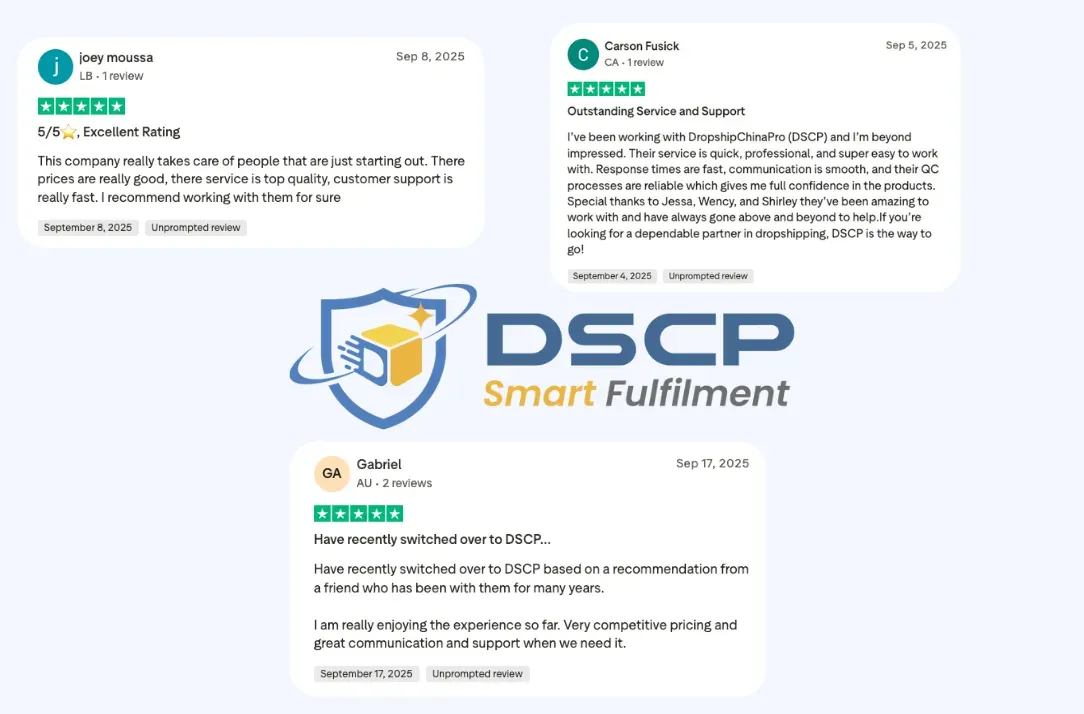
What Our Clients Say: Real Success Stories
Choosing the right fulfillment partner makes a tangible difference in your daily operations and business growth. These testimonials from real ecommerce entrepreneurs show how professional fulfillment services transform businesses.
Carson’s Experience: Outstanding Service and Support
As Carson Fusick from California shares, “I’ve been working with DropshipChinaPro (DSCP) and I’m beyond impressed. Their service is quick, professional, and super easy to work with. Response times are fast, communication is smooth, and their QC processes are reliable which gives me full confidence in the products. Special thanks to Jessa, Wency, and Shirley. They’ve been amazing to work with and have always gone above and beyond to help. If you’re looking for a dependable partner in dropshipping, DSCP is the way to go!”
Carson’s experience highlights what separates exceptional fulfillment providers from average ones—responsive communication, reliable quality control, and a team that genuinely cares about client success. When your fulfillment partner proactively supports your business rather than simply processing orders, you gain confidence to focus on growth strategies, knowing your operations are in capable hands. This level of service consistency becomes especially valuable during peak seasons or when launching new products that require extra attention to detail.
Joey’s Success: Excellent Support for Growing Businesses
Joey Moussa from Lebanon emphasizes the beginner-friendly approach: “This company really takes care of people who are just starting out. Their prices are really good, their service is top quality, customer support is really fast. I recommend working with them for sure.”
Starting an ecommerce business feels overwhelming when you’re navigating warehousing, shipping logistics, and inventory management for the first time. Joey’s five-star experience demonstrates how the right fulfillment partner provides more than logistics services—they offer guidance and support, helping new entrepreneurs establish solid operational foundations.
Fast customer support means your questions get answered quickly, preventing small issues from becoming costly problems. Competitive pricing allows growing businesses to maintain healthy margins while delivering professional service quality that builds customer loyalty from day one.
Gabriel’s Transition: Smooth Switch Based on Trust
Gabriel from Australia explains his decision: “Have recently switched over to DSCP based on a recommendation from a friend who has been with them for many years. I am really enjoying the experience so far. Very competitive pricing and great communication and support when we need it.”
Switching fulfillment providers involves significant operational risk—inventory transfers, system integrations, and potential service disruptions during transition periods. Gabriel’s smooth experience shows that established fulfillment companies have refined onboarding processes, minimizing disruption while quickly demonstrating value through competitive pricing and responsive support.
When long-term clients confidently recommend a provider to friends and colleagues, it speaks volumes about consistent service quality over time. This track record of reliability matters more than promotional promises, giving you confidence that your partnership will remain strong as your business scales and requirements evolve.
These real experiences from ecommerce entrepreneurs across different countries and business stages demonstrate the concrete benefits professional fulfillment services provide. From responsive customer support and quality control processes to competitive pricing and smooth transitions, the right fulfillment partner becomes an essential asset supporting your business growth and operational excellence.
Ready to Transform Your Ecommerce Fulfillment?
Don’t let fulfillment challenges hold back your business growth. DSCP Smart Fulfillment combines competitive global product sourcing with fast, reliable delivery from our strategically located US warehouses in Pomona, California and New Brunswick, New Jersey.
Why Growing Businesses Choose DSCP:
- US-Based Warehouses for lightning-fast domestic delivery that meets customer expectations
- Global Product Sourcing to access wholesale pricing while maintaining fast shipping speeds
- Quality Control ensuring every product meets your standards before reaching customers
- Private Label Solutions to build your brand with custom packaging and labeling
- Virtual Local Fulfillment giving you a competitive edge with local presence nationwide
- Worldwide Delivery supporting your expansion into international markets
Whether you’re shipping your first 100 orders or scaling past 10,000 monthly, our fulfillment experts are ready to help you optimize operations, reduce costs, and delight your customers.
Get started today. Contact our team for a free consultation and discover how DSCP Smart Fulfillment can become your competitive advantage.
[Explore Our Services] | [Discover US Fulfillment] | [Contact Our Team]
Conclusion
Fulfillment companies for ecommerce provide essential infrastructure enabling online retailers to scale efficiently without massive capital investment in warehouses, equipment, and logistics staff. Understanding the full spectrum of available services—from core operations like warehousing and shipping to advanced capabilities like inventory forecasting and multi-channel integration—helps you identify which capabilities align with your business model and growth objectives.
The right fulfillment partner becomes a strategic asset supporting your business growth rather than simply a vendor executing orders. They provide operational expertise, technology infrastructure, and scalable capacity that would take years and significant capital to develop internally. As the global ecommerce market continues expanding, professional fulfillment services become increasingly essential for competitive success.
When evaluating potential fulfillment partners, focus on finding providers appropriately scaled to your current needs while offering growth pathways as your business expands. Prioritize transparent pricing, reliable technology integration, and responsive customer service. The time invested in thorough evaluation pays substantial dividends through years of successful partnership supporting your ecommerce operations.
For businesses seeking fulfillment solutions, whether you’re processing your first hundred orders or scaling past ten thousand monthly, professional fulfillment services can transform your operations. By outsourcing logistics complexity to specialized providers, you free resources and attention for the activities that truly grow your business—product development, marketing, customer relationships, and strategic planning.
References
- Armstrong & Associates. (2024). Global Third-Party Logistics Market Analysis and Trends. Armstrong & Associates, Inc.
- Baymard Institute. (2024). Cart Abandonment Rate Statistics. Retrieved from Link to Resource
- Council of Supply Chain Management Professionals. (2024). State of Logistics Report. CSCMP.
- Grand View Research. (2024). E-commerce Fulfillment Services Market Size, Share & Trends Analysis Report. Grand View Research, Inc.

Hi, I’m Yavuz. I help e-commerce businesses grow through strategic content and SEO. Here, I share insights on fulfillment solutions, 3PL partnerships, and digital marketing strategies based on real data and industry trends.