
E-commerce customers have made their expectations clear. They want their orders fast, familiar shipping carriers, and simple returns. Local fulfillment for e-commerce is the operational strategy that makes all of this possible. In 2026, it has become one of the most important factors differentiating competitive online stores from those struggling to retain customers.
This guide explains what local fulfillment is, why it directly impacts your bottom line, and how to implement it effectively, whether you are running a small dropshipping store or scaling a high-volume operation.
Key Takeaways: Local Fulfillment for E-Commerce
- 41% of online shoppers say delivery speed is the most important factor in their purchasing decision (Statista, 2024).
- Local fulfillment reduces average delivery times from 10-21 days to 2-5 days for most markets.
- Domestic shipping rates are typically 40-60% lower than international shipping for comparable distances.
- 25% of customers abandon their carts due to slow delivery times (McKinsey, 2023).
- Virtual local fulfillment allows e-commerce businesses to benefit from regional warehousing without owning physical warehouse space.
- For dropshipping businesses, local fulfillment addresses the trust and speed gaps created by international shipping.
What Is Local Fulfillment for E-Commerce?
Local fulfillment means storing inventory in warehouses within the same country or region as your customers and shipping orders from the facility closest to the buyer. Rather than routing every order from a single distant warehouse, a local fulfillment network distributes inventory across multiple regional locations.
The result is shorter transit times, lower shipping costs, and a delivery experience that feels domestic to the customer, even if the products were originally sourced internationally.
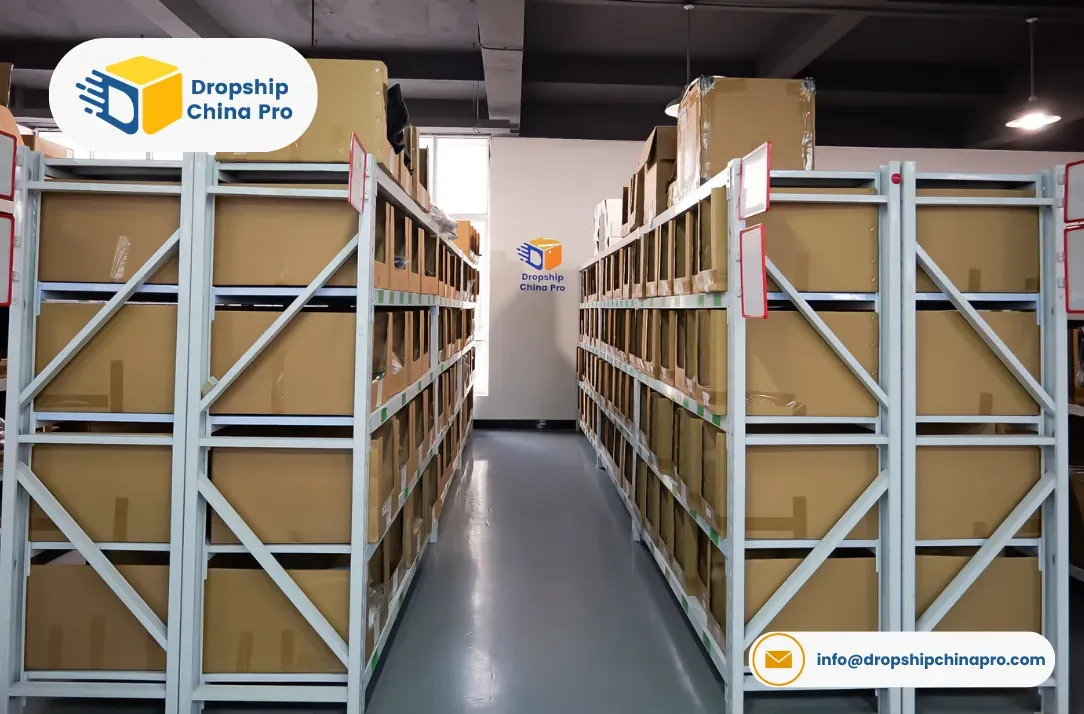
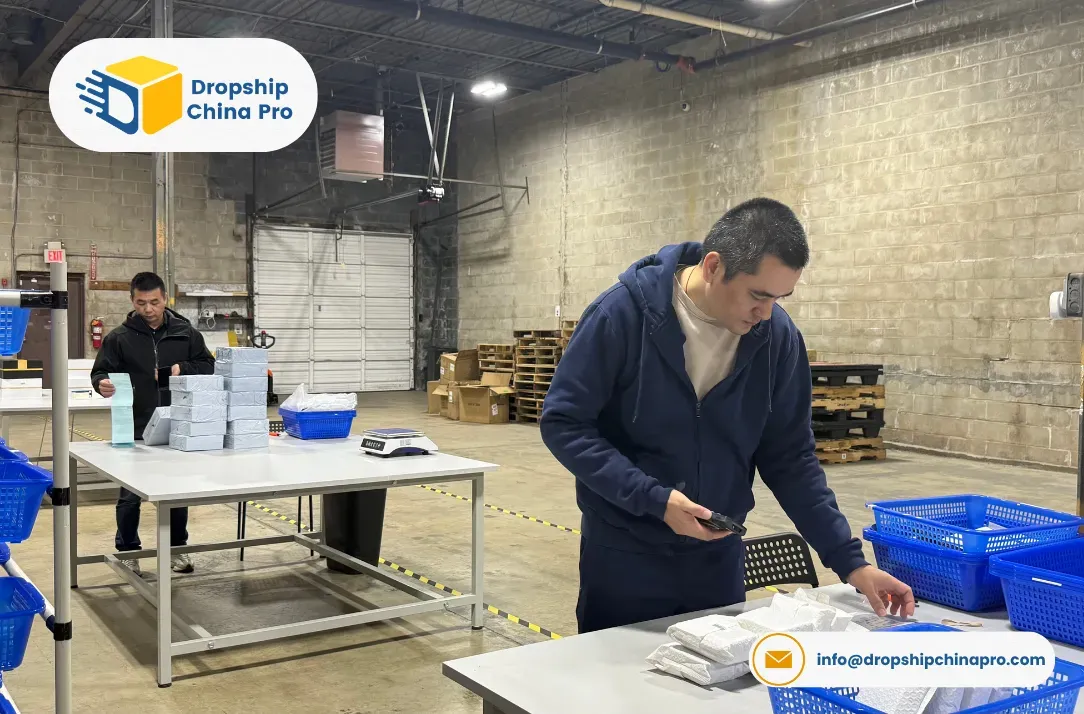
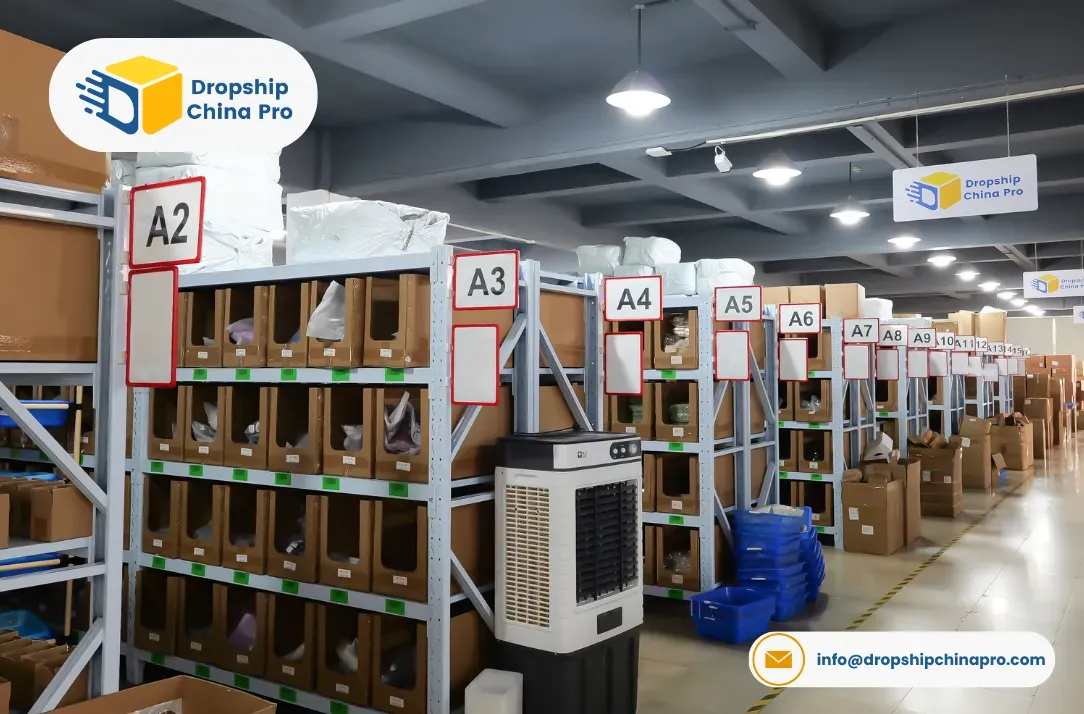
A local fulfillment center is the physical facility where this happens. It receives inventory, stores it, processes orders and dispatches shipments to nearby customers. E-commerce businesses typically work with third-party logistics providers (3PLs) to access these facilities without the overhead of owning or leasing warehouse space.
Why Local Fulfillment Directly Affects Your Revenue
Delivery speed is no longer a nice-to-have. It is a conversion factor. According to Statista, 41% of online shoppers cite delivery speed as the most important factor in their purchasing decisions (Statista, 2024). When a customer reaches your product page and sees a 14-day shipping estimate, many will simply leave and go to a competitor that offers faster delivery.
The data on cart abandonment reinforces this. Research from McKinsey found that 25% of shoppers abandon their carts directly because of slow delivery times (McKinsey, 2023). That is revenue lost not because of price, product quality, or your checkout experience, but purely because of where your inventory sits.
Local fulfillment solves this at the operational level. When your stock is positioned in regional warehouses, delivery estimates drop from weeks to days. Customers complete their purchases. Repeat purchase rates improve. And the positive reviews that follow compound into long-term brand credibility.
The Real Cost Advantage
Speed is the headline benefit of local fulfillment, but the cost story is equally compelling. Domestic shipping rates are consistently 40-60% lower than international rates for similar distances. Those savings flow directly to your margin or are passed to customers as more competitive delivery offers.
Consider a straightforward example. An electronics accessories store was spending $8-12 per order shipping from China to US customers. After moving inventory into fulfillment centers in California and New Jersey, their average shipping cost per order dropped to $4-6. They used those savings to offer free shipping on orders over $35, which increased average order value by 28% while maintaining margins.
The cost advantages extend beyond the per-order rate:
- Seasonal shipping surges affect international rates far more than domestic rates, so local fulfillment insulates you from peak-period price spikes.
- Fewer lost or delayed packages means fewer replacement shipments and customer service costs.
- Returns are cheaper and faster to process when customers send items back to a nearby facility.
- Distributed inventory across multiple regions prevents a single stockout from stopping all sales.
How Local Fulfillment Builds Customer Trust
International shipping creates uncertainty that customers actively try to avoid. Customs delays, unexpected import fees, unfamiliar carriers and complicated returns all introduce friction that erodes confidence before and after purchase.
According to the National Retail Federation, 73% of consumers say that easy returns are an important factor in deciding where to shop online (National Retail Federation, 2024). Local fulfillment addresses this directly. When customers see their order shipping from a domestic warehouse, they know their consumer protection laws apply, they recognise the carrier and understand what to do if something goes wrong.
This trust translates into measurable outcomes:
- Higher add-to-cart rates when domestic shipping is displayed on product pages.
- Lower checkout abandonment when delivery estimates are short and credible.
- Better post-purchase reviews that mention fast shipping and easy returns.
- Stronger customer retention because the experience meets or exceeds expectations.
A fashion accessories seller based in the UK experienced this directly. They were losing customers to competitors who offered faster delivery. After implementing local fulfillment through warehouses in London and Manchester, their average delivery time dropped from 12 days to 3 days. Customer complaints about shipping fell by 78%, and their repeat purchase rate increased by 34% within four months.
Virtual Local Fulfillment: The Flexible Model for Dropshippers
Not every e-commerce business can commit to holding large volumes of inventory in multiple warehouses. Virtual local fulfillment bridges this gap.
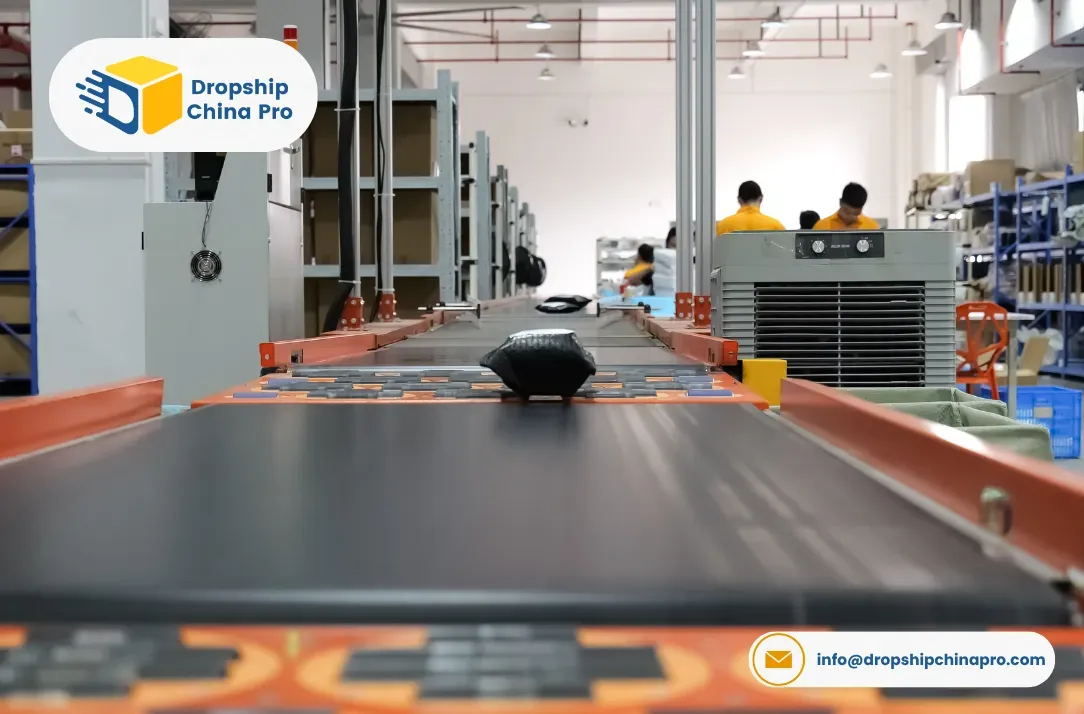
In a virtual local fulfillment model, businesses use a 3PL network to position inventory regionally without managing physical warehouse space themselves. The 3PL handles receiving, storage, picking, packing and dispatch. The merchant retains full visibility through a connected warehouse management system and pays based on usage rather than fixed overhead.
This model is particularly well-suited to dropshipping businesses. It preserves the model’s low-overhead nature while addressing its biggest competitive disadvantage: slow international delivery. Products sourced from China can be pre-shipped in bulk to regional fulfillment centers, then dispatched domestically to end customers within 2-5 days.
The e-commerce fulfillment services market reflects how rapidly this model is growing. The global market is projected to reach $272.14 billion by 2030 (Grand View Research, 2024), driven largely by the demand for faster regional delivery from businesses that cannot afford to build their own warehouse infrastructure.
Choosing the Right E-Commerce Fulfillment Partner
Selecting a 3PL or e-commerce fulfillment platform is one of the most consequential decisions a growing online store will make. The wrong partner creates the same problems local fulfillment is supposed to solve: delays, inaccurate inventory and poor customer experiences.
When evaluating e-commerce fulfillment services, look for:
- Warehouse locations that match where your customers are concentrated.
- Direct integration with your e-commerce platform, particularly Shopify.
- Real-time inventory visibility across all storage locations.
- Transparent per-order pricing with no hidden handling fees.
- Scalability that accommodates seasonal spikes without service degradation.
- Clear SLAs for order processing and dispatch cutoff times.
The geographic coverage of a fulfillment network matters as much as the technology behind it. A partner with facilities in the US, Europe and Asia-Pacific enables a single operational model to serve global customers with regional delivery speeds.
For Shopify stores, Dropship China Pro’s Shopify app connects your store directly to a distributed fulfillment network across the US and Europe, automating order routing and inventory tracking from a single dashboard.
Local Fulfillment vs International Shipping: A Direct Comparison
| Factor | International Shipping vs Local Fulfillment |
|---|---|
| Average Delivery Time | 10-21 days vs 2-5 days |
| Customs Risk | High vs None |
| Shipping Cost Per Order | $8-15 vs $4-8 |
| Return Complexity | High vs Low |
| Customer Trust | Lower vs Higher |
| Cart Abandonment Impact | High vs Low |
What the E-Commerce Community Says
Sellers discussing fulfillment in communities like r/ecommerce on Reddit consistently identify the same turning point: the moment they moved from pure international shipping to a regional fulfillment model, customer complaints about delivery dropped sharply and repeat purchase rates climbed. The recurring advice in those threads is to treat fulfillment not as a cost centre but as a marketing asset. Fast, reliable delivery is something customers talk about in reviews and recommend to others.
How Dropship China Pro Approaches Local Fulfillment
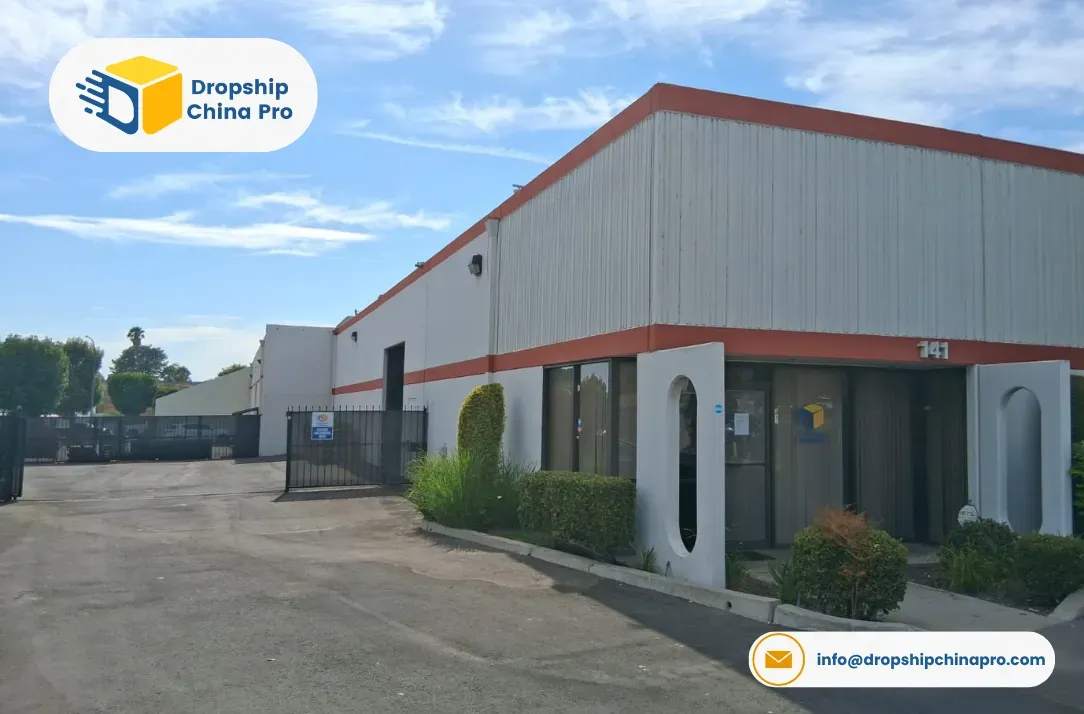
Dropship China Pro operates fulfillment centers across the United States (California and New Jersey) and Europe (UK and Germany), with global network coverage across 15+ warehouse locations. The model is built for e-commerce businesses that source products from China but need to deliver with domestic speed and confidence to customers worldwide.
DSCP’s approach combines product sourcing, quality control and regional fulfillment into a single workflow. Orders placed through connected Shopify stores are automatically routed to the nearest warehouse with available stock, dispatched within 1-2 business days and tracked in real time by both the merchant and the customer.
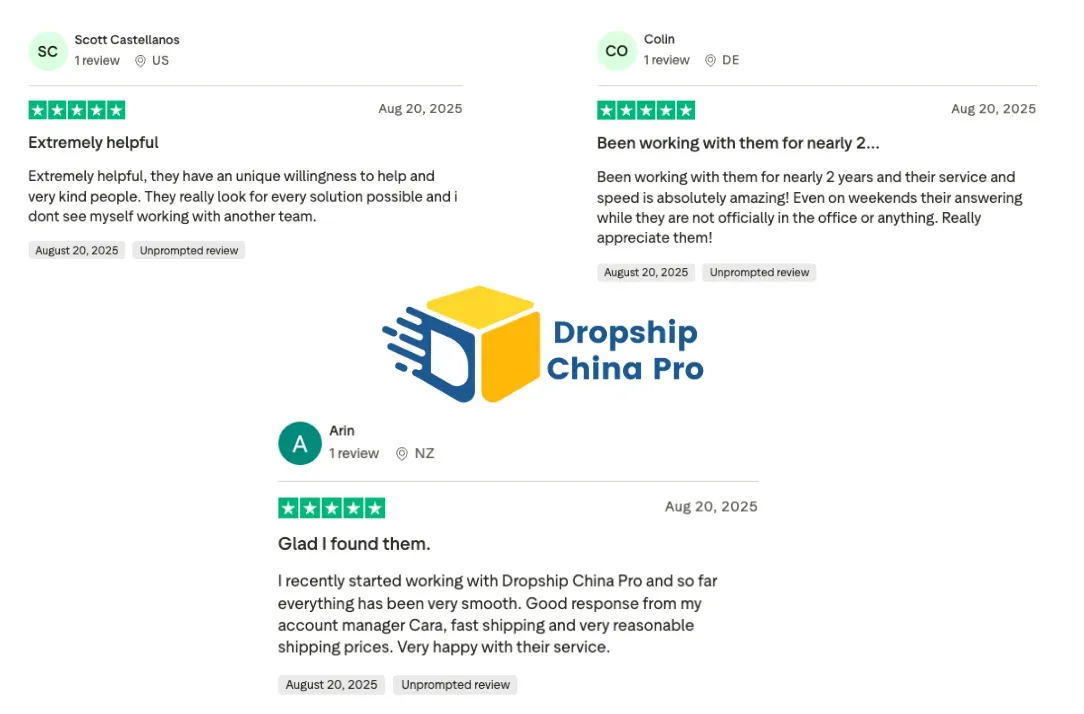
Here is what clients say about the experience:
“I recently started working with Dropship China Pro, and so far, everything has been very smooth. Good response from my account manager, Cara, fast shipping and very reasonable shipping prices. Very happy with their service.” — Arin, New Zealand.
“Been working with them for nearly 2 years and their service and speed are absolutely amazing. Even on weekends, they are answering while they are not officially in the office. Really appreciate them!” — Colin, Germany.
“Extremely helpful, they have a unique willingness to help and are very kind people. They really look for every solution possible and I don’t see myself working with another team.” — Scott, United States.
Frequently Asked Questions
What is local fulfillment for e-commerce?
Local fulfillment for e-commerce means storing inventory in warehouses in the same country or region as your customers and shipping orders from the nearest facility. It reduces delivery times, lowers shipping costs and improves the customer experience compared to international shipping from a single distant warehouse.
What is a local fulfillment center?
A local fulfillment center is a warehouse located near the target customer base. It receives, stores, and dispatches inventory on behalf of e-commerce businesses, enabling faster delivery than overseas shipping. Most e-commerce businesses use third-party logistics providers to access local fulfillment centers rather than operate their own facilities.
How much does e-commerce fulfillment cost?
Costs vary by provider, order volume and warehouse location. Most 3PL providers charge a combination of receiving fees, monthly storage fees and per-order fulfillment fees. Domestic shipping from a local fulfillment center typically costs $4-8 per order in the US, compared to $8-15 for international shipping from China.
Is local fulfillment suitable for dropshipping businesses?
Yes. Virtual local fulfillment is specifically designed for dropshipping businesses that want regional delivery speeds without holding large amounts of inventory. Products are pre-shipped in bulk from the sourcing country to regional warehouses, then dispatched domestically to end customers as orders come in.
What is 3PL e-commerce fulfillment?
3PL stands for third-party logistics. A 3PL e-commerce fulfillment provider manages warehousing, order processing and shipping on behalf of online stores. Businesses pay for the services they use rather than investing in their own warehouse infrastructure, making 3PL fulfillment a scalable and cost-efficient model for growing e-commerce brands.
How do I find a local fulfillment center near my customers?
Start by analyzing where the majority of your orders are shipped. If most customers are in the US, look for fulfillment partners with facilities in California and on the East Coast. For European customers, coverage from the UK and Germany warehouses reaches most of the continent within 2-4 days. A fulfillment partner with multiple regional locations can automatically route orders based on customer addresses.
Conclusion
Local fulfillment for e-commerce is not a logistics upgrade reserved for large brands. It is a practical, accessible strategy that directly improves conversion rates, reduces shipping costs, and builds the kind of customer trust that drives repeat purchases. For dropshipping businesses in particular, moving from pure international shipping to a virtual local fulfillment model is often the single biggest improvement available without changing products or pricing.
The businesses that treat fulfillment as a competitive advantage, not just an operational necessity, consistently outperform those that do not.
References
- Statista. (2024). Most Important Factors for Online Shoppers Survey. Statista Research Department.
- McKinsey. (2023). The State of Grocery in North America. McKinsey & Company.
- National Retail Federation. (2024). Consumer Returns in the Retail Industry Report. NRF.
- Grand View Research. (2024). E-Commerce Fulfillment Services Market Size Report, 2030. grandviewresearch.com

Hi, I’m Yavuz. I help e-commerce businesses grow through strategic content and SEO. Here, I share insights on fulfillment solutions, 3PL partnerships, and digital marketing strategies based on real data and industry trends.