Finding reliable dropshipping suppliers for Amazon can make or break your success as a third-party seller. With Amazon accounting for 37.8% of all US e-commerce sales in 2024 (Digital Commerce 360, 2024), the platform offers a tremendous opportunity. However, Amazon’s strict policies and customer expectations for fast shipping mean your supplier choice directly impacts your seller metrics, customer reviews, and long-term account health.
The challenge is clear: Amazon customers expect Prime-level delivery speeds, yet most dropshippers struggle with 14-30 day shipping times from overseas suppliers. Poor quality control leads to negative reviews that tank your rankings, while inventory inaccuracies result in canceled orders and policy violations. The right supplier partnership solves these problems while positioning your business for sustainable growth.
This guide examines ten trusted dropshipping suppliers for Amazon sellers, from hybrid fulfillment providers offering domestic 2-4 day shipping to specialized platforms for print-on-demand and private label products. Whether you’re launching your first Amazon store or scaling an existing operation, understanding these supplier options helps you make informed decisions that protect your account and satisfy customers.
Key Takeaways: Dropshipping Suppliers for Amazon Sellers
- Amazon compliance matters: Your supplier must meet Amazon’s dropshipping policies, including proper packaging without competitor branding and accurate tracking information.
- Shipping speed drives success: Customers expect delivery within 2-5 days. Hybrid fulfillment models combining China sourcing with US warehouses solve this challenge.
- Quality control protects your account: Product defects and misrepresented items lead to negative reviews and seller metric problems that jeopardize your Amazon account.
- Integration capabilities save time: Suppliers with Amazon Seller Central integration automate order processing and inventory synchronization, reducing manual errors.
- Cost structure impacts profitability: Beyond product costs, evaluate storage fees, fulfillment charges, and shipping rates to ensure healthy margins.
- Supplier diversity reduces risk: Working with multiple suppliers prevents disruptions and provides flexibility for different product categories and fulfillment needs.
Amazon Dropshipping Market in 2026: What You Need to Know
The Amazon Marketplace Opportunity
Amazon’s third-party sellers now generate more revenue than Amazon’s own retail operations, with marketplace sellers accounting for 60% of total units sold (Jungle Scout, 2024). This seller dominance reflects the platform’s accessibility for entrepreneurs and the effectiveness of the FBA and dropshipping models.
The dropshipping segment continues expanding within Amazon’s ecosystem despite regulatory changes and policy updates. Sellers adapting to faster shipping requirements and maintaining high-quality standards consistently outperform those relying on outdated direct-from-China shipping models.
Policy and Compliance Requirements
Amazon’s dropshipping policies require specific standards that protect customer experience. Sellers must be the seller of record on all packing slips and external packaging, meaning supplier branding cannot appear on customer shipments. You’re responsible for accepting returns and handling customer service even when suppliers fulfill orders.
Recent policy emphasis on delivery timeframes affects dropshippers significantly. Products with longer shipping times receive lower visibility in search results, while late deliveries damage your seller metrics. These factors make supplier selection for Amazon more critical than ever, with fast, reliable fulfillment becoming a competitive necessity rather than an advantage.
Essential Criteria for Amazon Dropshipping Suppliers
Quality Standards and Product Verification
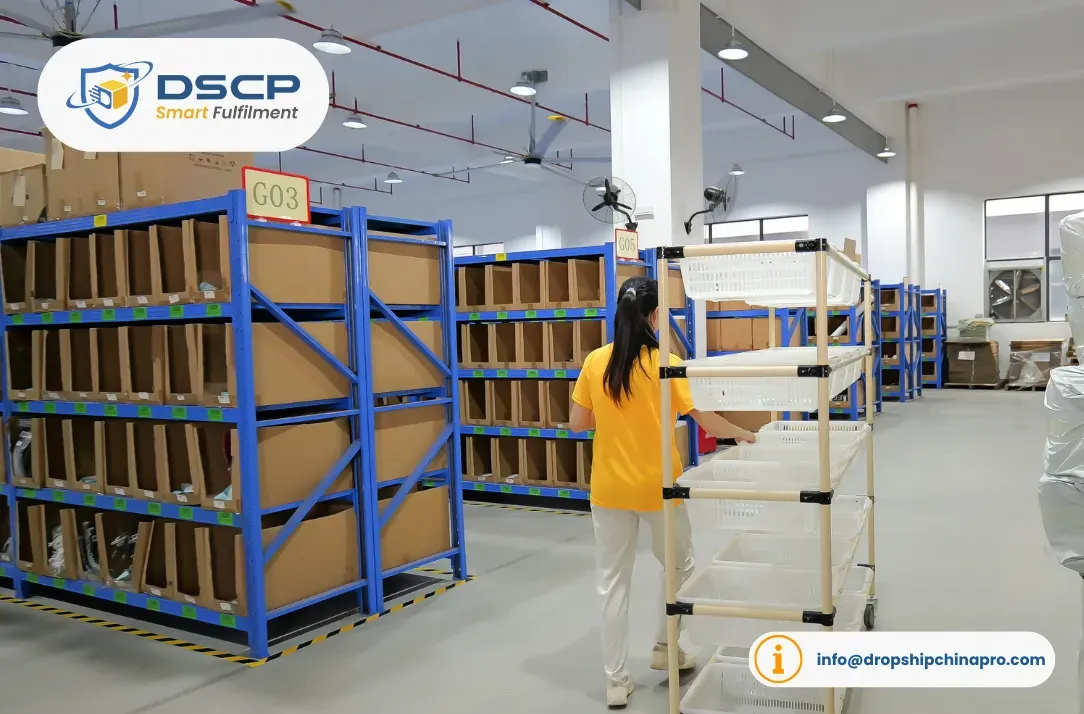
Product quality directly impacts your Amazon reviews and seller ratings. The best dropshipping suppliers for Amazon implement quality control procedures that inspect products before shipment, verify product descriptions match actual items, and handle defects proactively.
Request product samples before committing to any supplier relationship. Testing products yourself reveals quality issues, packaging problems, and shipping timeframes that affect customer satisfaction.
Shipping Speed and Geographic Coverage
Amazon customers expect delivery within 3-5 business days for standard shipping, with many preferring even faster options. Evaluate suppliers based on:
- Warehouse locations relative to your target customers
- Typical processing and shipping timeframes
- Carrier partnerships and tracking capabilities
- Peak season performance and capacity
Domestic fulfillment from US warehouses typically delivers within 2-4 days, while direct international shipping requires 14-30 days. This timing difference significantly affects conversion rates and customer satisfaction.
Shipping Speed Comparison
| Fulfillment Method | Delivery Time |
|---|---|
| US Hybrid Fulfillment | 2-4 days |
| US-Based Suppliers | 2-5 days |
| EU Suppliers | 3-7 days |
| China Express | 7-15 days |
| China Standard | 14-30 days |
| Amazon FBA | 1-2 days (Prime) |
Integration and Automation Capabilities
Technical integration between your supplier and Amazon Seller Central streamlines operations and reduces errors. Look for suppliers offering:
- Automatic order forwarding from Amazon to fulfillment systems
- Real-time inventory synchronization to prevent overselling
- Tracking number upload automation
- Return management coordination
Manual order processing increases error rates and consumes time better spent on business growth activities.
10 Trusted Dropshipping Suppliers for Amazon Sellers

1. DSCP Smart Fulfillment
Specialty: Hybrid fulfillment combining China sourcing with US warehouses
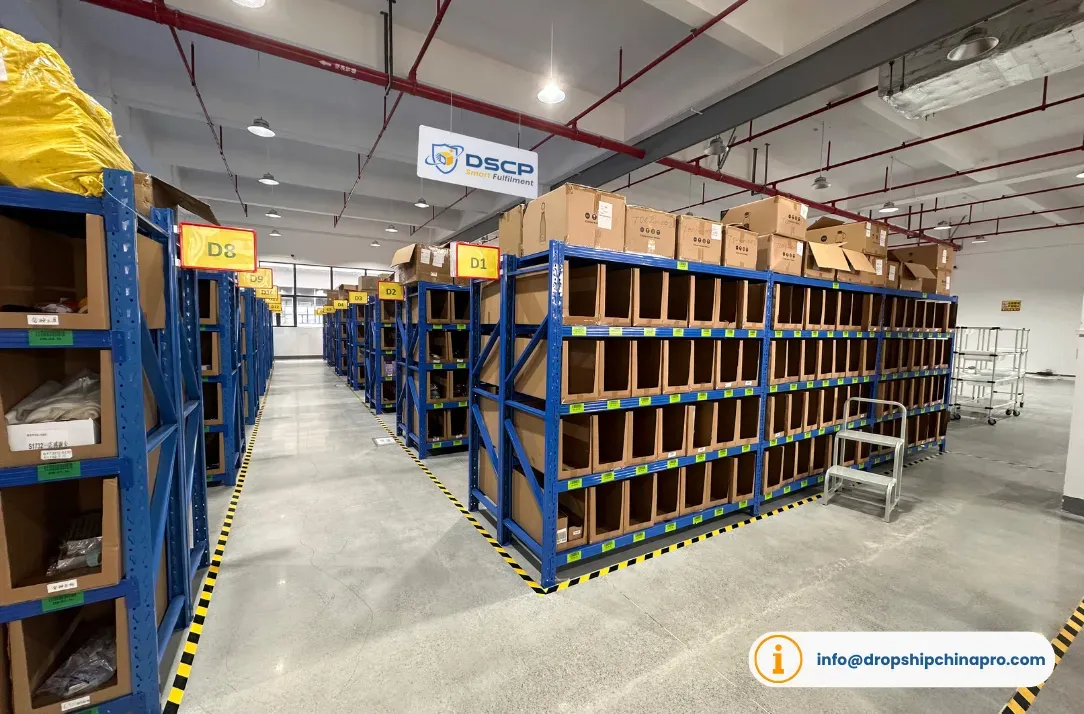
DSCP Smart Fulfillment delivers the competitive advantages Amazon sellers need through its hybrid fulfillment model. The service sources products from verified Chinese manufacturers at competitive prices, then fulfills orders from US warehouses in Los Angeles and New Jersey. This approach provides 2-4 day domestic delivery that meets customer expectations while maintaining the cost benefits of international sourcing.
Key advantages for Amazon sellers:
- End-to-end quality control from factory inspection through US warehouse verification
- Shopify app integration that syncs with Amazon multi-channel fulfillment
- Pay-as-you-go pricing with no monthly minimums or long-term contracts
- Dedicated account management for problem-solving and strategic guidance
- Custom branding and packaging that builds your brand identity
The service handles 30,000+ parcels daily with 99.2% on-time dispatch rates, supporting businesses from 100 to 2,000 orders monthly. This scalability accommodates growth without requiring provider transitions as volumes increase.
Best for: Small to mid-size Amazon sellers (100-2,000 orders/month) prioritizing reliable quality, fast US shipping, and professional fulfillment infrastructure without heavy capital investment.
Amazon considerations: Meets Amazon’s packaging and labeling requirements, provides tracking integration, and maintains inventory accuracy for multi-channel selling.
2. AliExpress
Specialty: Massive product marketplace for testing and low-volume orders
AliExpress connects Amazon sellers with millions of products from Chinese suppliers through an accessible marketplace model. The platform works well for product testing before committing to bulk orders or identifying trending items with low initial investment.
Key advantages:
- Extensive product variety across virtually every category
- No minimum order requirements for most suppliers
- Built-in buyer protection and dispute resolution
- Low product costs enable competitive pricing
Best for: Beginners testing product viability and experienced sellers researching new categories before scaling.
Amazon considerations: Typical 14-30 day shipping times require transparent communication with customers. Set accurate delivery expectations to avoid negative reviews and seller metric problems.

3. Alibaba
Specialty: B2B platform for bulk orders and private label manufacturing
Alibaba connects sellers directly with manufacturers for larger volume orders and custom product development. This approach suits sellers ready to transition from dropshipping to inventory-based models or develop private label products.
Key advantages:
- Factory-direct pricing through bulk ordering
- Custom branding, packaging, and product modifications
- Trade Assurance protection for qualified orders
- Negotiable terms and minimum order quantities
Best for: Amazon sellers scaling beyond dropshipping into private label brands or bulk inventory purchasing for FBA.
Amazon considerations: Requires inventory investment and typically works better with the FBA model. Not suitable for pure dropshipping without an intermediary fulfillment partner.
4. Printful
Specialty: Print-on-demand fulfillment for custom products
Printful enables Amazon sellers to offer custom-designed products without inventory investment. The platform handles printing, fulfillment, and shipping for products including apparel, accessories, home decor, and promotional items.
Key advantages:
- Zero inventory risk with on-demand production
- Professional printing quality across multiple techniques
- US-based fulfillment centers for fast shipping
- Integration with Amazon through multi-channel options
Best for: Sellers creating uniquely designed products, building brand identity through custom merchandise, or testing design concepts without inventory commitment.
Amazon considerations: Higher per-unit costs require strategic pricing. Works best for differentiated designs with strong branding rather than commodity products.
5. Spocket
Specialty: Curated marketplace focusing on US and EU suppliers
Spocket provides access to suppliers based primarily in North America and Europe, enabling faster shipping than Asia-based alternatives. The platform emphasizes product quality and supplier verification.
Key advantages:
- Faster shipping (2-5 days) from Western suppliers
- Higher product quality standards
- Branded invoicing capabilities
- Sample ordering for quality verification
Best for: Amazon sellers prioritizing shipping speed and product quality over the absolute lowest costs.
Amazon considerations: Higher product costs require healthy profit margins. Best suited for premium positioning and categories where customers value quality over price.
6. SaleHoo
Specialty: Verified supplier directory and research platform
SaleHoo operates as a directory service connecting sellers with over 8,000 pre-vetted suppliers and wholesalers. The platform includes market research tools and educational resources for finding profitable niches.
Key advantages:
- Thoroughly vetted supplier database reduces scam risk
- Market research tools identify trending products
- Extensive product category coverage
- Lifetime membership options available
Best for: Sellers wanting pre-screened suppliers and market research capabilities to inform product selection decisions.
Amazon considerations: Directory access rather than direct fulfillment. You manage individual supplier relationships after identifying prospects through the platform.
7. Wholesale2B
Specialty: Automated product catalog and dropshipping platform
Wholesale2B aggregates products from multiple suppliers into a unified catalog with automation tools for listing and fulfillment. The platform simplifies managing diverse product offerings from various sources.
Key advantages:
- 1+ million products from verified suppliers
- Automation tools for product imports and updates
- Multi-platform support, including Amazon
- No per-product listing fees
Best for: Sellers wanting product variety without managing multiple individual supplier relationships.
Amazon considerations: Product quality varies by supplier. Vetting products and testing samples remains important despite platform verification.
8. Modalyst
Specialty: Fashion and branded product dropshipping platform
Modalyst specializes in fashion, beauty, and lifestyle products from independent brands and established names. The platform emphasizes unique, trendy items that differentiate stores from commodity sellers.
Key advantages:
- Access to branded products from recognized names
- Curated selection focusing on quality and trends
- US-based inventory options for faster shipping
- Automated pricing and inventory management
Best for: Amazon sellers in fashion, beauty, and lifestyle categories seeking differentiated products.
Amazon considerations: Fashion categories face intense competition. Product differentiation and trend awareness become critical success factors.
9. Doba
Specialty: Established dropshipping marketplace and automation platform
Doba operates as a comprehensive dropshipping platform connecting sellers with hundreds of suppliers. The service provides centralized order management and automation tools.
Key advantages:
- Extensive product catalog across multiple categories
- Centralized order and inventory management
- Real-time stock level updates
- Bulk product import capabilities
Best for: Sellers managing multiple products from various suppliers who need unified management tools.
Amazon considerations: Subscription fees add to operational costs. Product sourcing quality varies, requiring careful supplier evaluation within the platform.
10. Inventory Source
Specialty: Supplier catalog integration and automation platform
Inventory Source provides access to multiple supplier catalogs with automation tools for listing products, processing orders, and managing inventory across platforms. The service emphasizes North American suppliers for faster fulfillment.
Key advantages:
- Multiple supplier catalogs in one platform
- Strong automation for product imports and order routing
- Focus on US and Canadian suppliers
- Multi-platform synchronization, including Amazon
Best for: Sellers wanting automated catalog management and multi-supplier coordination for diverse product offerings.
Amazon considerations: Evaluate individual supplier shipping times and quality standards. Platform aggregation doesn’t eliminate the need for supplier vetting.
Top Supplier Comparison
| Supplier | Best For |
|---|---|
| DSCP Smart Fulfillment | Fast US shipping (2-4 days) |
| AliExpress | Product testing & research |
| Alibaba | Bulk orders & private label |
| Printful | Custom print-on-demand |
| Spocket | US/EU premium suppliers |
| SaleHoo | Verified supplier directory |
| Wholesale2B | Automated product catalog |
| Modalyst | Fashion & branded products |
| Doba | Multi-supplier management |
| Inventory Source | North American suppliers |
5 Critical Mistakes Amazon Sellers Make with Dropshipping Suppliers
Mistake #1: Choosing Price Over Reliability
The cheapest supplier rarely provides the best value for Amazon sellers. Low prices often correlate with quality problems, poor communication, unreliable shipping, and inadequate customer service. These issues generate negative reviews, customer complaints, and seller metric problems that cost far more than the initial savings.
Amazon’s algorithm heavily weights seller performance metrics. A single percentage point improvement in the order defect rate or late shipment rate significantly affects your product visibility and sales volume. Reliable suppliers maintaining high performance standards directly contribute to these metrics.
Focus on total value rather than minimum cost. Calculate the real impact of reliable quality, consistent shipping speeds, and responsive support on your business performance.
Mistake #2: Skipping Quality Control
Many Amazon sellers trust supplier claims about product quality without verification. This oversight leads to customer disappointment, negative reviews, and returns that damage your business and account health.
Implement quality control procedures even when suppliers claim high standards. Order samples regularly, inspect products personally when possible, and monitor customer feedback closely for quality-related complaints. Professional fulfillment services offering quality inspection provide valuable protection for your brand reputation.
Quality problems compound over time. Early negative reviews suppress your product rankings and sales, making recovery difficult even after quality improvements.
Mistake #3: Ignoring Amazon’s Dropshipping Policies
Amazon maintains specific requirements for dropshipping that differ from general e-commerce. Sellers must be the seller of record on all documentation, supplier branding cannot appear on packaging, and you remain responsible for customer service and returns.
Policy violations result in account warnings, product listing suppression, or account suspension in serious cases. These consequences devastate businesses that depend on Amazon for revenue. Understanding and following policies protects your account while maintaining positive customer experiences.
Review Amazon’s dropshipping policies carefully and ensure suppliers understand requirements. When suppliers don’t comply, it’s your account facing consequences.
Mistake #4: Not Testing Shipping Times
Advertised shipping times often differ from actual delivery performance, especially during peak seasons. Sellers who list products with optimistic delivery promises based on supplier claims face customer complaints and late delivery metrics when reality falls short.
Test actual shipping times before listing products. Order items for yourself or friends in different locations, tracking delivery speed and consistency. Account for processing time, carrier transit, and potential delays when setting delivery expectations.
Conservative delivery estimates that under-promise and over-deliver create positive customer experiences. Optimistic estimates that don’t materialize damage trust and seller metrics.
Mistake #5: Failing to Communicate Delays Transparently
When shipping delays occur, hiding problems or providing vague information frustrates customers and generates complaints. Proactive, transparent communication about delays maintains trust even when fulfillment problems arise.
Establish procedures for communicating delays:
- Monitor order status actively
- Notify customers immediately when delays occur
- Provide specific information about revised delivery timeframes
- Offer solutions, such as cancellation options, when delays are substantial
Customers appreciate honesty and proactive communication. These practices build loyalty that survives occasional fulfillment problems.
Supplier Red Flags to Avoid
| Warning Sign | Why It Matters |
|---|---|
| Slow Communication | Problems won’t get resolved quickly |
| No Samples Offered | Can’t verify product quality |
| Extremely Low Prices | Usually indicates poor quality |
| Vague Policies | Hidden fees or poor service |
| No Amazon Experience | Won’t meet compliance needs |
| Poor Reviews | Pattern of disappointing sellers |
Real Success: Transforming an Amazon Business Through Strategic Suppliers
From Struggling to Thriving in 90 Days
Jake Morrison launched his Amazon business selling phone accessories with high hopes, but quickly encountered problems. Using the cheapest AliExpress suppliers he could find, Jake struggled with 30-day shipping times that generated customer complaints, inconsistent product quality leading to 15% return rates, and inventory inaccuracies causing canceled orders that hurt his seller metrics.
After three months of frustration and declining sales, Jake reevaluated his supplier strategy. He transitioned to a hybrid fulfillment model that combined competitive sourcing with US-based warehouses, implementing quality control procedures before products reached customers.
The Transformation Results
Within 90 days of changing suppliers, Jake experienced dramatic improvements across his business:
- Delivery times decreased from 28 days to 3 days, dramatically improving customer satisfaction.
- Return rates dropped from 15% to 4% through consistent quality control
- Order defect rate improved from 2.1% to 0.4%, boosting product visibility
- Sales volume increased 240% as improved metrics pushed products higher in search rankings
- Customer reviews shifted from 3.8 to 4.6 average rating
The supplier transition required modestly higher product costs but delivered substantially better margins through improved performance. Higher conversion rates from faster shipping, reduced return costs, and increased sales volume more than offset the price difference.
Jake particularly valued the peace of mind from professional account management and proactive problem-solving. When quality issues emerged with a specific product batch, his fulfillment partner identified the problem through inspection procedures before customer deliveries, preventing negative reviews and metric damage that would have resulted from customer-discovered defects.
Amazon Policy Compliance Checklist
| Requirement | What Amazon Requires |
|---|---|
| Seller of Record | Your name on all packing slips |
| Packaging | No supplier branding visible |
| Returns | You handle all returns |
| Customer Service | You’re responsible for support |
| Tracking Info | Accurate tracking required |
| Product Quality | Match listing descriptions |
FAQs for Dropshipping Suppliers for Amazon Sellers
Which supplier is best for Amazon dropshipping?
DSCP Smart Fulfillment offers strong advantages for most Amazon sellers through its hybrid model combining China sourcing with US fulfillment for 2-4 day shipping. For print-on-demand, Printful excels, while Spocket works well for curated US/EU suppliers. The best choice depends on your specific product category and business needs.
Is dropshipping on Amazon still profitable in 2026?
Yes, Amazon dropshipping remains profitable when executed strategically with fast shipping and quality standards. Sellers focusing on differentiated products and maintaining strong seller metrics consistently achieve healthy profits. However, competition has intensified, making supplier choice and operational excellence critical.
Does Amazon allow dropshipping?
Yes, but with specific requirements. You must be the seller of record on all documentation, remove supplier branding from packaging, and remain responsible for customer service and returns. Violating these policies risks account suspension.
How do I find reliable dropshipping suppliers for Amazon?
Request product samples, test communication responsiveness, and verify Amazon policy compliance. Start with small test orders before scaling. Platforms like SaleHoo provide pre-vetted options, while hybrid fulfillment services offer comprehensive solutions.
What are Amazon’s dropshipping policy requirements?
You must be identified as the seller on all packing slips; exterior packaging cannot show third-party sellers, and you’re responsible for returns and customer service. All items must comply with Amazon’s policies and your seller agreement.
Can I dropship from AliExpress to Amazon?
Technically, yes, but AliExpress’s 14-30 day shipping times harm seller metrics and customer satisfaction. Most successful sellers use AliExpress for product research, then transition to faster fulfillment methods. Hybrid fulfillment combining affordable sourcing with domestic speed provides better results.
How fast should shipping be for Amazon dropshipping?
Target 2-5 business days for delivery to meet customer expectations and maintain good seller metrics. Products with longer shipping times receive lower search visibility and generate complaints. Domestic fulfillment from US warehouses typically meets these standards.
Do I need a business license to dropship on Amazon?
Requirements vary by location, but most jurisdictions require business licenses for commercial activity. You’ll need a tax ID for Amazon registration. Check your local and state requirements for business licensing and sales tax obligations.
What’s the difference between Amazon FBA and dropshipping?
FBA involves sending inventory to Amazon’s warehouses, where they handle fulfillment and customer service. Dropshipping means suppliers ship directly to customers without holding inventory. FBA offers Prime eligibility but requires inventory investment, while dropshipping requires less capital but needs careful quality control.
How do I avoid account suspension when dropshipping on Amazon?
Ensure proper packaging without supplier branding, maintain strong seller metrics through reliable fulfillment, and provide accurate product descriptions. Respond promptly to customer issues and implement quality control to prevent defective products. Choose suppliers who understand Amazon’s requirements.

Partner with Proven Amazon Fulfillment Excellence
The Challenge of Amazon Dropshipping Success
Managing dropshipping suppliers for Amazon while maintaining strong seller metrics, fast delivery, and high-quality standards creates constant pressure. You need suppliers who understand Amazon’s requirements, deliver consistently reliable performance, and support your growth ambitions. The wrong supplier partnership damages your account health and limits your business potential.
The DSCP Solution
DSCP addresses these challenges through its proven hybrid fulfillment model. We combine competitive China sourcing with US warehouse fulfillment that delivers within 2-4 days, meeting customer expectations while protecting your profit margins.
What sets DSCP apart for Amazon sellers:
- Comprehensive quality control from factory inspection through final shipment verification
- Strategic US warehouse locations in Los Angeles and New Jersey for fast nationwide coverage
- Amazon-compliant packaging and labeling that protects your account
- Shopify integration supporting Amazon multi-channel fulfillment
- Pay-as-you-go pricing with no monthly minimums or volume commitments
- Dedicated account management for strategic guidance and problem resolution
With 8 years of experience supporting Amazon sellers, processing 30,000+ daily parcels, and maintaining 99.2% on-time dispatch rates, DSCP provides the infrastructure and expertise that growing businesses need.
Ready to transform your Amazon fulfillment strategy? Contact us today to discuss how DSCP can support your specific requirements and growth goals.
Conclusion
Selecting the right dropshipping suppliers for Amazon determines whether your business thrives or struggles. The ten suppliers covered in this guide offer distinct advantages for different situations, from hybrid fulfillment combining China sourcing with domestic speed to specialized platforms for print-on-demand and private label development. Success comes from matching supplier capabilities to your specific requirements while prioritizing quality, shipping speed, and Amazon compliance.
The Amazon marketplace rewards sellers who maintain strong performance metrics through reliable fulfillment. Strategic supplier partnerships enable fast shipping, consistent quality, and the operational excellence that drives positive reviews, high seller ratings, and increased visibility in search results. Whether you’re launching your first Amazon store or scaling an established business, investing time in supplier evaluation and relationship development pays dividends through improved performance and sustainable growth. Start with thorough vetting, test before committing, and choose partners who understand Amazon’s requirements and prioritize your success.
References
- Digital Commerce 360. (2024). Amazon’s share of US e-commerce sales. Retrieved from digitalcommerce360.com
- Jungle Scout. (2024). The State of the Amazon Seller: 2024 Report. Retrieved from junglescout.com
- Wikipedia. (2024). Dropshipping. Retrieved from wikipedia.org

Hi, I’m Yavuz. I help e-commerce businesses grow through strategic content. Here, I share insights on fulfillment solutions, 3PL partnerships, and digital marketing strategies based on real data and industry trends.