Most dropshippers operate in a constant state of reset. A product runs for a few weeks, momentum fades, and the search begins again. It is a model that feels like progress because there is always activity, but rarely builds anything that compounds.
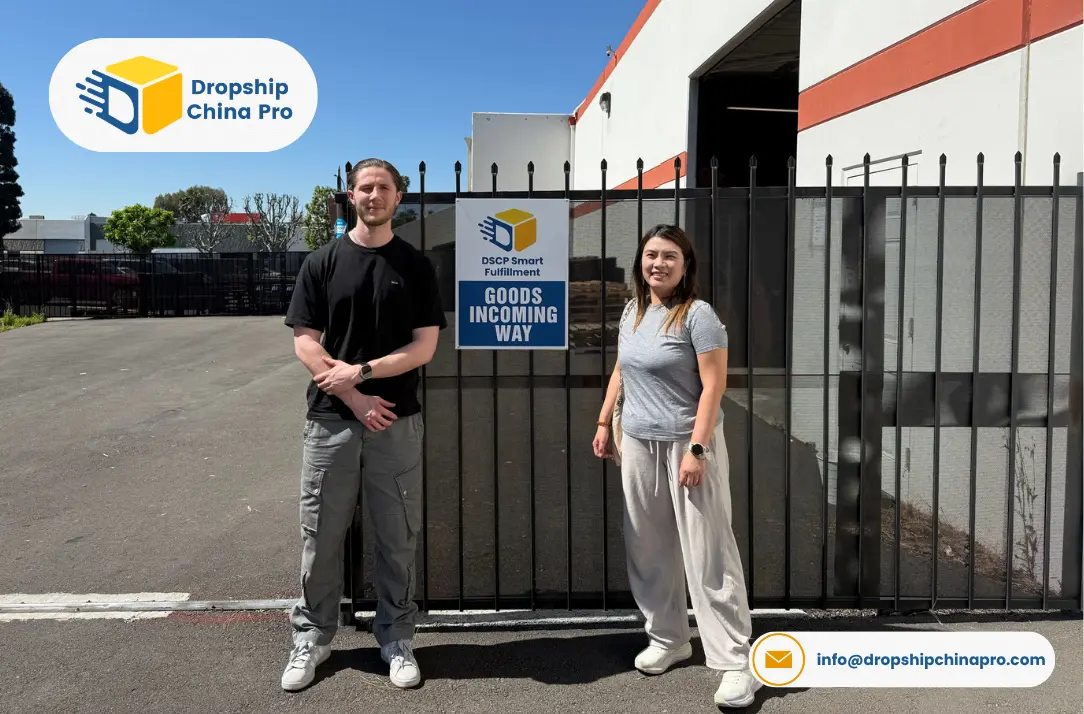
Fin, known in the e-commerce community as @ecomfin on X platform, thinks about his business differently. He is a long-term Dropship China Pro client who has built a brand-focused operation grounded in deliberate product selection, structured ad testing and a supplier relationship he describes as a long-term partnership. In a detailed interview, he shared the framework behind his approach, where it came from and what he would tell sellers who are still stuck in the product-chasing cycle.
This post covers that conversation in full.
Key Takeaways
- Fin evaluates every product against four specific questions before committing to a test, filtering out anything without proven demand, real margin or genuine differentiation
- The viral product cycle is not just a strategy problem. Fin describes it as a skill problem, because the habits it builds do not transfer to long-term brand development
- Ad performance improves through building a feedback loop, extracting learning from every result rather than simply increasing spend
- A backend that converts customers into repeat buyers changes the acceptable cost of acquisition and makes the whole paid advertising model more sustainable
- Hybrid fulfillment makes financial sense at around 300 daily orders, at which point bulk shipping to U.S. warehouses improves both margins and delivery speed
- Trust is the single most important factor Fin looks for in a supplier relationship, alongside a specific set of operational criteria that become more critical as volume grows
- Fin has invested over $50,000 in mentorships and learning, and attributes a significant portion of his progress to targeted guidance from people ahead of him
Who Is Fin
Fin runs a branded e-commerce operation built around products that genuinely solve consumer problems. He is not a course creator or a consultant. He is an active seller who has spent years in the business, including time chasing viral products before developing the approach he uses today.
His operation uses a hybrid fulfillment model combining China-based inventory with U.S. warehouse stock. He works with Dropship China Pro on the fulfillment side of that model. And he has reinvested heavily in his own development, spending over $50,000 on mentorships and courses across several years.
What makes his perspective worth paying attention to is not that he found a shortcut. It is that he found the specific skills and decisions that consistently separate stores that last from stores that do not.
The Four Questions Behind Every Product Decision
There is no shortage of frameworks for finding dropshipping products. Most focus on signals: trending searches, TikTok velocity, competitor ad spend. Fin’s approach starts at a more fundamental level.
Before he considers testing anything, he asks four questions:
- Does the product actually work? This is the first filter and the most basic. Does the product look compelling in an ad, or does it have a satisfying unboxing video? Does it do what it claims to do? A product that does not work generates returns, disputes, and reviews that destroy the economics of any campaign before scale becomes possible.
- Can I achieve 70% or more margins on cost of goods? Fin sets a high threshold deliberately. At 70% COGS margins, the product has enough room to absorb ad costs, platform fees, returns and fulfillment expenses and still generate meaningful net profit. Products that only work at 40% to 50% margins leave no buffer for the real costs of running a paid acquisition business. “If a product doesn’t achieve 70%+ margins, it will always be a struggle to build sustainably around it,” he explains.
- Is it solving a real problem with enough demand? Fin’s primary research tool for this is Amazon. If the product exists there with strong reviews, that confirms two things simultaneously: buyers are willing to pay for a solution to this problem and the product quality is sufficient to earn their satisfaction. If the reviews are consistently poor, no amount of marketing will fix the underlying problem. “If the reviews are poor, it usually means the product isn’t worth selling, and you save yourself time and money,” he says.
- Can I differentiate if others are already selling it? Competition alone does not disqualify a product. But if there is no credible answer to how you would stand apart, whether through branding, creative angle, target audience or product quality, then you are entering a margin compression race you will eventually lose.
These four questions are not a checklist to complete quickly. They are a filter designed to eliminate the majority of products before any money is spent testing them.
Fin’s Four Product Selection Questions
| Question | What It Filters Out |
|---|---|
| Does the product actually work? | Gimmicks that convert once but generate returns and disputes |
| Can I achieve 70%+ margins on COGS? | Products with no room to absorb ad costs and fees at scale |
| Is it solving a real problem with demand? | Trend-driven products with no verified buyer need |
| Can I differentiate from other sellers? | Commoditized products heading toward margin compression |
The Viral Product Trap Is a Skill Problem
Fin spent time earlier in his career doing what most dropshippers do: finding products with current momentum, testing quickly and moving on when they faded. His shift away from that model was not the result of a strategic revelation. It was the result of frustration.
“I kept seeing products die and not knowing how to bring them back or scale them again,” he says. “That frustration made me realise it was a skill issue.”
This is an important distinction. The viral product cycle feels like a sourcing problem. You just need to find the next one. But Fin’s diagnosis is that it is actually a capability problem. The skills developed while rotating through trending products, copying ad formats, picking based on algorithm signals and abandoning when traction fades, do not transfer to building a brand with consistent revenue.
“A lot of sellers pick products just because they’re trending, even if they’re gimmicky or don’t really work. I’ve done this myself in the past, and those brands don’t last because there’s no real scalability,” he says.
He does not dismiss the model entirely for beginners. If someone is new to e-commerce and needs early cash flow while learning foundational skills, a viral product can serve a purpose. His concern is specific: using it as a permanent operating model rather than a learning phase. “I do think there’s a time and place for viral products. If you’re a complete beginner and just want to generate some quick cash flow, they can work. But you should be learning real skills alongside it, otherwise you’ll end up stuck in that cycle.”
The broader market data supports this pattern. Only 10% to 20% of dropshipping stores manage to stay profitable long term (SellersCommerce, 2025). The differentiator among those that do is consistently brand focus and niche depth rather than product rotation speed.
Building the Feedback Loop That Compounds
The most practical change Fin made when shifting from viral product chasing to brand building was changing how he used ad results.
“One of the biggest changes was having a clear thesis behind every ad we tested and learning from every result,” he explains. “Whether an ad won or lost, we extracted something from it to improve the next iteration. Over time, that compounds and increases your hit rate.”
This is a system rather than a tactic. A failed ad in the old model means a product is dead. A failed ad in this model means you have information: which angle did not resonate, which claim did not connect, which audience segment did not respond. That information feeds the next test rather than being discarded when the campaign is turned off.
“Once we found a winning ad, we could break down exactly why it worked and use that to guide future creatives,” Fin adds.
The compounding effect he describes is real and measurable. Each iteration that incorporates prior learning has a higher starting point than the one before it. Sellers who skip this step, who run ads based on intuition or imitation and do not track what is actually producing results, never build that advantage.
“I see a lot of people fall into this trap. Even people I know who’ve had success before from ripping ads struggle with this, because they’ve never built that feedback loop of testing, learning, and improving,” Fin says.
The Backend That Changes Your Acquisition Math
One of the less discussed aspects of Fin’s approach is how he thinks about the relationship between backend performance and paid advertising.
“A big shift for me has been being able to scale at lower ROAS because we’ve improved our backend. That means a winning ad can now have a higher CPA than before.”
This is a meaningful operational insight. When post-purchase systems are working, including repeat purchase flows, customer lifetime value and the customer experience from delivery through any service interactions, the acceptable cost of acquiring a new customer increases. You can pay more per acquisition because each customer generates more revenue over time.
This changes how you evaluate ad performance entirely. A campaign that appears unprofitable against a first-purchase metric may be highly profitable when measured against lifetime value. Sellers who only track ROAS on the first transaction are optimizing for the wrong number.
Fin also highlights copywriting as a foundational skill that most sellers underestimate. “Understanding basic copywriting is key. It allows you to work effectively with AI tools and avoid ending up with generic, low-quality content that doesn’t stand out.”
In a market where AI-generated ad copy and product descriptions are increasingly common, the sellers who can evaluate and direct that output produce better results than those who accept whatever the tool generates. Copywriting ability is what determines whether AI is an accelerant or a liability.
How and When Hybrid Fulfillment Makes Sense
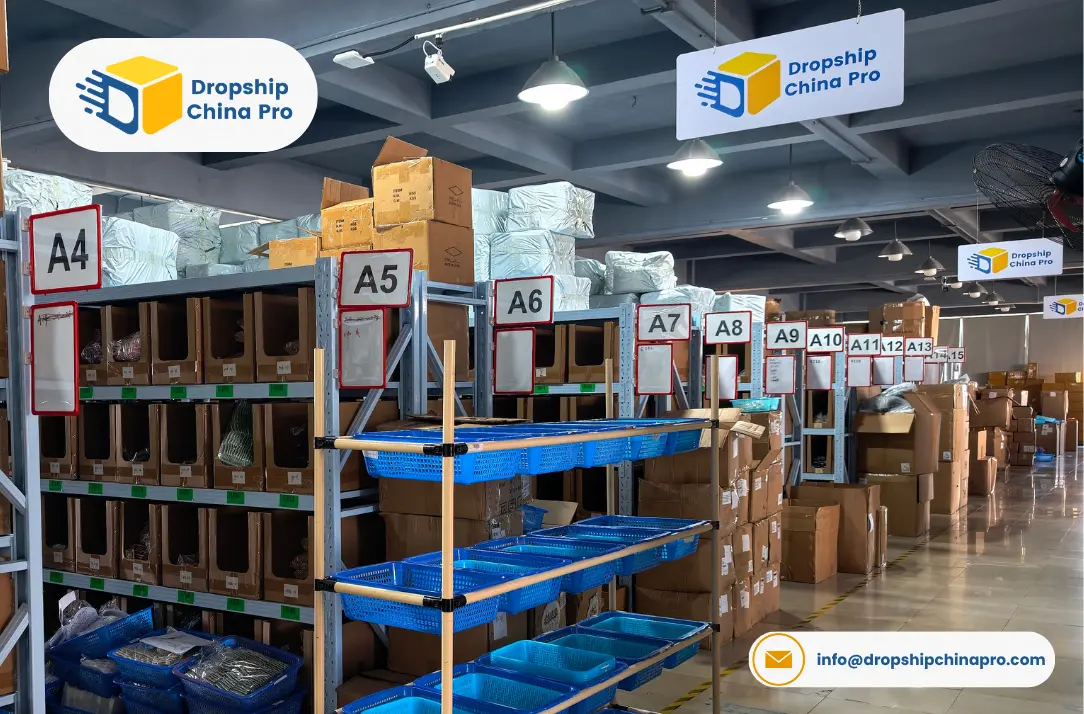
Fin runs a hybrid fulfillment model, which means he holds inventory in China and ships in bulk to U.S. warehouses once volume justifies it. His threshold for making that transition is specific.
“Once you have consistency, around 300 daily orders, it makes sense to start bulk shipping to the U.S. as your margins should improve, assuming most of your customers are there.”
The logic is straightforward. Faster delivery to U.S. customers improves satisfaction, which increases repeat purchase rate and customer lifetime value. Bulk shipping to a domestic warehouse reduces per-unit fulfillment cost compared to individual China-to-customer shipments. Both improvements work together to improve the economics of the business at volume.
The flexibility argument is equally important and came from real experience. “We’ve had periods where we scaled aggressively and ran out of US stock, but because we still had inventory in China, we could switch and keep selling,” Fin explains.
That optionality does not exist in a single-channel fulfillment model. A store relying entirely on U.S. stock that runs dry has no fallback. A store with China inventory as a backup can continue operating through a stockout, source a replenishment and protect the continuity of whatever marketing momentum it has built.
Fin acknowledges that he does not manage the operational details of this directly. “I don’t manage this heavily myself, as DSCP handles most of it, but it’s something I should probably get more involved in over time.”
For sellers who are approaching the volume where local warehousing starts to make financial sense, the Dropship China Pro Shopify app is a practical starting point for understanding what a managed hybrid model looks like for your specific order volume and geography.
What a Supplier Relationship Looks Like at Scale
The section of Fin’s interview that receives the least attention in most dropshipping conversations is the one about supplier relationships. Most content treats the supplier as a vendor: you place orders, they fulfill them. Fin’s description of what a supplier relationship should be at serious volume is substantially different.
“You’re building a long-term relationship, so trust is the most important factor,” he says. “Your supplier is responsible for product quality, sourcing and fulfillment. So they have a huge impact on your business.”
The criteria he applies when evaluating whether a supplier can support his business at scale are operational and specific:
- Fast processing and shipping
- Weekend operations
- Access to better factories
- Quality control
- Strong payment terms
- Ability to handle U.S. or overseas fulfillment
These are not criteria a new seller uses when picking a marketplace supplier. They are the criteria someone applies when they understand that their supplier’s operational capability is directly tied to their own business performance.
“It’s a partnership, so there needs to be compromise on both sides when it comes to pricing, terms, and scaling,” Fin adds.
This framing has a practical implication. A supplier who can grow with your business gives you access to better factory connections, more favorable pricing structures as volume increases and the kind of operational flexibility that individual order-by-order sourcing cannot provide. That advantage accumulates in the same way a strong ad feedback loop does: slowly at first, then significantly over time.
On Investing in Your Own Development
One of the threads throughout Fin’s interview that does not appear in most dropshipping content is his view on learning and mentorship.
“I strongly believe in reinvesting in yourself,” he says. “I’ve spent over $50k on mentorships, courses, and learning over the couple of years.”
His approach to finding mentors worth paying for is grounded in practical verification. He checks whether they run their own stores, whether they have verifiable results such as Shopify plaques and whether their expertise is specific to what he needs rather than general.
“I strongly believe in reinvesting into yourself. Every time I get on a call with someone more experienced, I’m quickly reminded how much faster you can progress when you’re learning from someone ahead of you.”
His advice on specialization is particularly useful. A mentor who focuses specifically on top-of-funnel marketing or backend operations will provide more actionable guidance than one who teaches a general overview of the dropshipping model. As a business grows, the questions it needs to answer become more specific, and the guidance it needs becomes more targeted to match.
“At the end of the day, if you could invest 10k to go from 5k/month to 100k/month in 90 days, most people would take that. The upside massively outweighs the risk.”
Frequently Asked Questions
What is the most important factor when choosing a product to build a brand around?
According to Fin, the most important factor is whether the product solves a genuine pain point. A product built around a real problem gives you the conviction to stay with it through the inevitable slow periods of brand building. It also gives you a customer base with a real reason to return. Products that are trending without solving a genuine problem have no foundation for a brand.
How do you verify whether a product has real demand before testing it?
Fin’s primary method is checking Amazon. Strong reviews across a product category confirm that buyers consistently find value in the solution and are willing to pay for it. Weak or poor reviews across the category suggest a quality problem that no marketing will overcome. This check takes minutes and can save significant ad spend on products that were never going to retain customers.
What does a good ad feedback loop actually look like in practice?
Fin describes it as building a clear thesis before launching any ad, defining what you believe will resonate and why, then evaluating the result against that thesis whether the ad wins or loses. A winning ad gets broken down: what specific element drove performance, which claim connected, which format worked. That analysis informs the next creative iteration rather than treating each campaign as a fresh start.
At what point does hybrid fulfillment become worth the operational complexity?
Fin’s threshold is approximately 300 daily orders, assuming most customers are based in the U.S. At that volume, bulk shipping to a domestic warehouse improves per-unit economics enough to justify the inventory management complexity. Before that threshold, the cost may not be offset by the margin improvement. The flexibility benefit, having China inventory as a fallback during U.S. stockouts, is an additional argument that applies regardless of volume.
How do you evaluate whether a mentor or course is worth the investment?
Fin applies a few practical checks: do they run their own active stores, do they have verifiable results, and is their expertise specific to what you actually need to improve. He cautions against generalist mentors who teach a broad overview of the business. As a seller grows, the value comes from someone who has solved the specific problem you are currently facing, whether that is ad performance, backend systems or fulfillment operations.
How important is supplier reliability compared to product selection?
Fin treats them as equally important at scale. A strong product with an unreliable supplier creates customer satisfaction problems that erode the brand equity you are trying to build. He describes trust as the foundation of a supplier relationship, followed by specific operational criteria: processing speed, weekend operations, factory access, quality control and payment terms. These criteria matter more as volume increases.

Work With a Fulfillment Partner Built for Scale
If your store is approaching the volume where hybrid fulfillment starts to make operational and financial sense, Dropship China Pro works with sellers at exactly that stage. From sourcing and quality control in China to U.S. warehouse fulfillment, the infrastructure Fin describes is what we build with clients over time. Explore the Dropship China Pro Shopify app or reach out directly to discuss your current requirements.
Conclusion
Fin’s framework is not complicated in principle. Choose products that genuinely work and solve real problems. Build a system for learning from ad results rather than just running them. Improve your backend so that each customer is worth more over time. And treat your supplier relationship as a partnership rather than a transaction.
What makes it difficult is that each of these things requires patience and consistency that the viral product model actively discourages. The cycle of test and replace feels productive. Building a feedback loop, improving backend systems and developing a supplier relationship feel slow.
The difference is that one approach compounds and the other resets.
References
- SellersCommerce. (2025). Detailed Dropshipping Statistics In 2025.
- The Business Research Company. (2026). Dropshipping Market Trends, Size, Share Report 2026. Retrieved from thebusinessresearchcompany.com
- TrueProfit. (2025). Is Dropshipping Still Profitable in 2026?
- FluentCart. (2026). Is Dropshipping Worth It in 2026?
Hi, I’m Yavuz. I help e-commerce businesses grow through strategic content. Here, I share insights on fulfillment solutions, 3PL partnerships, and digital marketing strategies based on real data and industry trends.