Every e-commerce seller reaches a point where the fulfillment question becomes impossible to ignore. You are getting orders, your product works and customers expect a professional experience. The decision between a 3PL fulfillment model and dropshipping is one of the most consequential operational choices you will make, and getting it wrong early costs you time, money and customers you cannot afford to lose.
This guide explains how both models work in practice, where each one excels, where each one falls short and how to make the right call for your specific business stage.
Key Takeaways
- A 3PL provider stores, manages and ships the inventory you own. A dropshipping supplier ships directly from their stock when orders come in, meaning you never hold inventory.
- Dropshipping carries lower upfront risk and is well-suited for product testing. 3PL offers more control, better quality assurance and a stronger foundation for brand building.
- The hybrid model, combining overseas sourcing with domestic 3PL warehousing, is increasingly the most practical approach for small to mid-size sellers who need both cost efficiency and delivery speed.
- Shipping speed is now a baseline customer expectation, not a differentiator. 88% of consumers consider fast delivery a key factor in their purchasing decisions (National Retail Federation, 2024).
- Reliability and communication quality from your fulfillment partner matter as much as cost, especially as order volumes grow.
What Is a 3PL Fulfillment Company?
A third-party logistics provider, or 3PL, is a company that handles the physical storage and shipment of inventory on your behalf. You source and purchase the products, send them to the 3PL’s warehouse and the provider picks, packs and ships orders to your customers as they come in.
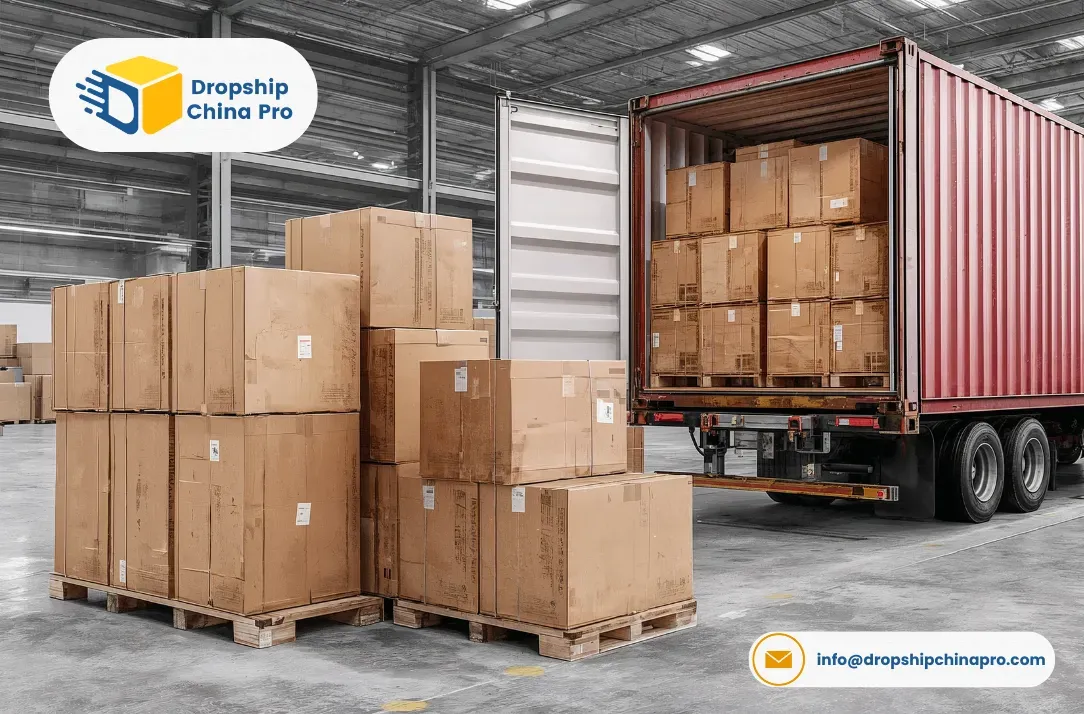
The core appeal of a 3PL is control. You own the inventory, you set the packaging standards, you manage the quality and you decide how products are presented when they reach your customer. For brands that have validated demand and are building a long-term customer relationship, this control is operationally valuable.
Key services a quality 3PL provides:
- Inventory storage across strategically located warehouses
- Quality inspection on incoming stock before it reaches customers
- Custom packaging, branded inserts and private label options
- Real-time inventory tracking and platform integration
- Returns management and restocking
What Is a Dropshipping Supplier?
Dropshipping removes inventory from the equation entirely. You list products in your store, and when a customer orders, the supplier ships the product directly to them. You never purchase stock upfront or handle the physical product at any stage.
The appeal for early-stage sellers is obvious. You can test products across multiple categories without committing capital to inventory. If a product does not sell, you have lost nothing on unsold stock. This makes dropshipping particularly attractive for new stores, validating a niche before scaling.
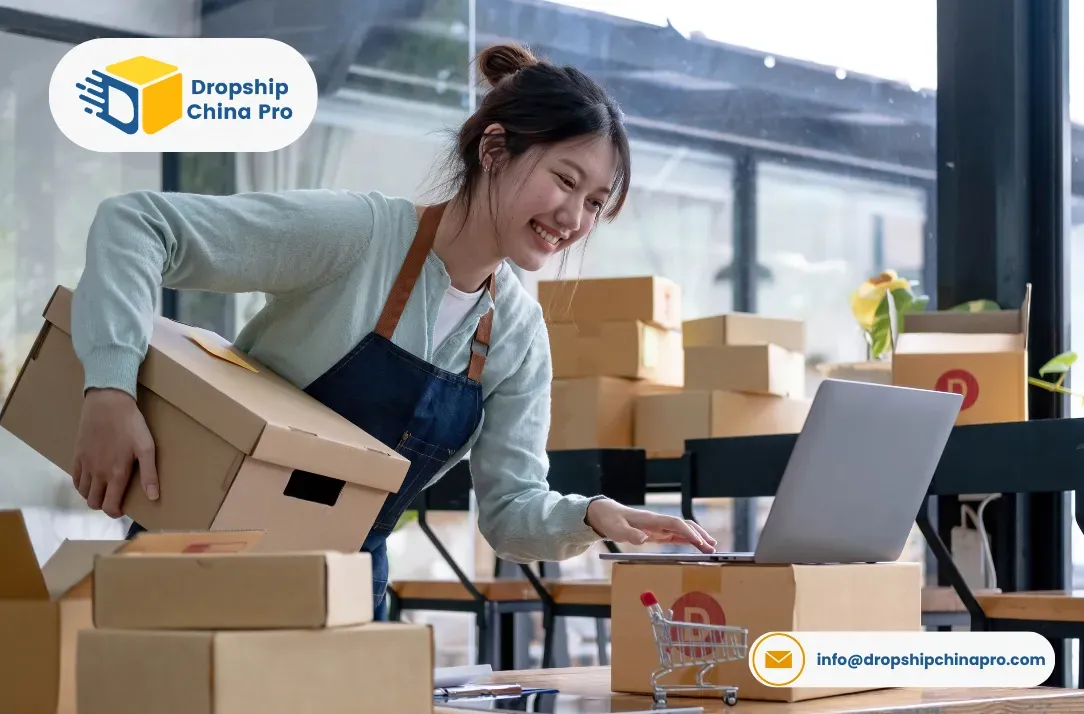
The tradeoff is equally obvious. You have limited control over product quality, shipping times and the customer unboxing experience. When something goes wrong, it is your store’s reputation that takes the hit, even if the fault lies entirely with the supplier.
3PL vs Dropshipping: A Direct Comparison
3PL vs Dropshipping at a Glance
| Feature | 3PL vs Dropshipping |
|---|---|
| Inventory Required | Yes → No |
| Upfront Investment | Moderate → Very Low |
| Quality Control | Strong → Supplier-Dependent |
| Shipping Speed | 2-5 days → 15-25 days |
| Branding Options | Full Control → Very Limited |
| Scalability | High → Limited |
| Best For | Scaling Brands → Product Testing |
Understanding the difference between the two models becomes clearer when you examine the specific areas that affect your daily operations and customer experience.
Inventory and Upfront Investment
With 3PL fulfillment, you purchase inventory before orders come in. This requires working capital and carries the risk of unsold stock, but it also means you have products ready to ship immediately when demand arrives. Most 3PL arrangements work well for sellers maintaining a lean rolling inventory, typically covering 7-30 days of projected demand, depending on the product category.
Dropshipping requires no upfront inventory investment. You only pay for products after customers have already paid you. This dramatically reduces financial risk in the early stages, though it also means your margins are typically thinner because you are buying single units at a time rather than in volume.
Quality Control
This is where the two models diverge most significantly. With a 3PL partner, products pass through a quality inspection process before reaching your customers. Defective or substandard items are caught at the warehouse, not after delivery. This protects your brand reputation and reduces return rates meaningfully.
Dropshipping puts quality control entirely in the hands of your supplier. You are trusting that what they ship matches what they advertised, and when it does not, your customer experience suffers. Sellers who have worked in both models consistently identify quality inconsistency as the most persistent challenge in dropshipping at scale.
Shipping Speed
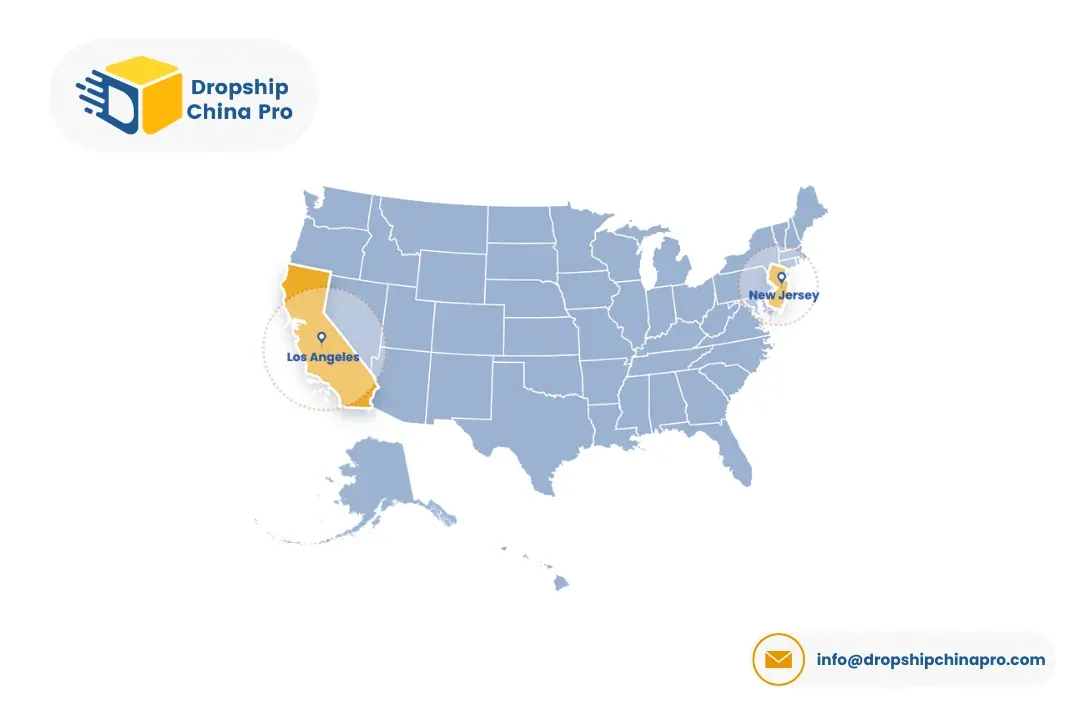
Domestic 3PL warehousing enables 2-5 day delivery via standard ground shipping. For US-focused stores, dual-coast warehouse positioning (East and West Coast) brings most customers within 2-3 days. This directly competes with what major retailers offer and meets the expectations buyers now consider standard.
Traditional dropshipping from international suppliers typically takes 15-25 business days. This is the single largest driver of customer complaints, negative reviews and chargebacks in dropshipping operations. The hybrid fulfillment model addresses this by sourcing products internationally but storing inventory in domestic warehouses for fast last-mile delivery.
Branding and Customization
3PL fulfillment gives you full control over how your product reaches the customer. Custom boxes, tissue paper, branded inserts, thank you cards and private labels are all achievable. This shapes the unboxing experience, which directly affects how customers perceive your brand and whether they return.
Dropshipping offers limited branding options. Some suppliers allow basic customization, but the scope is narrow and consistency is difficult to maintain. Sellers building a genuine brand identity consistently find dropshipping’s customization constraints a ceiling they eventually have to break through.
Scalability
3PL is the natural home for businesses that have validated demand and are ready to grow systematically. As order volumes increase, 3PL operations scale with them without requiring you to invest in your own warehouse infrastructure or staff.
Dropshipping scales easily in the sense that there is no inventory ceiling, but it scales poorly in terms of customer experience. The problems that exist at 50 orders per month, variable shipping times, inconsistent quality and limited tracking tend to amplify rather than resolve as volumes increase.
The Hybrid Model: The Best of Both Worlds
For small to mid-size e-commerce sellers in 2026, the most practical approach is the hybrid fulfillment model. This means sourcing products internationally where manufacturing costs are lowest, then transferring inventory to domestic 3PL warehouses before orders arrive.
The result is competitive product pricing combined with domestic shipping speeds. Customers receive orders in 2-5 days. Quality is inspected before products enter the warehouse. Branding and packaging can be customized. And you are not carrying the capital risk of large inventory commitments because stock levels can be managed in lean rolling batches.
This model is particularly well-suited for sellers processing between 100 and 2,000 monthly orders who have outgrown pure dropshipping but are not yet at a scale where building proprietary fulfillment infrastructure makes sense. Dropship China Pro operates exactly on this model, with warehouses in Pomona, California, and New Brunswick, New Jersey, sourcing from verified factories in China and handling quality inspection before goods arrive at US facilities. You can connect your store directly through the Dropship China Pro Shopify app.
What Sellers Say About Making the Switch
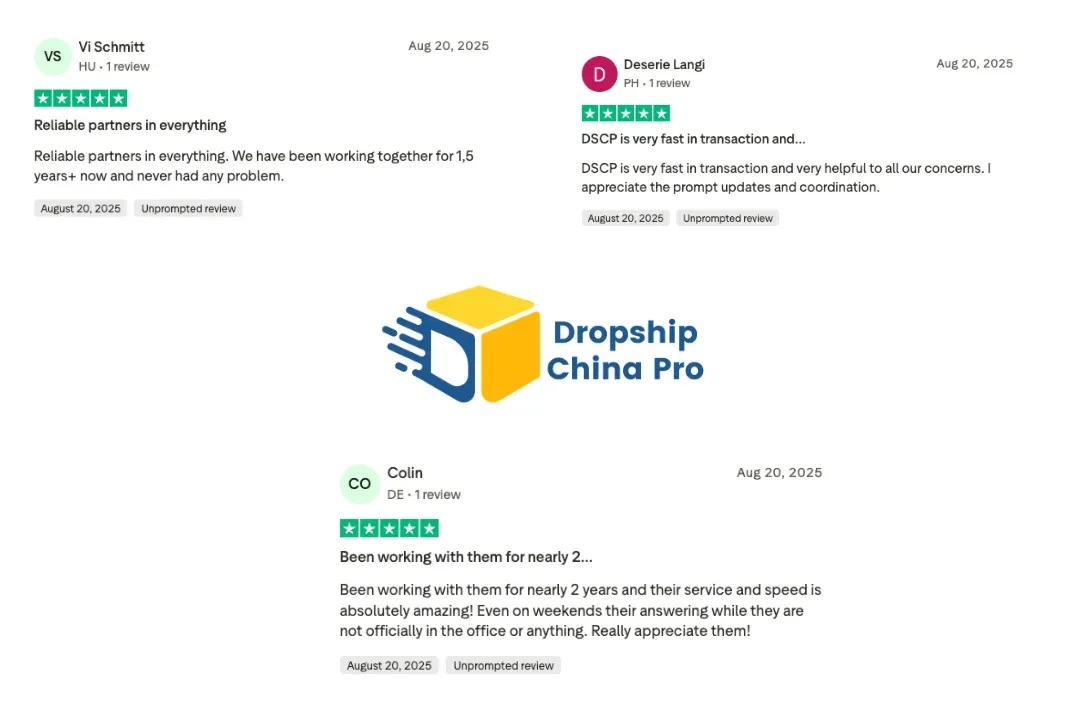
The difference between dropshipping and a reliable fulfillment partner shows up most clearly in the day-to-day experience of running your store. Deserie Langi, who works with DSCP from the Philippines, highlights how the speed of communication changes operations entirely: transactions are fast and the team is genuinely helpful across all concerns, with prompt updates that keep everything on track.
Colin, a German seller who has been with Dropship China Pro for nearly two years, notes something that often goes unsaid in fulfillment discussions: support does not stop when the office closes. Even on weekends, the team is responsive, which he says makes a real difference when issues need quick resolution. Vi Schmitt from Hungary describes the relationship simply as reliable partners in everything. After more than a year and a half of working together, there have been zero problems.
These are not exceptional outcomes. They reflect what happens when you work with a fulfillment partner whose emphasis is on long-term relationship quality rather than transactional volume.
Which Model Is Right for Your Business?
The honest answer depends on where you are in your business journey.
Dropshipping makes sense when you are:
- Testing a new product or niche before committing capital
- Operating with very limited startup funds
- Running a store with a global customer base that does not prioritize fast delivery
A 3PL or hybrid model makes sense when you are:
- Processing consistent monthly order volumes
- Building a brand that competes on customer experience
- Selling to US or European customers who expect 2-5 day delivery
- Experiencing quality or delivery complaints that are hurting your reviews
Most sellers who scale successfully start with dropshipping to validate demand, then transition to a 3PL or hybrid model once they have proof that a product and market work. The two models are not opposites. They are stages.
Which Model Fits Your Business Stage?
| Business Stage | Recommended Model |
|---|---|
| Testing a new niche | Dropshipping |
| Under 100 orders/month | Dropshipping |
| 100–500 orders/month | Hybrid Fulfillment |
| 500–2,000 orders/month | 3PL or Hybrid |
| Building a brand | 3PL Fulfillment |
| Scaling internationally | 3PL with Multi-Warehouse |
Frequently Asked Questions about 3PL vs Dropshipping
What is the main difference between 3PL and dropshipping?
A 3PL provider stores inventory you own and fulfills orders on your behalf, giving you control over quality, branding and shipping speed. Dropshipping requires no inventory ownership as suppliers ship directly to customers, but this comes at the cost of quality control and customization.
Which model is better for a new e-commerce store?
Dropshipping is generally the better starting point for new stores because it eliminates upfront inventory risk and allows product testing across multiple categories. Once you identify what sells consistently, transitioning to a 3PL or hybrid model improves the customer experience and supports brand building.
Can I use both 3PL and dropshipping at the same time?
Yes, and many growing stores do exactly this. Fast-moving, proven products are fulfilled through a 3PL warehouse for speed and quality. Slower-moving or experimental products continue through dropshipping. This balanced approach optimizes both cost and customer experience.
How does the hybrid fulfillment model work?
The hybrid model sources products internationally, typically from manufacturers in China, and ships them in bulk to domestic warehouses before orders arrive. When a customer orders, the product ships from the local warehouse rather than overseas, delivering in 2-5 days at a cost structure much lower than air freight express shipping.
Is dropshipping still profitable in 2026?
Yes, but the margin for error has narrowed. Consumer expectations around delivery speed have risen significantly, and competition in most niches is higher than it was a few years ago. Dropshipping remains viable for well-researched niches with clearly differentiated products, but relying solely on it as a long-term strategy carries increasing risk as buyer expectations rise.
What should I look for in a 3PL fulfillment partner?
Look for physical warehouse addresses you can verify, documented quality control processes, transparent pricing with no hidden fees, platform integration with your e-commerce store and responsive account management. A provider that has worked with clients for multiple years is a stronger signal of reliability than marketing claims alone.
How much does 3PL fulfillment cost compared to dropshipping?
3PL fulfillment typically costs 15-30% more per order than direct dropshipping due to storage, pick and pack and receiving fees. However, the improved customer experience leads to lower return rates, fewer support tickets and higher repeat purchase rates that often more than offset the cost difference for stores with consistent order volumes.
Ready to Upgrade Your Fulfillment?
If you are at the stage where dropshipping limitations are holding your store back, get in touch with Dropship China Pro to discuss what a hybrid fulfillment setup looks like for your order volume and product mix.
Conclusion
The 3PL vs dropshipping decision is not a permanent one. It is a judgment call about where your business is right now and what it needs to reach the next stage. Dropshipping lowers the barrier to entry and reduces risk when you are figuring out what to sell. A 3PL or hybrid model raises the quality of your customer experience once you know what works and are ready to build something lasting.
The stores that scale successfully are typically the ones that treat fulfillment as a strategic function rather than an afterthought. Your supplier ships the product, but your fulfillment model shapes how customers experience your brand. Choose accordingly.
References
- National Retail Federation. (2024). Consumer View: Retail in 2024. https://nrf.com
- Baymard Institute. (2024). E-commerce Checkout Usability Study. https://baymard.com
- Reddit community discussions. r/dropship and r/ecommerce. https://www.reddit.com/r/dropship/ and https://www.reddit.com/r/ecommerce/

Hi, I’m Yavuz. I help e-commerce businesses grow through strategic content. Here, I share insights on fulfillment solutions, 3PL partnerships, and digital marketing strategies based on real data and industry trends.