The skills that determine dropshipping success are mostly business and marketing skills, not technical ones. You do not need to know how to code or build websites. You need to know how to find products people want, market them effectively, read your own data and keep customers happy. Those abilities decide whether a store grows or stalls.
This is the single biggest misconception that keeps people from starting. They assume that because dropshipping is an ecommerce model, it requires deep technical knowledge. It does not. The most successful dropshippers are sharp marketers and disciplined operators who learned a focused set of practical skills, most of which can be developed in months rather than years.
Here are the eight skills that matter most in 2026 and how to build each one.
Key Takeaways for 8 Dropshipping Skills You Need to Succeed
- Dropshipping success depends primarily on marketing, data analysis and customer service skills rather than technical or web development ability.
- The dropshipping market is forecast to reach $476.1 billion by the end of 2026, and competition is high, which means skill execution matters more than it did when the barrier to entry was lower (AutoDS, 2026).
- Two skills have become far more important since 2021: data analysis, because dropshipping is now a data-driven business, and AI proficiency, because the tools that run a modern store increasingly depend on it.
- Most of these skills can be developed through practice and free online resources within a few months. None require formal qualifications.
- The skill with the highest leverage is supplier management, since most returns, complaints and chargebacks trace back to supplier problems that the right partnership prevents.
What Skills Do You Need for Dropshipping?
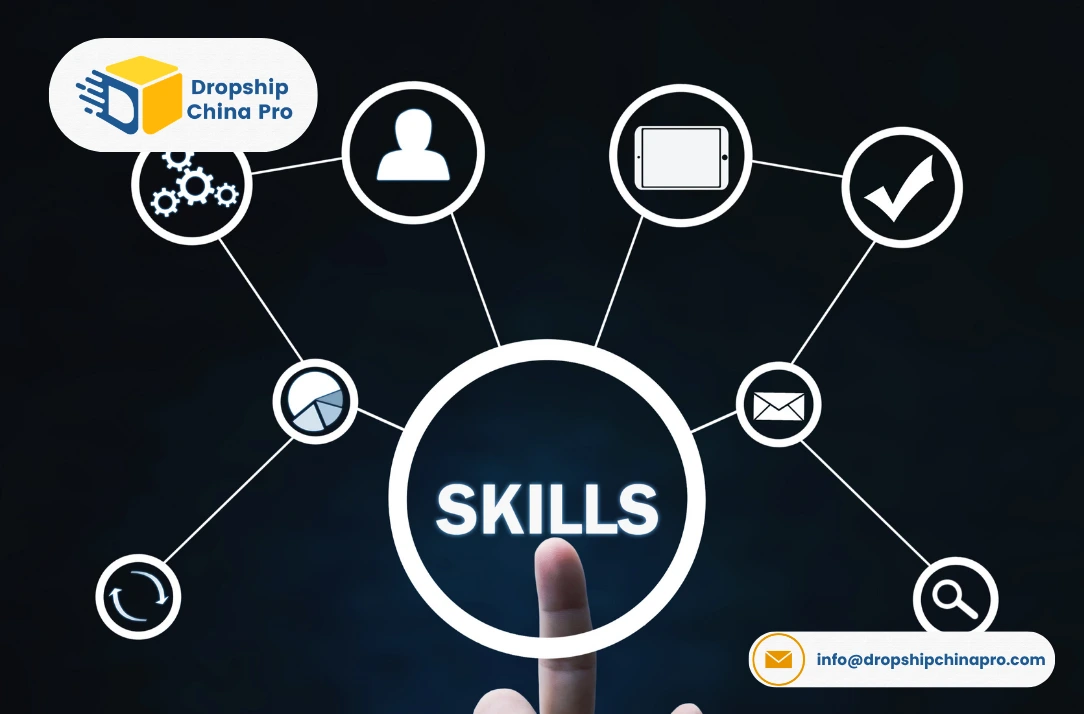
To run a successful dropshipping business, you need eight core skills: marketing and advertising, data analysis, customer service, product research, supplier management, financial management, branding and adaptability with modern tools including AI. None of these require a technical background. All of them can be learned. The combination is what separates stores that grow from stores that quietly close in their first year.
The reassuring part is that these are transferable life and business skills. Time spent developing them pays off well beyond dropshipping itself.
1. Marketing and Advertising
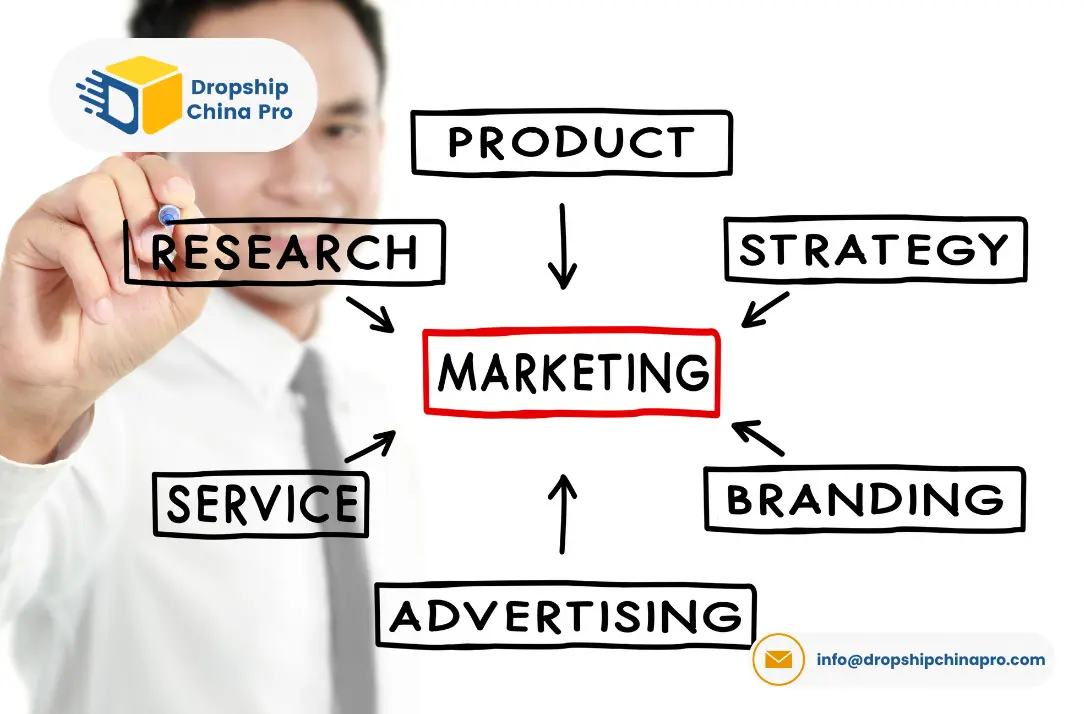
This is the skill that matters most. A dropshipping business without marketing does not fail slowly; it fails immediately. No traffic means no sales, regardless of how good the products or store are.
Modern dropshipping marketing centers on paid advertising and social content. You need a working understanding of how to run and read Meta and TikTok ad campaigns, how to write copy that converts and how to build organic reach through short-form video. You do not need to be an expert on day one. You need to understand the fundamentals well enough to test, measure and improve.
The good news is that marketing is largely learnable through practice. Running your own small campaigns teaches more than any course. For a current breakdown of which channels and techniques are producing results, our guide to the best dropshipping marketing techniques covers the full landscape with 2026 data.
2. Data Analysis

This is the skill that barely existed in dropshipping guides five years ago and is now essential. Dropshipping in 2026 is a data-driven business. Every decision worth making: which products to scale, which ads to cut, where customers drop off, is answered by data you already have access to.
You do not need to be a statistician. You need to be comfortable reading the core metrics: conversion rate, cost per acquisition, average order value, return on ad spend and customer lifetime value. The ability to look at a dashboard and know what to do next is what separates operators who scale from those who guess.
This skill compounds. The more you practice reading your store’s data, the faster you spot what is working and the less money you waste on what is not. It is also one of the most valuable transferable skills you can build, sought after in nearly every industry.
3. Customer Service
Your store cannot exist without customers, and how you treat them determines whether they return and what they tell others. Good customer service is how dropshipping businesses build loyalty and reputation. Poor customer service permanently damages both.
The challenge in dropshipping is that your fulfillment is handled by third parties, which means you have less direct control over the issues that generate customer service situations: shipping times, product quality and order accuracy. This makes two things essential. First, responsive, clear communication when issues arise. Second, working with a supplier whose quality control and fulfillment reliability prevent those issues in the first place.
Treat every complaint as a chance to improve your reputation rather than a problem to avoid. Customers who have a problem resolved well often become more loyal than those who never had a problem at all.
4. Product Research
The ability to identify products that will sell is part research, part strategic thinking and part pattern recognition. A large part of dropshipping success hinges on spotting demand before the market is saturated and validating that demand with real evidence rather than guesses.
Strong product research means understanding your target audience deeply, reading demand signals through search trends and social engagement and calculating whether a product’s economics actually work after all costs. It also means thinking long-term: building a coherent product range that creates a brand rather than chasing one viral item after another.
This skill improves with every product you test. Experienced dropshippers develop an instinct for what will work, but that instinct is built on the foundation of disciplined research repeated many times.
5. Supplier Management

This is the highest-leverage skill on this list and the one most beginners underestimate. Most returns, complaints, chargebacks and reputation problems in dropshipping trace directly back to supplier issues: wrong items, inconsistent quality, slow shipping or poor communication.
Managing suppliers well means knowing how to vet them, how to communicate expectations clearly, how to verify quality through samples before listing and how to build a relationship that holds up when problems arise. The difference between a reliable supplier and an unreliable one shows up in your return rate, your customer reviews and your margins.
For most dropshippers, the most effective approach is working with a dedicated sourcing and fulfillment partner rather than juggling individual marketplace sellers. Dropship China Pro provides vetted suppliers, quality control and fulfillment through US and international warehouses, which removes most of the supplier-management burden from your plate. Explore our sourcing and fulfillment service or connect your store through our Shopify app.
6. Financial Management

This is the skill dropshippers take for granted until a few costly mistakes teach them otherwise. Bookkeeping is not enjoyable, but tracking your numbers is what keeps a business profitable rather than just busy.
Financial management in dropshipping means understanding your true margins after every cost, advertising, shipping, fees, returns and supplier price, and tracking them consistently. It means knowing your break-even point, managing cash flow around payment processor holds and pricing products for sustainable profit rather than just competitiveness.
You can learn the fundamentals of ecommerce bookkeeping in a few days through free resources. The discipline of tracking your numbers regularly matters more than any advanced accounting knowledge. A store that knows its numbers can make confident decisions. A store that does not is flying blind.
7. Branding and Creativity
Creativity in dropshipping is not about graphic design, which you can outsource. It is about the ideas that make your store and products stand out in a crowded market.
Branding has become significantly more important as competition has increased. When multiple sellers source the same products from the same suppliers, your brand identity is one of the few genuine competitive advantages you have. This means developing a coherent voice, a recognizable visual identity and product presentation that feels like a real business rather than a generic storefront.
Creative skill shows up in your product descriptions, your ad angles, your store design direction and the overall experience a customer has with your brand. You do not need to execute every creative element yourself, but you need the vision to direct how your brand is presented. This is increasingly what turns a one-time buyer into a repeat customer.
8. Adaptability and AI Proficiency

The final skill is the one that has changed the most. In 2026, the ability to adapt to new tools, particularly AI tools, has become a genuine competitive advantage rather than a nice-to-have.
You still need basic technical comfort: choosing a domain, setting up payment gateways, navigating your ecommerce platform. These remain easy to learn. What has been added is fluency with the AI tools that now handle tasks that used to require specialists. Generating product descriptions, drafting ad copy variations, customizing your store and analyzing data are all faster with AI, and the dropshippers who use these tools well operate with a meaningful edge.
A clear example is store customization. Tasks that used to require hiring a developer can now be done by describing what you want to an AI tool. Our guide to vibe coding your dropshipping store shows exactly how this works in practice. The broader point is that the most successful dropshippers in 2026 are not the most technical ones. They are the ones most willing to adopt new tools as they emerge.
The 8 Dropshipping Skills at a Glance
| Skill | Why It Matters |
|---|---|
| Marketing and advertising | No traffic means no sales. The single most important skill for any dropshipping store. |
| Data analysis | Dropshipping is data-driven. Reading your metrics tells you what to scale and what to cut. |
| Customer service | Builds loyalty and reputation. Poor service permanently damages both. |
| Product research | Identifying real demand before saturation is what makes a store profitable. |
| Supplier management | The highest-leverage skill. Most returns and chargebacks trace back to supplier problems. |
| Financial management | Knowing your true margins keeps the business profitable rather than just busy. |
| Branding and creativity | Your brand identity is one of the few real advantages when competitors sell the same products. |
| Adaptability and AI proficiency | Fluency with AI tools is now a genuine competitive edge, not a nice-to-have. |
How to Build These Skills
None of these eight skills require formal qualifications, and most can be developed within a few months through deliberate practice.
Start with the two highest-leverage skills first: marketing and supplier management. Marketing because nothing happens without traffic, and supplier management because it prevents the problems that sink stores. Learn marketing by running small, real campaigns and reading the results rather than just consuming content. Handle supplier management by partnering with a reliable supplier early, which removes much of the learning curve.
Which Skills to Build First
| Priority | Skills | How to Build Them |
|---|---|---|
| Build first | Marketing and supplier management | Run small real ad campaigns and read the results. Partner with a reliable supplier early to skip the hardest part of the learning curve. |
| Build together | Data analysis and financial management | They overlap. Reading your store metrics and understanding your margins are two halves of the same discipline. |
| Build as you operate | Customer service, product research, branding, AI proficiency | Develop naturally through running the store. Treat every order, complaint and new tool as a learning opportunity. |
Build data analysis and financial management together, since they overlap. Reading your store’s numbers and understanding your margins are two halves of the same discipline. Customer service, product research, branding and AI proficiency develop naturally as you operate, especially if you treat every order, every complaint and every new tool as a learning opportunity.
If you are just getting started, our complete guide to starting a dropshipping business walks through how these skills apply across the setup process.
FAQs for the Dropshipping Skills
What skills do you need for dropshipping?
The eight core skills for dropshipping success are marketing and advertising, data analysis, customer service, product research, supplier management, financial management, branding and adaptability with modern tools including AI. Most are business and soft skills rather than technical ones, and all can be learned through practice and free resources.
Do you need technical skills to start dropshipping?
No. You need only basic technical comfort: choosing a domain, setting up payment gateways and navigating your ecommerce platform. These take days to learn. Web development and coding skills are not required, especially now that AI tools handle store customization tasks that previously needed a developer.
What is the most important skill for dropshipping?
Marketing is the most important skill because no traffic means no sales. However, supplier management is the highest-leverage skill because most returns, complaints and chargebacks trace back to supplier problems. Strong stores develop both: marketing to drive sales and supplier management to protect the customer experience and margins.
How long does it take to learn dropshipping skills?
Most dropshipping skills can be developed within a few months through deliberate practice. Basic technical skills take days. Marketing, data analysis and financial management take longer to develop real competence but can be learned well enough to start within weeks. The key is learning by doing rather than only consuming content.
Is dropshipping hard to learn in 2026?
Dropshipping is accessible to learn but competitive to master. The skills themselves are not difficult, but executing all of them well while the market is crowded takes discipline. The barrier is not intelligence or technical ability. It is consistency, willingness to learn from data and the patience to develop the full skill set rather than expecting quick results.
Conclusion
The skills that make a dropshipper successful are mostly the skills that make any entrepreneur successful: marketing, financial discipline, customer focus and the willingness to adapt. The technical barrier that many people imagine simply does not exist, and AI tools have lowered it further.
If there is one place to focus first, it is the combination of marketing and supplier management. Marketing brings customers in. Supplier management ensures those customers have a good experience and come back. Everything else builds on that foundation over time.
Dropshipping rewards the operators who treat it as a real business and commit to building these skills steadily. The opportunity in a $476 billion market is real for those willing to do that.
References
- AutoDS. (2026). Dropshipping 2026: How to dropship and start a business guide. autods.com
- Spocket. (2026). How to become a successful dropshipper: 7 pro tips for 2026.
- Yuv Trainings. (2026). Top skills you learn from a dropshipping course in 2026. yuvtrainings.com
- BlueCart. (2026). Ecommerce skills needed to succeed in 2026 and beyond.
- Shopify. (2026). How to start a dropshipping business: 9 essential steps (2026). shopify.com

Hi, I’m Yavuz. I help e-commerce businesses grow through strategic content. Here, I share insights on fulfillment solutions, 3PL partnerships, and digital marketing strategies based on real data and industry trends.