Choosing the wrong supplier can quietly sink your e-commerce store. Shipments arrive late, customers file chargebacks, and your Shopify reviews take a hit before you even figure out what went wrong. In 2026, when customer expectations around delivery are higher than ever, your choice of US dropshipping suppliers is one of the most consequential decisions you will make as a store owner.
This guide breaks down what actually separates reliable US-based suppliers from the rest, compares the leading options on the market and helps you make a decision based on your real business needs rather than marketing promises.
Key Takeaways
- 88% of consumers consider fast delivery a key factor in their purchasing decisions (National Retail Federation, 2024).
- Shipping delays cause 22% of cart abandonments before checkout is even completed (Baymard Institute, 2024).
- The hybrid fulfillment model, combining China-sourced products with US warehouse stock, now offers small and mid-size sellers the speed of domestic shipping without sacrificing margin.
- Reliability and communication matter as much as shipping speed when evaluating a supplier long-term.
- Not all “US-based” suppliers actually warehouse inventory on US soil. Always verify physical warehouse addresses before committing.
What Makes a US Dropshipping Supplier Worth Using in 2026?
The baseline expectation has shifted. Thanks to the Amazon Prime effect, buyers in the United States now treat 2-5 day delivery as standard, not a premium. If your store is shipping from overseas without a domestic warehouse buffer, you are starting every transaction at a disadvantage.
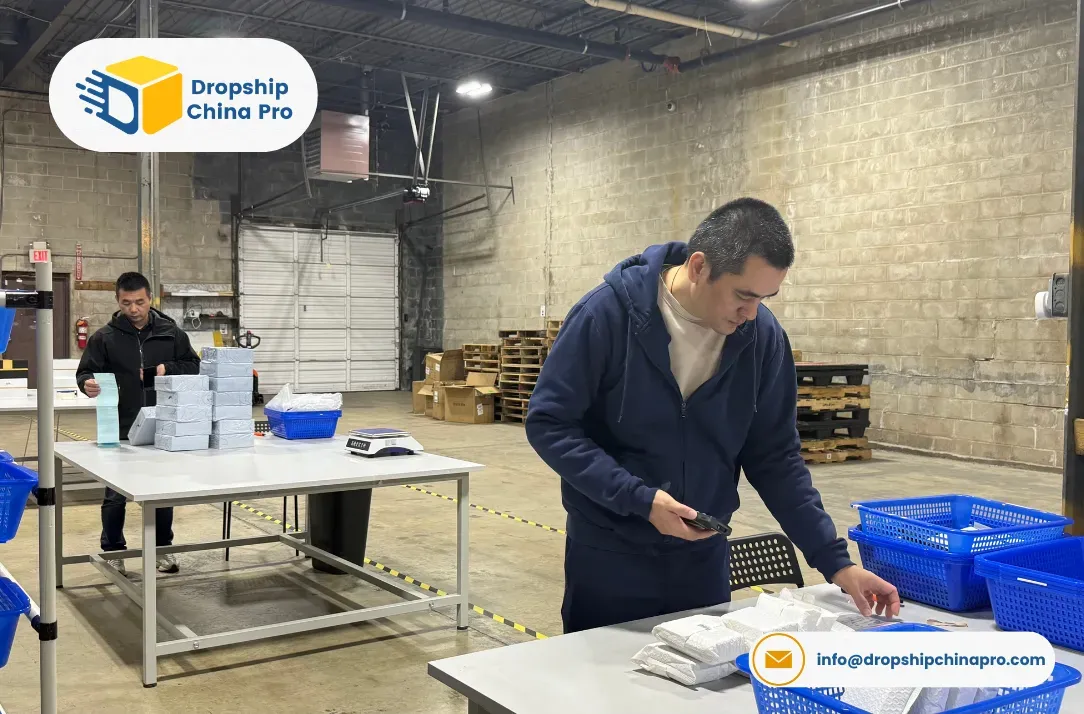
A legitimate US-based dropshipping supplier stores inventory in American fulfillment centers and ships directly to your customers when orders come in. The best ones go further by offering quality control before products ever leave the warehouse, integration with platforms like Shopify and WooCommerce, and transparent, predictable pricing.
What you should look for:
- Physical warehouse addresses in the US (not a forwarding address)
- Integration with your e-commerce platform
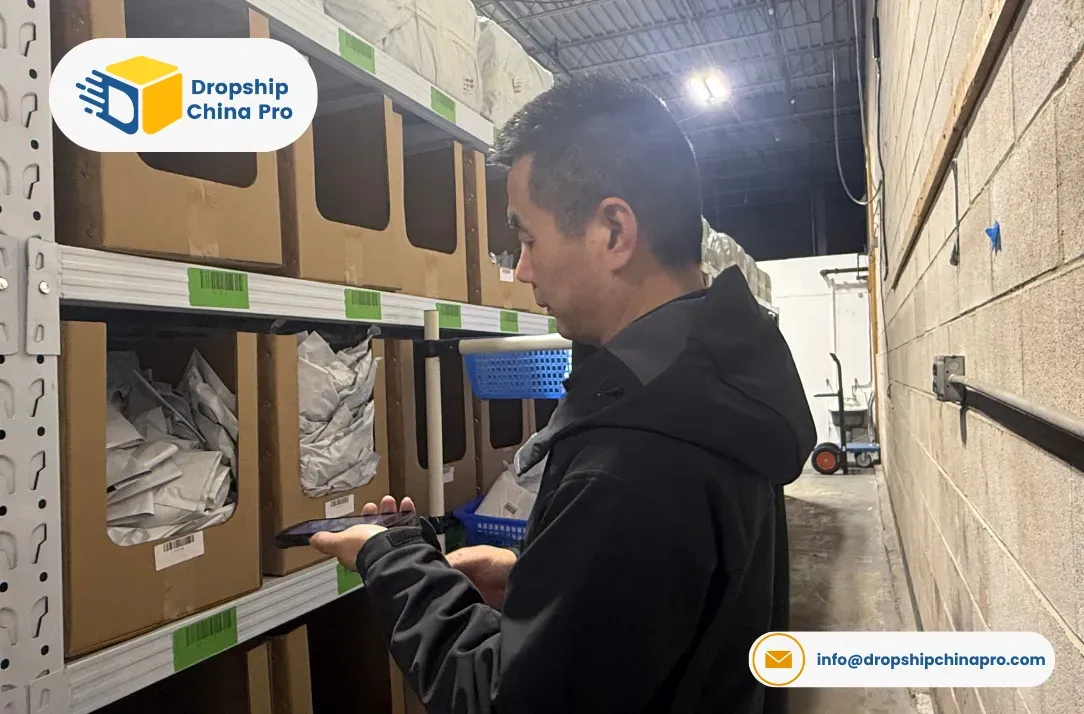
- Documented quality inspection processes
- Clear fee structures with no hidden costs
- Responsive account management, not just ticketing systems
The Hybrid Fulfillment Model: Why It Changes the Equation
Most growing e-commerce businesses face a real tension. Sourcing products directly from China is cost-effective but slow. Stocking domestically is fast but capital-intensive. The hybrid fulfillment model resolves this by sourcing internationally in bulk and storing inventory in US warehouses for fast domestic dispatch.
This is no longer a niche approach. It is becoming the standard for serious small to mid-size dropshippers who need to compete with larger brands on delivery speed without inflating product costs.
A practical example: a home goods store processing 400-500 monthly orders moved its top 15 products to a US warehouse while keeping slower-moving SKUs on direct China shipping. Within 60 days, average delivery time dropped from 18-22 days to 3-4 days, return rates fell by half, and repeat purchase rates jumped from 18% to 31%. The per-order cost increased by roughly $3.50, but the lifetime value improvement more than covered it.
Top US Dropshipping Suppliers to Consider in 2026
US Dropshipping Suppliers at a Glance
| Supplier | Best For |
|---|---|
| Dropship China Pro | Hybrid fulfillment, 100–2,000 orders/month |
| Spocket | Early-stage stores, quick catalog setup |
| SaleHoo | Finding and vetting domestic suppliers |
| CJDropshipping | Beginners, broad product variety |
| Zendrop | New sellers, simple Shopify setup |
Dropship China Pro (DSCP)
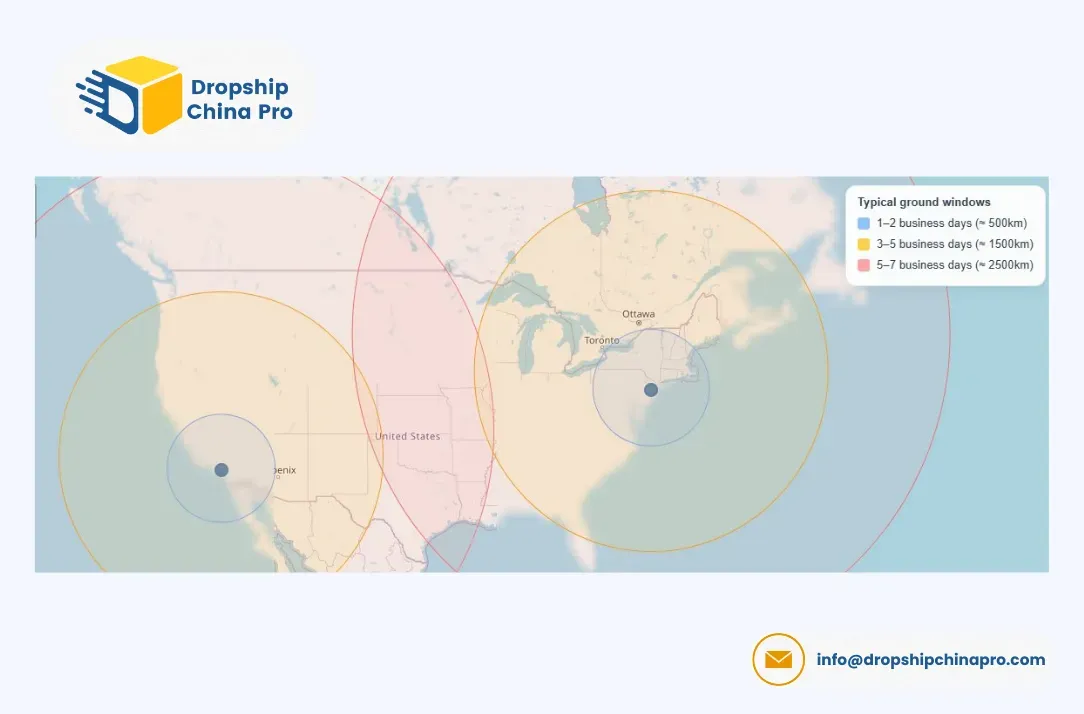
Dropship China Pro operates a hybrid fulfillment model with warehouses in Pomona, California and New Brunswick, New Jersey, positioned to cover both major US coasts. Products are sourced from verified factories in China, inspected for quality, and shipped to US facilities via ocean freight before orders even come in.
Key facts:
- Serving 2,500+ active stores with a 4.9/5 Trustpilot rating
- 99.2% on-time dispatch rate
- Pay-as-you-go pricing with no monthly minimums
- Certified Shopify app with WooCommerce integration
- Handles sourcing, quality inspection, branded packaging, and private label options
- In operation since 2016-2017
DSCP is particularly well-suited for sellers doing 100-2,000 orders per month who want a single partner handling the full chain from factory to front door. The emphasis is on reliability and long-term partnership rather than rock-bottom pricing. Several of their clients have been with them for 7-8 years, which speaks to consistency over time.
Spocket
Spocket connects sellers to a network of US and European suppliers through a marketplace model. It integrates well with Shopify and WooCommerce and offers a wide product catalog with relatively quick onboarding.
The tradeoff is that you are competing with many other sellers using the same catalog, and product margins tend to be tighter. It works well for stores in the early testing phase, but brands looking for differentiation and control over quality typically outgrow it.
SaleHoo
SaleHoo is a supplier directory rather than a fulfillment service. It gives you access to a vetted list of wholesalers and suppliers across the US, UK, Canada, and Australia. It is a useful research tool for finding domestic supplier relationships, but you will still need to manage fulfillment logistics yourself.
CJDropshipping
CJDropshipping offers a broad product catalog and US warehouse options for certain SKUs. Shipping times vary significantly depending on the product and warehouse availability, so the experience is less consistent than that of dedicated fulfillment providers. It can be a reasonable entry point for beginners, but it requires active management as you scale.
Zendrop
Zendrop provides US-based fulfillment for a curated product selection, with a straightforward Shopify integration. It is more accessible for new sellers and offers faster domestic shipping than direct China sourcing. Like Spocket, the catalog overlap with other stores is a limitation for brands trying to build a unique identity.
US Warehouse Locations and Why They Matter
Where inventory sits directly determines how quickly and cheaply it reaches your customer. A single warehouse strategy leaves you exposed to 5-6 day ground shipping across the country. A two-warehouse approach covering both coasts brings 90% of the US population within 2-3 days of standard ground shipping.
The most strategically valuable locations are:
- East Coast: New Jersey and Pennsylvania, close to the Port of New York/New Jersey, and 50+ million people in the Northeast corridor
- West Coast: Southern California (Los Angeles, Pomona, Inland Empire), close to the Port of Los Angeles and efficient for western US coverage
For stores with a national US customer base, dual-coast inventory positioning is worth the added complexity.
Pricing: What to Actually Budget For
US fulfillment costs more per order than direct international shipping. That is unavoidable. But when you factor in reduced returns, fewer customer service tickets, and higher repeat purchase rates, the economics often favor domestic fulfillment for stores with proven demand.
Typical cost ranges to expect:
- Storage: $0.50 to $2.00 per cubic foot per month
- Pick and pack: $2.00 to $6.00 per order
- Receiving: $25 to $75 per incoming shipment
- Shipping: Standard carrier rates, often discounted through supplier volume agreements
Plan for 15-30% higher per-order costs compared to international shipping. Build this into your margin calculation before switching rather than after.
US Fulfillment Cost Breakdown
| Fee Type | Typical Cost Range |
|---|---|
| Storage | $0.50 – $2.00 per cubic ft/month |
| Pick & Pack | $2.00 – $6.00 per order |
| Receiving | $25 – $75 per shipment |
| Shipping | Carrier rates (often discounted) |
| vs. Direct China Shipping | 15–30% higher per order |
What E-Commerce Sellers Are Saying
Sellers who have worked with Dropship China Pro consistently highlight two things: communication and proactive problem-solving. One Australian seller who switched based on a peer recommendation noted the competitive pricing and quality of support, mentioning that the team is genuinely responsive when issues arise. A California-based seller described the experience as one where the team puts in maximum effort to source products correctly and communicates clearly throughout. A US seller summed it up simply: fast fulfillment and the best pricing available on products.
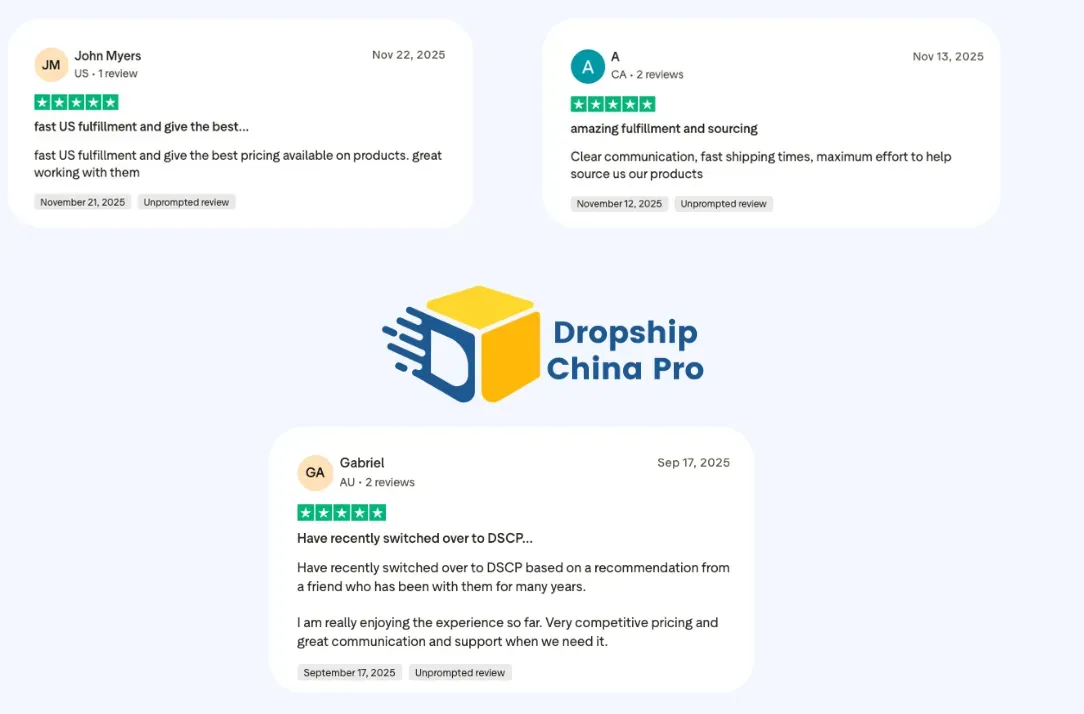
These are not extraordinary claims. They reflect the reality that in dropshipping, your supplier’s communication quality is just as important as their shipping speed, because problems will always come up.
Community Insights: What Dropshippers Are Discussing
On Reddit communities like r/dropshipping and r/ecommerce, the recurring themes when choosing US dropshipping suppliers are consistent: actual warehouse verification, hidden fees on invoices, and response time during peak season. Many sellers report discovering that a supplier advertised as “US-based” was simply forwarding orders to a third party. The advice repeated most often is to request the physical warehouse address and verify it before placing your first real order.
This aligns with professional guidance: transparency about infrastructure is a leading indicator of a supplier’s overall reliability.
How to Evaluate a US Dropshipping Supplier Before Committing
Before signing up with any supplier, get answers to these specific questions:
- What are your exact US warehouse addresses?
- What does your quality control process look like at the product level?
- What is your average order processing time from receipt to shipment?
- How do returns work, and who handles the inspection?
- Do you have a dedicated account manager or only ticket-based support?
- What happens to my orders during your peak volume periods?
Vague answers or reluctance to provide specifics are red flags regardless of how polished the website looks.
Frequently Asked Questions About US Dropshipping Suppliers
What is the best dropshipping supplier in the US for Shopify stores?
There is no single answer, but the most important factors are platform integration, physical US warehouse presence, and quality control processes. For Shopify sellers specifically, suppliers with a certified Shopify app and automated order routing remove a lot of manual work. Dropship China Pro offers a dedicated Shopify app alongside US warehouse fulfillment, making it a strong option for stores at the 100-2,000 orders per month range.
How do I find a legitimate US-based dropshipping supplier?
Start by asking for physical warehouse addresses and verifying them independently. Legitimate suppliers will have no hesitation in providing this. Avoid services that only advertise “US-based” without specifying locations. Checking Trustpilot reviews and Reddit communities like r/dropshipping can also surface real seller experiences that marketing pages will not.
Is dropshipping from US warehouses more expensive than shipping from China?
Yes, typically 15-30% more per order. However, faster delivery reduces return rates, increases repeat purchases and cuts down on customer service costs. For most US-focused stores with healthy margins, the improved customer experience justifies the cost difference once order volumes are consistent.
What is the difference between a 3PL and a dropshipping supplier?
A 3PL (third-party logistics provider) stores inventory you have already purchased and fulfills orders on your behalf. You carry the stock risk. A dropshipping supplier owns the inventory and you only pay when a customer places an order. Some companies, including Dropship China Pro, offer both models, which lets you start lean and transition to a 3PL arrangement as demand becomes predictable.
How fast can a US dropshipping supplier deliver to customers?
Most US-based fulfillment operations process and ship within 24 hours of receiving an order. Standard ground shipping then delivers in 2-5 business days, depending on the customer’s location relative to the warehouse. With dual-coast warehouses (East and West), 2-3 day delivery is achievable for the majority of US addresses.
Can I use a US dropshipping supplier if I source products from China?
Yes, and this is exactly what the hybrid fulfillment model is designed for. Products are sourced from Chinese factories, shipped in bulk to US warehouses, and then fulfilled domestically when orders come in. This approach combines the cost advantages of overseas manufacturing with the delivery speeds customers expect from domestic shipping.
Ready to Evaluate Your Fulfillment Setup?
If your current shipping times are hurting conversion or driving return rates up, it may be time to look at US warehouse options. Get in touch with Dropship China Pro to discuss your order volume, product types, and what a hybrid fulfillment setup would cost for your specific store.
Conclusion
The best US dropshipping suppliers in 2026 are not simply the ones with the longest product catalogs. They are the ones that can deliver reliably, communicate proactively and scale with your business without forcing you to start over every time you grow. Speed matters, but consistency is what builds a brand that customers return to.
Whether you are processing 100 orders a month or moving toward 2,000, the decision of who fulfills your orders is one of the most direct levers you have on customer satisfaction, return rates, and long-term profitability. Choose accordingly.
References
- Baymard Institute. (2024). E-commerce Checkout Usability Study. baymard.com
- National Retail Federation. (2024). Consumer View: Retail in 2024. nrf.com
- Reddit community discussions. r/dropshipping and r/ecommerce. reddit.com/r/dropshipping/ and reddit.com/r/ecommerce/

Hi, I’m Yavuz. I help e-commerce businesses grow through strategic content. Here, I share insights on fulfillment solutions, 3PL partnerships, and digital marketing strategies based on real data and industry trends.