
Starting an online store has never been more accessible, but that does not mean it is automatic. The AliExpress and Shopify combination remains one of the most practical setups for new sellers because it lowers the financial barrier without requiring technical expertise. What it does require is a clear understanding of how each part of the process works and where the real decisions happen.
This guide walks you through the full setup from niche selection to your first fulfilled order, with honest context on what to expect at each stage.
Key Takeaways for AliExpress Dropshipping on Shopify
- Shopify powers over 4.5 million stores globally as of 2025, making it the most established platform for building a branded dropshipping store (AutoDS, 2026)
- The average Shopify dropshipper earns profit margins of 20 to 40%, though real margins depend heavily on ad spend and product selection (AutoDS, 2026)
- 64% of store owners cite shipping delays as their biggest operational pain point, which makes supplier selection as important as product selection (FluentCart, 2026)
- Importing too many products is one of the most consistent mistakes new dropshippers make, according to an analysis of over 1,000 Reddit and Quora posts on the topic (AMZScout, 2026)
- A niche-focused store consistently outperforms a general store in customer loyalty and repeat purchase rate
- Profit margins of 15 to 25% net are realistic for stores managing costs carefully, based on TrueProfit’s analysis of 1,200 dropshipping stores in 2025
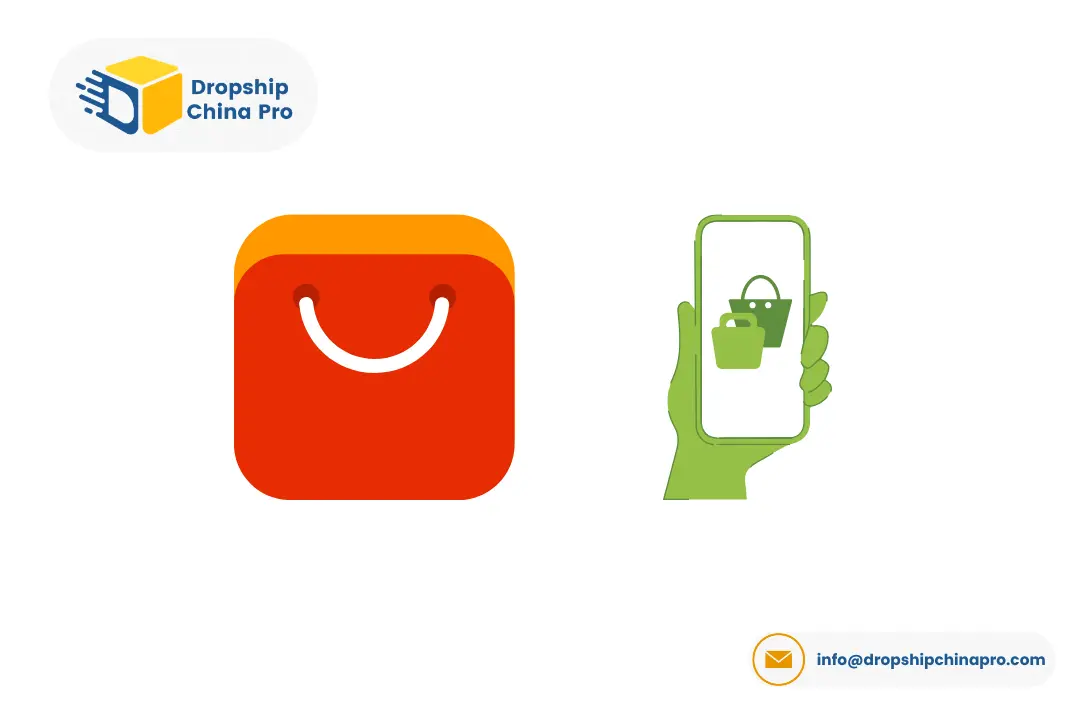
Why Shopify and AliExpress Work Well Together
Shopify provides the storefront. AliExpress provides the products. Neither solves the other’s problems, but together they cover the two things that stop most people from starting: the technical complexity of building a store and the cost of stocking inventory.
With AliExpress, you do not purchase products until a customer has already paid you. That removes the inventory risk that makes traditional retail so capital-intensive. With Shopify, you get a customizable store with built-in payment processing, a large app ecosystem and straightforward tools for managing orders, customers and marketing.
The combination is not without limitations. Quality control sits outside your hands, and shipping times from China require proactive communication with customers. These are manageable, but they are not problems that go away on their own. Understanding them up front is what separates stores that last from those that close after three months. If you want a full picture of how AliExpress dropshipping works before diving into the setup, our complete AliExpress dropshipping guide covers the model in depth, including its advantages, limitations and when it makes sense to move beyond it.

Step 1: Choose a Niche Before You Choose Products
The most consistent mistake in early-stage dropshipping is starting with products instead of starting with an audience. A niche is not a category. Electronics is a category. Desk accessories for remote workers are a niche. The distinction matters because a niche gives you a specific customer to write for, market to and build trust with.
A niche-focused store outperforms a general store in almost every meaningful metric. According to Shopify’s analysis of successful dropshippers, brand identity and a clear customer focus are what separate sustainable operations from stores that cycle through products without traction (Shopify, 2026).
To choose a niche that works:
- Look for problems people complain about in online communities, not just products that seem popular
- Cross-reference demand using Google Trends and the AliExpress Dropshipping Center
- Avoid categories that are heavily saturated with paid advertising, including generic phone accessories, LED gadgets and unbranded fitness equipment
- Check that your chosen niche has products priced between $15 and $80 on AliExpress, which leaves enough room for a 3x to 4x markup after shipping costs
A useful exercise before committing: search your niche on r/Dropship and r/Ecommerce (both with over 800,000 members combined) to see what experienced sellers say about margin and competition in that space. These communities surface practical insight that product research tools often miss (LooperBuy, 2025).
Step 2: Set Up Your Shopify Store
Go to shopify.com and start a free trial. You will be asked for a store name, which you can change later, and some basic business information. Once inside the dashboard:
- Go to Online Store > Themes and select a theme suited to your niche. The Dawn theme is a widely used starting point and costs nothing. Choose something clean and fast-loading rather than visually complex
- Set up your essential pages: About Us, Contact, Shipping Policy and Refund Policy. These are not optional. Customers check them, and their absence signals to visitors that the store is not legitimate
- Go to Settings > Payments and connect your preferred payment provider. Shopify Payments is the simplest option if available in your country. PayPal is a common addition
- Under Settings > Shipping and Delivery, define your shipping zones. Many dropshippers set a flat rate or offer apparent free shipping built into the product price
Shopify’s basic plan starts at $29 per month. Factor in a domain name (around $10 to $14 per year) and your initial budget for product samples. A realistic starting budget across platform costs, branding and initial testing sits between $300 and $1,500 (BettaMax, 2026).
Step 3: Find and Evaluate Products on AliExpress
Open an AliExpress account at aliexpress.com. Once logged in, you have access to the full product catalog and the AliExpress Dropshipping Center, which is the most underused research tool available to sellers at this stage.
The Dropshipping Center ranks products by sales volume, growth rate and customer demand. It also lets you filter by shipping time and supplier location, which matters significantly if you are selling to U.S. or European customers.
When evaluating a specific product, apply these criteria:
- Rating of 4.5 stars or higher across a meaningful number of reviews (not just a handful)
- Order volume that confirms consistent demand, not a spike from a single viral moment
- Supplier processing time of 1 to 3 days. Anything above that adds directly to your customer’s total wait time. For a full breakdown of how shipping methods compare and what realistic delivery windows look like by destination, see our guide on how long AliExpress takes to ship
- Reviews that include photos from real buyers, not just text. Photo reviews are harder to fake and give you the clearest picture of what the product actually looks like on arrival
- Shipping options that include AliExpress Standard Shipping or better for your target market
Skip products with existing brand logos or trademarks. Dropshipping branded products you do not have authorization to sell creates intellectual property risk that is not worth the short-term margin.
Step 4: Connect AliExpress to Shopify With a Dropshipping App
You need a connector between AliExpress and your Shopify store to import products and automate order processing. DSers is the official AliExpress partner app and the most widely used option for this setup. It is available on the Shopify App Store and is free at the entry level.
Once DSers is installed and connected to both your Shopify store and your AliExpress account:
- Use the DSers Chrome extension to import products directly from AliExpress product pages into your store with a single click
- In DSers, map each product variant to the correct AliExpress supplier listing so the app knows how to route orders
- Set pricing rules inside DSers to apply automatic markups across imported products rather than pricing each item manually
- Configure your default shipping method in DSers settings so every order uses your preferred carrier without requiring manual selection
When a customer places an order in your Shopify store, DSers allows you to fulfill it through AliExpress in a matter of clicks, or automatically if you enable that setting. The tracking number syncs automatically with Shopify and the customer.
Other apps worth knowing: AutoDS handles automation at a more advanced level and supports multiple suppliers beyond AliExpress. Zendrop focuses on faster shipping options. DSers is the most practical starting point for AliExpress specifically.
You can also explore the Dropship China Pro Shopify app as an alternative fulfillment option once you are ready to move beyond marketplace-level sourcing, particularly if your customers are in the U.S. or Europe and delivery speed matters to your positioning.
Step 5: Write Product Listings That Actually Convert
The default product information pulled from AliExpress is written for AliExpress buyers, not your store’s customers. Rewriting it is not optional if you want to compete.
A converting product listing has:
- A title that describes the product for your customer, not a keyword-stuffed string copied from a supplier
- A description that addresses the buyer’s situation: what problem this solves, who it is for and what they should expect when it arrives
- Realistic shipping time information on the product page itself, not buried in a policy page. Cole Turner, one of Shopify’s documented dropshipping success stories, lists shipping times and product origins directly on product pages as a deliberate trust-building decision (Shopify, 2026)
- At least one strong image that shows the product in context, not just on a white background
On pricing: aim for a minimum 3x markup on the AliExpress cost before ad spend. Products priced between $25 and $70 tend to convert most reliably because they are above impulse-buy territory without triggering serious purchase deliberation.
Step 6: Order Samples Before You Scale Anything
This step is skipped more often than any other, and it is the source of more preventable problems than anything else in AliExpress dropshipping.
Order at least one unit from every supplier you plan to work with, shipped to your own address. What you are testing:
- Does the product match its listing photos and description
- How long does dispatch actually take from this specific supplier
- What does the packaging look like when it arrives
- Is there any AliExpress branding on the box or invoice that would undermine your store’s credibility
The cost of a sample is $5 to $30, depending on the product. The cost of scaling a defective product to 200 orders before realizing it is a problem is far higher in refunds, chargebacks and ad spend you cannot recover.
Step 7: Drive Traffic to Your Store
A well-built store with no traffic generates nothing. Traffic is the part of dropshipping that requires the most ongoing investment, in either money or time.
The main channels available to AliExpress Shopify dropshippers in 2026:
Paid advertising through Meta (Facebook and Instagram) remains the dominant channel. Facebook CPM averages around $8.77 in 2026, which is meaningfully higher than it was three to four years ago (FluentCart, 2026). This means product margins need to support ad costs, and testing needs to happen at small budgets before scaling.
TikTok is increasingly effective for product categories with strong visual appeal. TikTok CPM ranges from $5 to $12, and organic content can still generate significant reach without any ad spend.
SEO and content take longer to produce results, but generate traffic without ongoing cost. Product pages optimized for search terms your customers actually use and a blog that addresses niche-specific questions both compound over time.
Email capture from day one. Even before you have significant traffic, an email list lets you re-market to interested visitors. A simple welcome offer on entry converts a meaningful share of first-time visitors into subscribers.
The consistent advice in r/Dropship, a community of 1.2 million members discussing global sourcing, is to start with one traffic channel and learn it properly before adding others (LooperBuy, 2025). Spreading budget across three platforms simultaneously before understanding any of them is one of the fastest ways to exhaust a testing budget without useful data.
Step 8: Manage Orders and Customer Communication
When an order comes in, your process through DSers is:
- Go to the Orders section in DSers
- Review the order details and confirm the mapped supplier
- Click Place Order to send it to AliExpress
- DSers syncs the tracking number back to your store once the supplier dispatches
For customer communication, set expectations at every stage. A confirmation email when the order is placed, a shipping notification with tracking when it dispatches, and a follow-up at the expected delivery window all reduce the volume of inbound “where is my order” messages significantly.
Stores that provide tracking updates see 25% fewer refund and cancellation requests compared to those that do not (ZIK Analytics, 2025). That number has a direct impact on your payment processor standing and your store’s review profile.
AliExpress Dropshipping on Shopify — Setup Checklist
| Setup Stage | What to Do |
|---|---|
| Niche Research | Identify a specific audience and validate demand with Google Trends |
| Shopify Store | Choose a theme, set up payments, shipping zones and essential pages |
| Product Research | Use AliExpress Dropshipping Center, filter by rating and order volume |
| App Integration | Install DSers, connect AliExpress and configure pricing rules |
| Product Listings | Rewrite titles and descriptions, add honest shipping time info |
| Sample Orders | Order from every supplier before listing to verify quality and speed |
| Traffic Strategy | Start with one channel, test at small budget before scaling |
| Order Management | Fulfill via DSers, sync tracking and communicate proactively |
Common Mistakes Worth Avoiding
An analysis of over 1,000 Reddit and Quora posts on dropshipping success and failure identified these as the most consistent problems (AMZScout, 2026):
- Importing too many products and getting overwhelmed. Start with 5 to 10 well-researched products
- Choosing platforms based on cost rather than reliability. Shopify’s stability is worth the monthly fee
- Ignoring supplier integration quality before committing. Test the app before you rely on it
- Skipping sample orders and discovering quality issues after scaling
- Celebrating revenue while ignoring margins. One of the most common patterns in stores that fail is high sales volume with thin or negative net profit after ad spend, fees and refunds (TrueProfit, 2025)
FAQs for AliExpress Dropshipping on Shopify
Do I need a business registration to start dropshipping on Shopify?
Not to open a store or make your first sales. However, once you are generating consistent revenue, registering as a business protects you legally and allows you to open a business bank account and accept payments more reliably. Requirements vary by country, so check local regulations for your situation.
How much does it cost to start AliExpress dropshipping on Shopify?
A realistic starting budget is $300 to $1,500. This covers Shopify’s basic plan ($29 per month), a domain name, product samples, basic branding and an initial testing budget for paid traffic. It is possible to start for less, but underfunding the testing phase is a common reason stores fail before they find a winning product (BettaMax, 2026).
Can I run multiple niches on one Shopify store?
Technically, yes, but it works against you. A store built around a specific audience converts better, builds more trust and is easier to market than a general store. Most experienced sellers recommend starting with a single niche and expanding within it rather than across multiple unrelated categories.
How do I handle returns for AliExpress dropshipping?
Returns are one of the trickier operational aspects of this model. Most AliExpress suppliers do not accept returns from end customers directly. The standard approach is to absorb the cost of returns for defective items and replace or refund, then dispute with the supplier separately. Having a clear refund policy visible on your store before launch reduces the number of disputes that escalate.
What is the difference between DSers and a fulfillment partner?
DSers is a connector app that automates the link between your Shopify store and AliExpress suppliers. It handles product import, order routing and tracking sync. A fulfillment partner like Dropship China Pro replaces the AliExpress sourcing layer entirely. Products are sourced, inspected and shipped from a managed warehouse rather than individual marketplace sellers, which results in faster delivery, consistent quality and greater operational control. The Dropship China Pro Shopify app is worth exploring once your daily order volume makes the switch operationally and financially sensible.
Is AliExpress dropshipping on Shopify still profitable in 2026?
Yes, with realistic expectations. Net profit margins of 15 to 25% are achievable for stores that manage costs carefully (TrueProfit, 2025). The model has become more competitive, ad costs have risen and customer expectations around delivery speed have increased. The sellers who remain profitable are those who treat it as a real business with deliberate product selection, margin discipline and consistent customer service rather than a passive income setup.
When should I move away from AliExpress to a dedicated fulfillment partner?
Most sellers find that AliExpress works well up to around 10 to 15 daily orders. Beyond that, managing multiple suppliers, quality inconsistencies and unpredictable shipping timelines creates operational overhead that erodes margins. A dedicated fulfillment partner becomes more cost-effective than the time and dispute costs of managing marketplace sourcing at volume.
Ready to Go Beyond the Marketplace?
Once your Shopify store has consistent daily orders and you are ready to improve delivery speed, quality control and operational reliability, Dropship China Pro fulfills orders for e-commerce sellers shipping to the U.S., Europe and beyond. Explore the Dropship China Pro Shopify app or reach out directly to discuss your requirements.
Conclusion
Setting up AliExpress dropshipping on Shopify is genuinely accessible. The barrier to entry is low, the tools are well-developed and the product catalog gives you enough variety to test almost any niche.
What is not accessible is success without deliberate decisions. Choosing a niche before choosing products, ordering samples before scaling, understanding your real margins after all costs and managing customer communication proactively are the things that separate stores that build something durable from those that burn through a testing budget and stop.
The setup is the easy part. The discipline around the decisions is what determines whether it becomes a business.
References
- AutoDS. (2026). AliExpress to Shopify Dropshipping 2026 With AutoDS Automation. Retrieved from autods.com
- FluentCart. (2026). Is Dropshipping Worth It in 2026? Retrieved from fluentcart.com
- AMZScout. (2026). Is Dropshipping Worth It in 2025? A Profitability Analysis. Retrieved from amzscout.net
- Shopify. (2026). 4 Real Dropshipping Success Stories + Beginner Tips. Retrieved from shopify.com
- TrueProfit. (2025). Is Dropshipping Still Profitable in 2026?
- BettaMax. (2026). AliExpress Dropshipping 2026: Complete Beginner Guide.
- ZIK Analytics. (2025). 60 Important Dropshipping Statistics for 2026.
- LooperBuy. (2025). How Reddit is Reshaping Dropshipping Strategies in 2025.

Hi, I’m Yavuz. I help e-commerce businesses grow through strategic content and SEO. Here, I share insights on fulfillment solutions, 3PL partnerships, and digital marketing strategies based on real data and industry trends.