Sellzone was Semrush’s Amazon seller toolkit, and it is no longer a working product. The sellzone.com domain now resolves to the Semrush App Center, the individual Sellzone tool pages have been retired, and nothing currently in the App Center replaces the Amazon listing suite it used to offer.
If you clicked a Sellzone link and landed somewhere that looked nothing like a seller dashboard, nothing broke on your end. The product went away, and it went quietly.
The audience it was built for did not. Independent sellers accounted for 61 percent of every paid unit sold on Amazon in the second quarter of 2026, and Amazon booked 46.8 billion dollars in third-party seller services revenue in that quarter alone (Amazon, 2026). Software churns constantly around a marketplace that size. Sellzone is simply the latest tool to disappear from it.
This guide covers what Sellzone was, what each of its seven tools did, what actually happened to it and what is worth using instead. Every status claim below was checked against Semrush directly in September 2026.

Key Takeaways About Sellzone in 2026
- Sellzone was Semrush’s Amazon toolkit. It grew out of a product called Sellerly and took the Sellzone name in May 2021, alongside the launch of the Keyword Wizard (Semrush, 2021).
- It is no longer sold. On Semrush the Keyword Wizard page now redirects to a general ecommerce collection, and the other six app pages return nothing at all.
- sellzone.com is still a live domain, but it points at the Semrush App Center rather than a seller dashboard.
- No app in the App Center today is an Amazon listing suite. The ecommerce apps there cover keyword demand, Shopify and AliExpress product research and competitor tracking.
- Software was never the hard half of selling on Amazon. Sourcing, quality control and delivery speed decide the margin, and no keyword tool touches any of them.
What Is Sellzone?
Sellzone was a suite of seven Amazon seller tools built by Semrush, covering keyword research, listing audits, traffic analytics, listing monitoring, PPC management, product research and split testing. It launched as Sellerly in 2019, was rebranded Sellzone in May 2021 when the Keyword Wizard shipped (Semrush, 2021) and was sold as a single subscription with a limited free tier. Its advantage was data. Every tool ran on the same keyword index that powers the Semrush SEO platform, which gave it coverage most standalone Amazon tools could not match.
What Happened to Sellzone?
Sellzone was retired rather than relocated. Semrush published no shutdown announcement, so the evidence sits in what is left behind, and it points one way.
- The Keyword Wizard for Amazon app no longer has a page of its own on Semrush. That URL redirects to the App Center’s general ecommerce collection.
- The Listing Quality Check, Traffic Insights, Listing Alerts, PPC Optimizer, Product Research and Split Testing app pages all return a 404.
- The Semrush Knowledge Base returns zero results for “sellzone” and zero for “amazon keyword wizard”.
- sellzone.com resolves to the Semrush App Center, and Google indexes that domain under the App Center’s own title.
That is a product wind-down, not a migration. Reviews elsewhere still say the tools moved into the App Center and can be bought individually. That described where Semrush was heading, not where the tools ended up.
Is sellzone.com Still the Official Sellzone Website?
The domain is live, it just does not lead anywhere useful for an Amazon seller. Typing sellzone.com into a browser puts you on the Semrush App Center, a marketplace of marketing apps built mostly by outside developers. There is no Sellzone login, no seller dashboard and no route back to an old account. If you held a paid subscription, billing always sat with Semrush, so Semrush support is where to start.
What Sellzone’s Seven Tools Did
Worth recording, because plenty of guides still describe these as live and the feature set makes a useful checklist for a replacement.
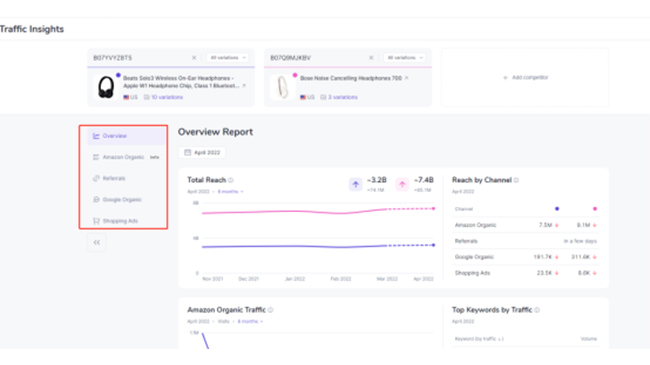
Traffic Insights
Compared up to three ASINs and showed where each one’s traffic came from, split across Amazon organic, referrals, Google organic and shopping ads, with a total reach estimate for how many shoppers could realistically discover the listing.
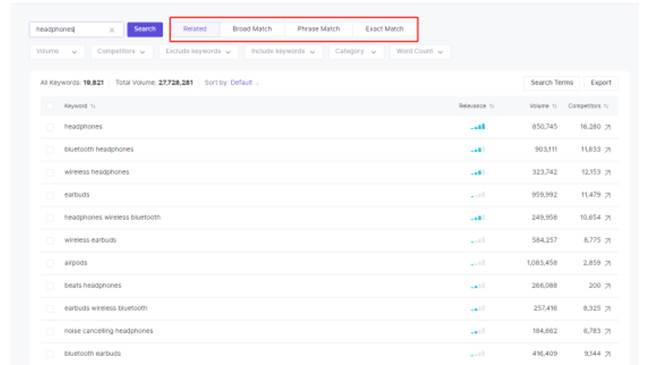
Keyword Wizard
Amazon keyword research running on Semrush data. One seed keyword returned tens of thousands of related terms with search volume, competitor counts and relevance scoring, filterable by match type, word count and category.
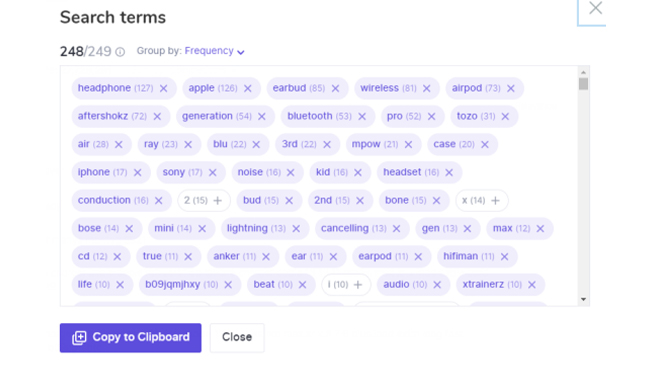
It also produced a deduplicated search terms list grouped by frequency, sized to drop straight into the backend search term field.
Listing Quality Check
Audited a listing against Amazon’s own requirements, its style guides and general best practice, scored it out of ten and listed every fix in priority order with the reason attached.

Listing Alerts
Monitored listings for the changes that quietly drain sales: suppressed listings, buy box loss, unexpected content edits and keyword position drops.
PPC Optimizer
Connected to a seller account and ran Amazon ad campaigns automatically, building auto, broad, exact and product targeting campaigns, then promoting converting keywords between them.

Product Research
Filtered the catalog by category, keyword and price to surface low-competition, high-demand products, showing monthly sales estimates, fees, margins, review counts and seller counts side by side.
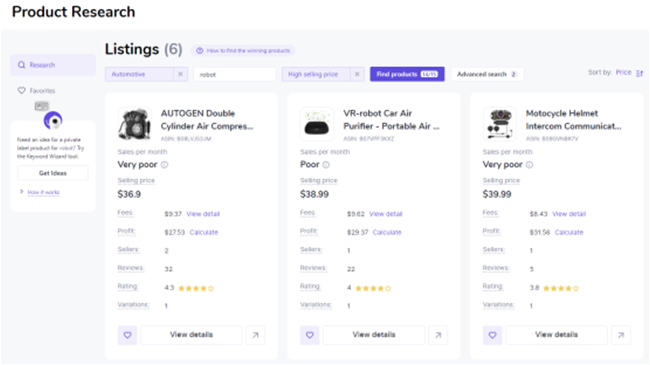
A built-in FBA profit calculator turned a cost price into a net margin before you committed inventory to a product. If you are doing this work now, our roundup of product research tools covers what is actually available, and our guide to the best products to sell covers what to look for.

Split Testing
Ran A/B tests on live listing elements, including images, titles, pricing and bullet points, then reported which version converted better.
Sellzone Pricing in 2026
There is no Sellzone price, because there is no Sellzone. The old structure, a single subscription with a limited free tier and a seven day trial of the full toolkit, does not exist in any form.
What Semrush sells for ecommerce today is priced per app, running from roughly $19 to $249 per month depending on the app, with free trials on most of them. Any review still quoting one monthly Sellzone figure is pricing a product that stopped being sold.
What to Use Instead of Sellzone
Nothing in the Semrush App Center is a like-for-like replacement. The closest apps there cover slices of what Sellzone used to do.
- Ecommerce keyword analytics, for keyword demand pulled from major retailer domains
- Product research apps, for finding sellable products, though these lean toward Shopify and AliExpress catalogs rather than the Amazon catalog
- Competitor tracking apps, for watching what rival stores change and when
For Amazon listing audits, PPC automation and split testing you now need a dedicated Amazon suite. Treat any list still ranking Sellzone among 2026 Amazon tools as out of date.
The Half of Amazon Selling No Tool Ever Fixed
Every tool in the Sellzone lineup worked on the same half of the problem, which is getting a listing found and clicked. None of them touched the half that decides whether the sale is worth making: where the product comes from, what it truly costs, whether it arrives intact and how quickly it gets there.
That is the half where sellers sourcing from China lose money. A keyword tool will not tell you a factory quietly swapped a component, will not catch a defect rate creeping toward your return threshold and does nothing about the transit time your reviews are written against. Listing optimization compounds a good supply chain. It cannot substitute for one.
Dropship China Pro works on that half. Vetted product sourcing with in-house quality control on every batch, private label production when you want to own a brand instead of reselling a generic and hybrid fulfillment that ships direct from our China fulfillment center while your proven sellers sit in a US fulfillment warehouse for 1-3 day delivery. If you are weighing that against Amazon’s own network, we broke down Amazon FBA against a dedicated 3PL in detail.
For the wider picture, our complete guide to Amazon dropshipping covers the model end to end, our list of dropshipping suppliers for Amazon sellers covers who to buy from, and our guide to improving delivery times covers how to cut the wait without cutting margin.
Fix the Half That Actually Moves Margin
Dropship China Pro combines sourcing, quality control and 3PL fulfillment across China and US warehouses, with automatic order fulfillment so processing never adds days and stocked products reach US customers in 1-3 days. See how it works step by step, or connect your store through our Shopify app. Our Trustpilot rating is 4.8.
Is Sellzone Worth It in 2026?
Not as a purchase decision, because there is nothing to buy. Sellzone was a credible product while it ran, built by an established company on genuinely good keyword data, and sellers who used the Keyword Wizard and Listing Quality Check got real value from them. That is history now.
The practical answer is to stop looking. Move keyword research and listing audits to a dedicated Amazon suite, and put the attention you would have spent comparing subscriptions into the supply side. The margin gap between a good supplier and an average one dwarfs the gap between two listing tools.
FAQs About Sellzone
What happened to Sellzone?
Sellzone was retired. Semrush never published a shutdown notice, but its Amazon app pages now return 404 or redirect to a general ecommerce collection, the Semrush Knowledge Base has no Sellzone articles left and sellzone.com points at the Semrush App Center instead of a seller dashboard.
Is Sellzone still available?
No. As of September 2026 there is no way to subscribe to Sellzone or to any of its seven tools individually. Guides describing the toolkit as available through the Semrush App Center are out of date.
Is Sellzone legit?
It was. Sellzone was a real product from Semrush, an established marketing software company, running on the same data as the Semrush SEO platform. The question is moot now that it is no longer offered.
What is the Sellzone official website?
sellzone.com was the official site. The domain still resolves, but it now lands on the Semrush App Center rather than on Sellzone, so there is no official Sellzone site left in any meaningful sense.
How much does Sellzone cost?
Nothing, because it is not sold. Semrush prices its ecommerce apps individually, from roughly $19 to $249 per month, but none of those apps is the Amazon toolkit Sellzone used to be.
Is there a Sellzone free trial?
No. The old seven day trial covered the bundled Sellzone subscription, which no longer exists. Individual Semrush App Center apps offer their own free trials, though none of them replaces the Amazon listing tools.
What tools did Sellzone include?
Seven: Keyword Wizard for Amazon keyword research, Listing Quality Check for listing audits, Traffic Insights for channel analytics, Listing Alerts for monitoring, PPC Optimizer for ad campaigns, Product Research for finding products and Split Testing for A/B testing listings.
Conclusion
Sellzone is gone, and no amount of searching sellzone.com brings the dashboard back. What it did is still worth knowing, because its seven tools map neatly onto the jobs any Amazon seller needs covered.
The more useful lesson sits underneath the tooling. Listing software optimizes what you already sell. It does not improve what you sell or how fast it arrives. Get sourcing and fulfillment right, and the tool you pick on top becomes a detail rather than a dependency.
References
- Amazon. (2026). Amazon.com Announces Second Quarter Results. aboutamazon.com
- Semrush. (2021). Sellerly Grows into Sellzone and Launches the Keyword Wizard tool. semrush.com

Hi, I’m Yavuz. I help e-commerce businesses grow through strategic content. Here, I share insights on fulfillment solutions, 3PL partnerships, and digital marketing strategies based on real data and industry trends.