Having the right products and a reliable supplier is the foundation of a dropshipping business. Marketing is what turns that foundation into revenue. Without it, even the best product selection generates nothing.
The challenge in 2026 is that marketing options have multiplied while attention has fragmented. Dropshippers are choosing among paid ads, social commerce, organic content, email, influencer partnerships, and AI-driven tools, often without a clear framework for prioritizing which channels first. This guide cuts through that noise. These are the ten marketing techniques that are producing measurable results for dropshipping stores right now, backed by current data.
For a broader look at how marketing fits into your overall operational strategy, our complete guide to dropshipping strategies for 2026 covers the full business picture.
Key Takeaways for Dropshipping Marketing Techniques
- 68% of dropshipping stores get the majority of their traffic from Meta (Facebook and Instagram) ads, making it still the dominant paid acquisition channel (ZIK Analytics, 2026).
- TikTok delivers a 96% higher return on ad spend than other digital channels and is projected to convert 45.5% of its US users into buyers in 2025, outperforming Facebook and Instagram (Stackmatix, 2026; SellersCommerce, 2026).
- Email marketing generates $36 to $40 for every $1 spent and accounts for 15 to 20% of total sales for established dropshipping stores (Growth-onomics, 2026; ZIK Analytics, 2026).
- Influencer shoutouts can drive 20 to 40% of a new store’s first-month sales (ZIK Analytics, 2026).
- Dropshipping stores with at least one active social media channel generate 32% more revenue on average than those without one (SellersCommerce, 2026).
1. Meta Ads (Facebook and Instagram)
Meta remains the baseline paid acquisition channel for dropshipping in 2026. 68% of dropshipping stores get most of their traffic from Facebook and Instagram ads combined, and the platform’s targeting infrastructure, refined over more than a decade of ecommerce data, remains unmatched for reaching specific buyer demographics (ZIK Analytics, 2026).
The cost structure is accessible. Dropshipping ad costs average between $0.35 and $1.20 per click, depending on competition and niche, which keeps the barrier to testing manageable even on modest budgets (ZIK Analytics, 2026). Most dropshipping stores convert between 1.6% and 2.1% of visitors into buyers, so the math on a profitable campaign is achievable once you have a validated product and a tested creative.
What has changed in 2026 is the creative format. Instagram UGC ads (user-generated content rather than polished brand creative) now generate 28% higher engagement and 29% higher conversion rates than brand-produced ads (SQ Magazine, 2026). For dropshippers, this means raw product demonstration content frequently outperforms expensive, professionally produced advertising. Test authentic-feeling creatives first before investing in production.
Where to start: Run Advantage+ Shopping Campaigns on Meta with a broad audience for product testing. Narrow targeting as you accumulate conversion data. Keep ad creative short, visually clear and product-focused.
2. TikTok Marketing and TikTok Shop
TikTok is the fastest-growing marketing channel for dropshippers and the most transformative platform shift since Facebook Ads became mainstream.
The performance data is compelling. TikTok delivers 96% higher ROAS compared to other digital advertising channels (Stackmatix, 2026). TikTok is projected to convert 45.5% of its US users into buyers in 2025, higher than Facebook at 38.5% and Instagram at 37.3% for the second consecutive year (SellersCommerce, 2026). TikTok’s engagement rate is nearly five times Instagram’s and over 37 times Facebook’s.
TikTok Shop adds a direct purchase layer to organic and paid content. The platform now has over 12 million merchants and processes more than 5 million daily US orders (SQ Magazine, 2026). For dropshippers, this creates a sales channel where product discovery and purchase happen in the same session without leaving the app.
Paid Ads Platform Comparison for Dropshippers
| Platform | Average CPC | ROAS vs Other Channels | US Buyer Conversion Rate | Best Ad Format |
|---|---|---|---|---|
| $0.35 to $1.20 | 2 to 4x average | 38.5% of users buy | UGC video, carousel, Advantage+ | |
| $0.40 to $1.30 | Strong for visual niches | 37.3% of users buy | Reels, Stories, UGC creative | |
| TikTok | ~$1.00 | 96% higher than other channels | 45.5% of users buy | Spark Ads on organic content, In-Feed Video |
| Google Shopping | $0.50 to $2.00+ | 3 to 6x for established stores | High intent buyers | Performance Max, Shopping campaigns |
The content approach that performs on TikTok is fundamentally different from Meta. Polished ads are largely ignored. Short, authentic product demonstrations, before-and-after formats, “this product fixed my problem” narratives and trending audio tracks drive both organic reach and paid performance. The platform rewards entertainment first, advertising second.
Where to start: Create a TikTok Shop account, connect your product catalog and post three to five organic videos per week before committing to paid. Test what resonates organically before scaling with Spark Ads on your best-performing content.
3. SEO and Content Marketing
Paid advertising generates traffic as long as you are paying. SEO generates traffic long after the initial investment and compounds over time. For dropshipping stores planning to operate beyond a single product cycle, SEO is the marketing channel with the highest long-term return.
The practical application for dropshipping SEO has two components. The first is on-site product and category page optimization: descriptive titles, accurate product descriptions written for the customer rather than copied from suppliers, and a clean site architecture that Google can crawl efficiently. The second is content marketing: a blog covering topics your target customers search for, which builds topical authority in your niche and drives organic traffic to your store.
The same blog you are reading now demonstrates this principle. Educational content that answers real customer questions builds trust, supports conversion and creates a library of search-accessible pages that compound in value over time.
Where to start: Identify the top five questions your target customer asks before buying your product. Write one clear, well-structured answer to each question. Optimize your product page titles and descriptions to include the exact phrases customers search for rather than generic supplier descriptions.
4. Email Marketing
Email marketing consistently produces the highest return on investment of any marketing channel. Every $1 spent on email generates $36 to $40 in return (Growth-onomics, 2026). For established dropshipping stores, email accounts for 15 to 20% of total revenue, making it a core revenue driver rather than a supplementary channel (ZIK Analytics, 2026).
The three email flows that every dropshipping store needs before anything else are the welcome sequence for new subscribers, the abandoned cart recovery sequence and the post-purchase follow-up sequence. These three alone can recover a significant proportion of lost revenue on autopilot once they are set up.
Beyond automation, a regular newsletter that delivers genuine value, new products, niche-relevant tips, or exclusive offers keeps your brand in your customers’ awareness between purchase cycles. In a category where repeat purchase rates are directly tied to brand recall, consistent email contact is one of the cheapest ways to maintain that presence.
Where to start: Set up a Klaviyo or Omnisend account, build the three core automated flows and add a newsletter sign-up pop-up to your store offering an incentive for subscribing. This foundation takes a day to build and generates returns indefinitely.
5. Influencer and Creator Marketing
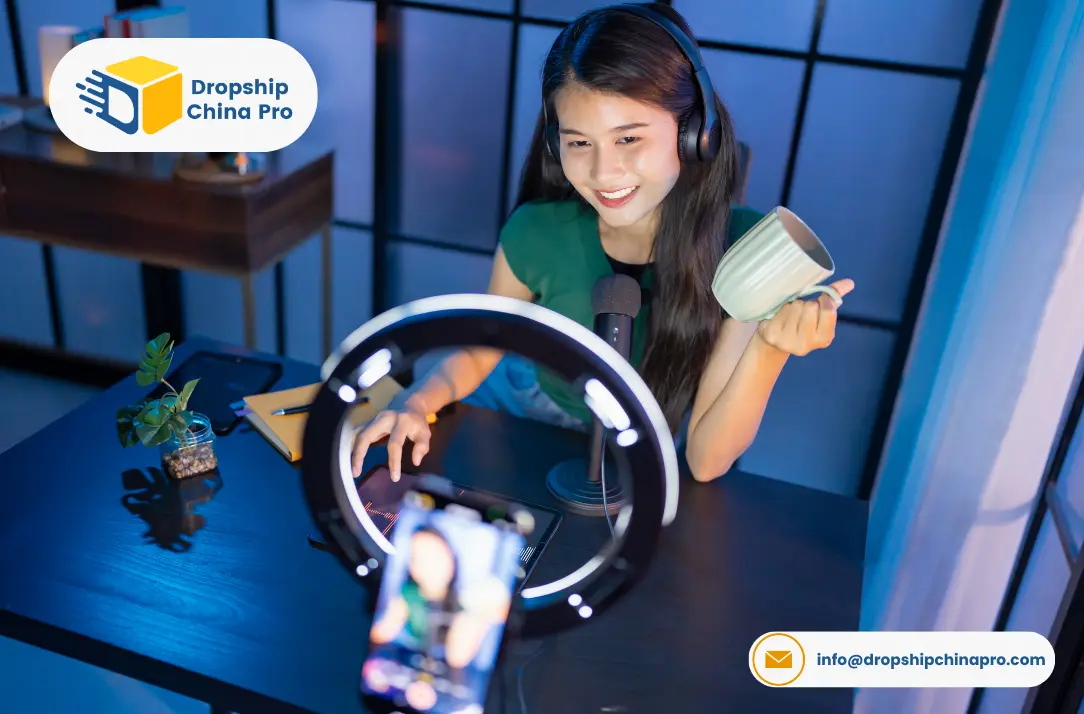
Influencer marketing is particularly powerful in the early stages of a dropshipping store’s life. Influencer shoutouts can generate 20 to 40% of a new store’s first-month sales, making it one of the fastest ways to acquire initial customers and social proof simultaneously (ZIK Analytics, 2026).
The most effective influencer partnerships for dropshippers in 2026 are not with large celebrities but with micro and nano influencers in specific niches. These creators typically have audiences of 5,000 to 50,000 highly engaged followers who trust their recommendations. The cost is lower, the content feels more authentic and the niche alignment means their audience is more likely to be your target customer.
Instagram and TikTok are the primary platforms for influencer campaigns among dropshippers (ZIK Analytics, 2026). Affiliate arrangements, where the creator earns a commission on sales they generate rather than a flat fee, align incentives effectively and eliminate upfront cost risk for new stores.
Where to start: Identify 10 micro-influencers in your product niche whose content your ideal customer follows. Offer a product sample and a commission arrangement rather than a paid post. Let authentic content outperform scripted advertising.
6. Short-Form Video Content
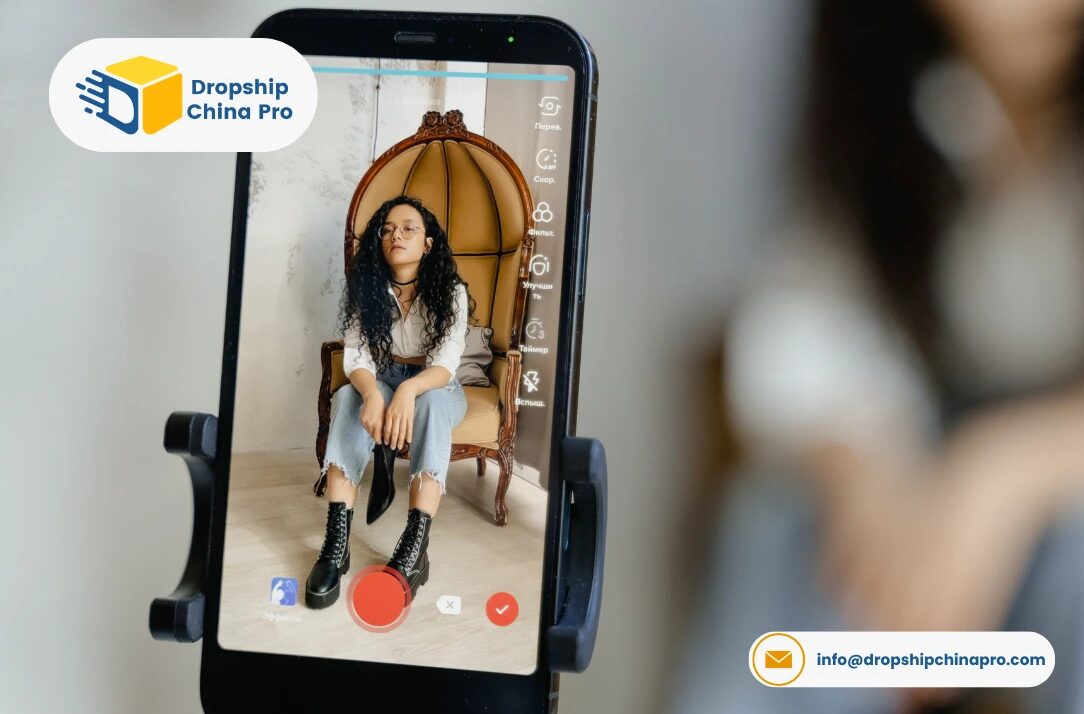
Short-form video has become the dominant content format for product discovery and purchase intent in 2026. 73% of marketers now prioritize short-form video above other content types, with 81% linking it directly to sales and 21% identifying it as the single highest-ROI format in their stack (Growth-onomics, 2026).
For dropshippers, short-form video is most effective on TikTok, Instagram Reels and YouTube Shorts. The content does not need to be expensively produced. What it needs is a clear product demonstration, a relatable problem being solved and enough visual interest to hold attention for 15 to 30 seconds.
The compounding effect of consistent short-form video output is significant. Each video is a permanent piece of content that can generate organic views, profile visits and store clicks long after it is published. A library of 50 product videos generates ongoing traffic without ongoing ad spend.
Where to start: Film three product videos this week using only your phone. Show the product in use, demonstrate the problem it solves and end with a clear call to action. Consistency over production value drives results.
7. Customer Reviews and Social Proof

70% of buyers say reviews and store design directly influence their trust when shopping from a brand they do not already know (ZIK Analytics, 2026). For dropshipping stores, which by definition lack the established brand recognition of established retailers, social proof is one of the most powerful conversion tools available.
Reviews should be collected systematically, not occasionally. After every delivered order, an automated email requesting a review should trigger. Photo and video reviews are worth far more than text-only reviews because they signal authenticity. Displaying reviews prominently on product pages, particularly below the fold where buyers are evaluating before purchase, consistently improves conversion rates.
User-generated content from customers using your product has an additional marketing value: it can be repurposed as ad creative. Instagram UGC outperforms brand creative by 28 to 29% in both engagement and conversions (SQ Magazine, 2026), meaning the content your customers create for free is frequently more effective advertising than anything you produce yourself.
8. AI-Powered Marketing and Advertising
AI is reshaping marketing execution speed and efficiency in 2026. AI-optimized ad campaigns are now up to 40% more efficient than standard campaigns by the same measures (SQ Magazine, 2026). 86% of social media advertisers now use or plan to use generative AI for content creation and ad production (SQ Magazine, 2026).
For dropshippers, the most practical AI marketing applications are product description generation from supplier specifications, ad copy testing across multiple variations simultaneously, customer service automation and email subject line optimization. Each of these reduces the time cost of marketing execution without reducing quality.
Meta’s Advantage+ campaigns already apply AI targeting and creative optimization automatically. Google’s Performance Max campaigns do the same across search, shopping and display. Using these tools effectively means providing them with strong creative inputs and conversion data, then letting the optimization algorithms do the work rather than managing campaigns manually.
Where to start: Switch your Meta campaigns to Advantage+ Shopping if you have not already and ensure your Google Merchant Center product feed is fully optimized. These two changes alone typically improve paid ad efficiency measurably within two to four weeks.
9. Community Building and Niche Positioning
Marketing to a community is fundamentally more efficient than marketing to anonymous traffic. Niche-focused stores that build genuine communities around their product category report higher repeat purchase rates, stronger word-of-mouth growth and lower customer acquisition costs than general stores competing purely on price.
Community building for dropshipping happens primarily on social platforms: Facebook Groups, Reddit communities, Discord servers and TikTok comment sections. The approach is consistent: contribution first, promotion second. Answering questions, sharing relevant content and demonstrating expertise in your niche create trust that advertising alone cannot manufacture.
The marketing advantage compounds over time. A seller who is known and trusted in a niche community receives organic recommendations, user-generated content and repeat business that a store with no community presence does not. This becomes a durable competitive advantage that competitors cannot replicate simply by spending more on ads.
10. Retargeting and Customer Retention
Acquiring a new customer costs five to seven times more than retaining an existing one. For dropshipping stores with thin margins, customer retention marketing is often the difference between a profitable business and one that perpetually funds customer acquisition without building equity.
Retargeting ads on Meta and Google reach website visitors who did not convert on their first visit. These are warm audiences who have already expressed interest in your products, and they convert at significantly higher rates than cold traffic at a fraction of the cost. Every store should have retargeting campaigns running as a baseline before scaling any cold acquisition spend.
Stores that provide proactive shipping updates and clear delivery communication see 25% fewer refund and cancellation requests (ZIK Analytics, 2026). This single operational detail, sending tracking updates automatically, reduces post-purchase anxiety and improves customer retention without any additional marketing spend.
Dropshipping Marketing Channels at a Glance
| Channel | Cost Level | Time to Results | Best For |
|---|---|---|---|
| Meta Ads (Facebook + Instagram) | Medium ($0.35–$1.20 per click) | Days to weeks | Scalable paid acquisition, retargeting |
| TikTok and TikTok Shop | Low to medium | Days (organic can go viral) | Product launches, trend-driven discovery |
| SEO and Content Marketing | Low (time investment) | 3 to 12 months | Long-term organic traffic, compounding returns |
| Email Marketing | Very low | Immediate after list built | Retention, repeat sales, abandoned cart recovery |
| Influencer Marketing | Variable (affiliate = low risk) | Immediate after post goes live | New store launches, niche audience trust |
| Short-Form Video (organic) | Very low | Weeks with consistency | Brand awareness, product demonstration |
| Reviews and Social Proof | Very low | Builds after first sales | Conversion rate improvement on product pages |
| Retargeting Ads | Low (warm audience) | Immediate | Recovering visitors who did not convert |
Putting It Together
Marketing a dropshipping store in 2026 does not require running every channel simultaneously. It requires running the right channels in the right sequence. Start with one paid acquisition channel, one organic content channel and email automation. Add channels as you understand what your audience responds to.
The supply chain behind your store matters as much as the marketing in front of it. A well-executed ad that delivers a late, poorly packaged order destroys the customer relationship that the marketing created. Dropship China Pro handles fulfillment through US and international warehouse partnerships, giving your marketing the operational foundation it needs to convert new customers into repeat ones. Explore our sourcing and fulfillment service or connect your Shopify store through our Shopify app.
FAQs for Dropshipping Marketing Techniques
What is the most effective marketing channel for dropshipping in 2026?
Meta (Facebook and Instagram) ads remain the most widely used channel, with 68% of dropshipping stores relying on them for the majority of their traffic. TikTok is the fastest-growing channel with the highest ROAS, making it the strongest channel for new store launches and product testing. For long-term cost-efficient growth, email marketing generates the highest return per dollar spent at $36 to $40 per $1 invested.
How much should a dropshipping store spend on marketing?
There is no universal answer, but a practical starting point is allocating 20 to 30% of your revenue target to marketing while testing product-market fit. Ad costs range from $0.35 to $1.20 per click, depending on the niche and platform. Email marketing and organic social have near-zero variable costs once set up, making them the highest-leverage channels for stores operating on lean budgets.
Is influencer marketing worth it for dropshipping?
Yes, particularly at launch. Influencer shoutouts can generate 20 to 40% of a new store’s first-month sales. Micro and nano influencers in specific niches deliver better ROI than large-audience influencers for most dropshipping stores because of their higher audience trust and niche alignment. Affiliate arrangements eliminate upfront cost risk.
How important is SEO for a dropshipping store?
SEO is the only marketing channel that generates compounding long-term returns without ongoing spend. While paid ads require continuous investment, SEO-optimized product pages and blog content continue generating traffic indefinitely. For stores planning to operate beyond a single product cycle, SEO investment pays dividends that no paid channel can replicate.
How does social media improve dropshipping sales?
Stores with at least one active social media presence generate 32% more revenue than those without one. Social media serves three distinct functions: product discovery through organic and paid content, social proof through reviews and user-generated content and community building that drives repeat purchases. Each function compounds the value of the others when maintained consistently.
Conclusion
Effective dropshipping marketing in 2026 is not about using every channel. It is about using the right combination of channels consistently, measuring what works and allocating more to what produces results.
Meta ads and TikTok handle acquisition. Email handles retention. SEO and organic content build long-term authority. Influencer partnerships accelerate trust. Social proof closes the conversion gap. Together, these channels form a marketing system that grows more efficient over time rather than one that requires constant reinvention.
References
- ZIK Analytics. (2026). 60 important dropshipping statistics for 2026. zikanalytics.com
- SellersCommerce. (2026). Detailed dropshipping statistics in 2026. sellerscommerce.com
- SQ Magazine. (2026). Social media marketing statistics 2026: Powerful ROI facts. sqmagazine.co.uk
- Stackmatix. (2026). TikTok advertising statistics 2026: Key data and trends. stackmatix.com
- Growth-onomics. (2026). The ultimate list of marketing statistics for 2026. growth-onomics.com
- Sprout Social. (2026). Social media ROI statistics marketers need to know in 2026. sproutsocial.com
- Global Market Insights. (2026). Dropshipping market share, analysis and forecast 2026-2035. gminsights.com

Hi, I’m Yavuz. I help e-commerce businesses grow through strategic content. Here, I share insights on fulfillment solutions, 3PL partnerships, and digital marketing strategies based on real data and industry trends.