Fashion is not just a popular dropshipping niche. It is the dominant one. Apparel accounts for 26% of all top-performing dropshipping stores, and clothing was the most-dropshipped product category in 2025, with over 532,000 products actively listed by dropshippers globally (Market.us, 2026). The global ecommerce fashion market is estimated at $997 billion in 2026 and is projected to exceed $1.6 trillion by 2030 (Shopify, 2026).
The opportunity is real, but clothing dropshipping carries specific operational challenges that other categories do not. Sizing inconsistencies, high return rates, and quality variation across suppliers are problems that have driven more fashion stores out of business than competition ever did. This guide covers the full picture: why clothing works, how to set it up, which suppliers are worth considering, what the challenges actually look like in practice and how to build a brand that lasts beyond a single trending product.
Key Takeaways for Clothing Dropshipping
- Fashion and clothing holds 34% of the global dropshipping market share with a 24.8% compound annual growth rate, making it the single largest dropshipping category (Carro, 2026).
- Return rates for clothing can reach 30% online, and 88% of consumers have returned clothing purchased online at some point (Thunderbit, 2026). Managing this is not optional.
- Sizing is the biggest operational challenge specific to fashion dropshipping. Inaccurate size charts from suppliers are the primary driver of returns and negative reviews.
- Stores using US or EU warehouse stock report up to 50% fewer customer complaints than those shipping direct from China on every order (ZIK Analytics, 2026).
- A clearly defined clothing niche with consistent branding outperforms a broad general store in conversion rate, repeat purchase rate and long-term profitability.
Why Clothing and Fashion Lead Dropshipping in 2026
The numbers alone explain why more dropshippers choose fashion than any other category. But the structural reasons go deeper than market size.
Fashion is trend-driven, which creates constant product renewal opportunities. A seller who built their store around a trend that faded can pivot to the next trend without changing their supplier relationships or rebuilding their store. That flexibility is harder to replicate in categories like electronics or homeware, where product lines are slower to change.
Social commerce has accelerated this dynamic significantly. Platforms like TikTok and Instagram create viral fashion moments that generate immediate purchase intent. A product that gains traction on social can move from obscurity to a bestseller within days. For dropshippers, who do not carry inventory upfront, this speed is a genuine advantage. There is no overstock risk on a viral product because inventory is purchased only when customers have already paid.
The buyer demographics also favour dropshippers. 82% of women bought clothing online in the past 12 months compared to 73% of men, and women represent the primary audience for most fashion dropshipping stores (Market.us, 2026). This audience is digitally fluent, responsive to brand storytelling and motivated by aesthetic cohesion across a store’s product range.
How Clothing Dropshipping Works
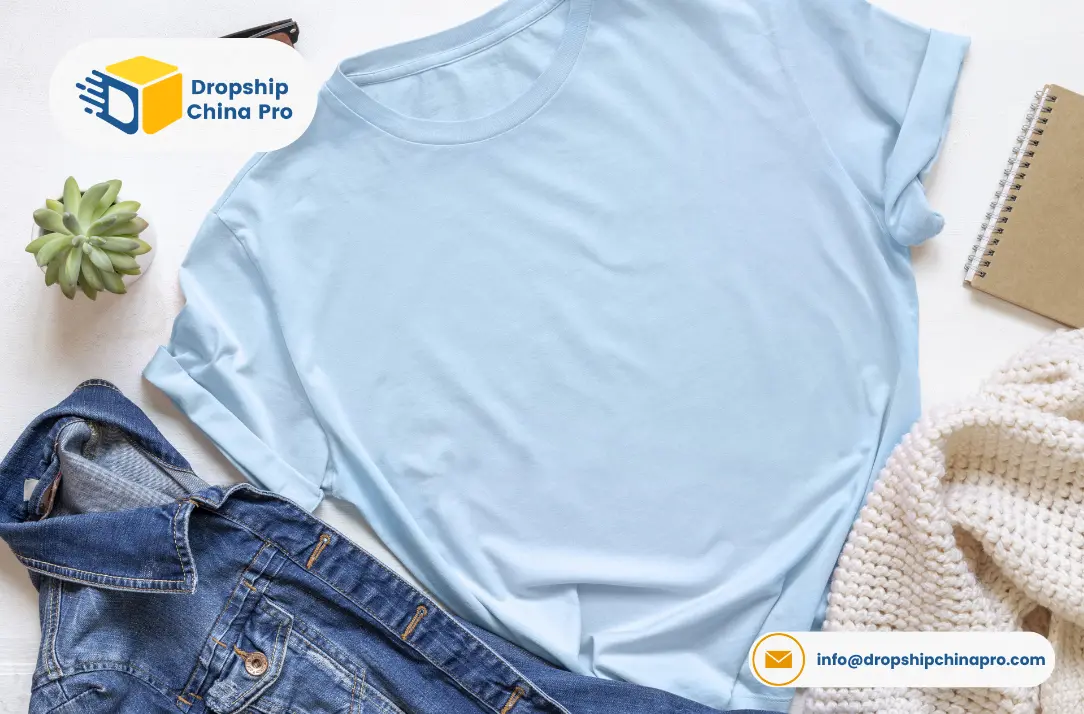
The operational model is the same as any dropshipping setup. You list products from a supplier on your Shopify or WooCommerce store, set your retail price above the supplier cost and when a customer orders, your supplier fulfills the order and ships directly to the customer. You never hold physical stock.
What differs in fashion is the supply chain complexity. A single product in a clothing store can have 20 or more variants: multiple sizes, multiple colours and potentially multiple fits. Each variant needs accurate inventory tracking, correct size chart information and consistent product photography. A supplier who handles these details well is worth significantly more than one who offers a slightly lower unit price but ships with inconsistent sizing labels or missing variant data.
The fulfillment flow for a well-run clothing dropshipping store looks like this:
- Customer places an order specifying size, colour and quantity
- Order is forwarded to your supplier automatically via your store integration
- Supplier picks the correct variant, conducts a quality check and packages the item
- Item ships with your brand information on the packing slip, not the supplier’s
- Customer receives the order and tracking information is automatically updated in your store
- Any return or exchange is handled through your store’s policy, with the supplier managing the physical process under your instruction
The weaker version of this flow, common among new fashion dropshippers, is a supplier who ships without quality control, uses inconsistent sizing and sends orders with their own branding visible. That version produces returns, negative reviews and account health problems across every platform the seller uses.
Challenges Specific to Clothing Dropshipping
Most dropshipping guides list generic challenges that apply to any category. Clothing has several aspects that are specific to fashion and are worth understanding before you commit.
Sizing and Fit
This is the single largest source of customer complaints in fashion dropshipping. Chinese sizing standards differ from US and European sizing standards, often by one to two sizes. A supplier who labels a garment as “M” by Chinese standards may be selling what a US customer would consider a small. If your size chart does not accurately reflect the actual garment measurements, you will generate returns at a rate that overwhelms your margins.
The solution is not to trust supplier-provided size charts. It is to request the actual garment measurements in centimetres for each size, build your own size guide from those measurements and display it clearly on every product page. This requires more setup time per product but reduces returns significantly.
Return Rates
Clothing has the highest return rates of any ecommerce category. Online return rates can reach 30%, and handling returns in a dropshipping model adds complexity because the customer expects to return to your store while your supplier is the physical destination for the item (Thunderbit, 2026). Having a clear, pre-agreed returns process with your supplier before you launch is essential, not a detail to figure out later.
Quality Consistency
A supplier who produces good quality on your first sample order may not maintain that quality across every production run. Fabric weight, stitching quality and print accuracy can all vary. For clothing specifically, a quality issue is visible and immediately noticeable to the customer in a way that a packaging problem might not be. Pre-shipment inspection and regular quality audits matter more in fashion than in most other categories.
Trend Shelf Life
A product that sells well this season may not sell at all next season. Fashion dropshippers who build stores around a single trending product without a plan for what comes next find themselves repeatedly rebuilding from scratch. The stores that sustain themselves in fashion are those with a defined niche identity that can absorb product changes without confusing their audience.
Best Clothing Dropshipping Suppliers in 2026
Finding a reliable supplier is the challenge that 84% of dropshippers cite as their biggest obstacle (ZIK Analytics, 2026). In fashion, this is even more pronounced because the quality variance between good and poor suppliers is immediately visible to customers.
Here are the key types of suppliers and what each suits best.
China-Based Sourcing Partners
For sellers who want access to the broadest product range, the most competitive pricing and the ability to source custom or private label clothing, working with a China-based sourcing partner is the most effective approach. The trade-off is shipping time when shipping direct, which is why pairing China sourcing with US or European warehouse stock for your bestsellers is the model most serious fashion dropshippers move toward.
Dropship China Pro works directly with vetted factories across China’s major fashion manufacturing regions. We source products, manage quality control and fulfill orders through US and international warehouse partnerships. For a detailed look at how China-specific clothing sourcing works, including supplier vetting and how to manage sizing consistency across Chinese factories, see our complete guide to clothing dropshipping from China.
Printify and Printful
For sellers building a brand around original designs rather than sourced products, print-on-demand suppliers like Printify and Printful offer on-demand production of apparel with your designs. These platforms eliminate the sizing risk of traditional dropshipping because products are printed on standardized blanks from known manufacturers, and sizing charts are consistent and well-documented. The trade-off is higher per-unit cost and limited product variety compared to sourced apparel. Sellers who want lower base costs can compare Chinese print on demand companies, which print original designs at China production prices.
Spocket
Spocket connects Shopify sellers with suppliers predominantly based in the US and Europe. For fashion dropshippers targeting US or EU customers who prioritize fast delivery and premium product quality, Spocket provides access to suppliers whose products arrive in three to seven days rather than two to three weeks. The unit costs are higher than those of China-sourced products, but the delivery speed and return logistics are significantly simpler.
Trendsi
Trendsi focuses specifically on women’s fashion and connects Shopify sellers with US-based manufacturers and warehouses. Products ship within five to seven days from US stock. For sellers building a women’s boutique brand, Trendsi’s product selection and domestic fulfillment capability are well aligned.
Direct Factory Sourcing via Alibaba or 1688
For sellers with established product demand and sufficient order volume, sourcing directly from factories on Alibaba or China’s domestic 1688 platform offers the best unit pricing. This approach requires more active supplier management, direct negotiation and quality oversight, but the cost advantage at scale is significant. A sourcing agent with established factory relationships simplifies this process considerably.
Clothing Dropshipping Supplier Types Compared
| Supplier Type | Unit Cost | Shipping to US | Product Range | Best For |
|---|---|---|---|---|
| China sourcing partner | Lowest | 2 to 5 days (US warehouse) / 10 to 20 days (direct) | Broadest | Scaling stores, private label, competitive pricing |
| Spocket (US/EU suppliers) | Medium to high | 3 to 7 days | Moderate | Premium products, fast delivery to US and EU |
| Trendsi (women’s fashion) | Medium | 5 to 7 days (US stock) | Women’s focused | Women’s boutique stores targeting US customers |
| Printify / Printful (POD) | Highest per unit | 5 to 10 days | Apparel with custom designs | Branded design stores, no inventory risk |
| Direct factory (Alibaba) | Lowest at volume | Varies by arrangement | Broadest with MOQ | High-volume validated products, experienced sellers |
Choosing Your Clothing Dropshipping Niche
A clothing dropshipping store that tries to serve everyone converts poorly and retains customers almost never. The stores that work in fashion are the ones that own a specific identity.
The most common profitable clothing niches in 2026 are:
- Women’s casualwear and basics — high repeat purchase rate, broad audience, price-sensitive buyers
- Activewear and athleisure — growing demand, brand-loyal buyers, consistent trend interest
- Sustainable and eco-friendly fashion — premium pricing justified, strong brand storytelling angle, 35% of consumers willing to pay more for sustainable options
- Plus-size fashion — underserved by mainstream retailers, loyal customer base, lower competition
- Niche aesthetic stores — Y2K, cottagecore, dark academia, streetwear — highly shareable on social, strong community identity
The selection principle is the same across all of these: pick a niche where you can build a brand identity your customer recognizes and returns to, not just a category where you can list the most products.
Top Clothing Dropshipping Niches in 2026
| Niche | Competition Level | Avg Order Value | Key Strength |
|---|---|---|---|
| Women’s casualwear | High | $25 to $55 | Broad audience, high repeat purchase rate |
| Activewear and athleisure | Medium to high | $30 to $70 | Brand-loyal buyers, consistent trend demand |
| Sustainable fashion | Medium | $40 to $90 | Premium pricing justified, strong brand story |
| Plus-size fashion | Low to medium | $30 to $65 | Underserved market, loyal customer base |
| Niche aesthetic (Y2K, streetwear) | Low to medium | $25 to $60 | Highly shareable, strong community identity |
| Men’s basics and streetwear | Medium | $30 to $75 | Faster growing than women’s at 14% CAGR |
Women’s Clothing: Download Our 2026 Catalog
If you are actively building or expanding a women’s clothing dropshipping store, our Women’s Clothing Catalog 2026 includes the latest styles from DSCP Partner Factories, covering casualwear, jumpsuits, sport and Y2K categories sourced directly from our manufacturing network.
Download the Women’s Clothing Catalog 2026 (PDF)
The catalog reflects current in-season stock and trending styles from our China partner factories. If you see products you want to discuss for your store, reach out directly through our sourcing and fulfillment service.
FAQs for Clothing Dropshipping
Is clothing dropshipping profitable in 2026?
Yes, when executed correctly. Fashion and clothing hold the largest share of the dropshipping market at 26-34% of top-performing stores globally. Profit margins of 20% to 30% per sale are achievable, though the actual margin depends on your supplier pricing, advertising costs and return rate management. Stores with well-defined niches and reliable supplier relationships consistently outperform generic fashion stores.
What is the biggest challenge in clothing dropshipping?
Sizing inconsistency is the most common operational problem. When a supplier’s sizing does not match what customers expect based on your size chart, return rates rise sharply. Building accurate size guides from actual garment measurements rather than relying on supplier-provided charts is the most effective preventative measure.
How do I handle returns in clothing dropshipping?
Agree on a return process with your supplier before launching. Most established dropshipping suppliers will accept returns to their warehouse when a product is defective or significantly different from the listing. For change-of-mind returns due to fit, many fashion stores adopt a partial refund or store credit policy to reduce the logistics burden. Make your return policy clear on every product page before a customer buys.
Should I dropship from China or use local suppliers?
Both have a role depending on your stage. China-based sourcing offers the widest product range and most competitive pricing. Local US or EU warehouse stock dramatically reduces delivery times and complaint rates. The most effective approach at scale is to source products from China and pre-stock your bestsellers in a US or EU warehouse. Stores using local warehouses report up to 50% fewer customer complaints compared to direct China shipping (ZIK Analytics, 2026).
How many products should I start with in clothing dropshipping?
Start with a small, tightly curated range of five to fifteen products that clearly represent your brand’s niche. A focused store with a coherent aesthetic converts significantly better than one with hundreds of loosely related items. Expand your catalog based on what is selling, not based on how many products your supplier offers.
Building a Brand in Clothing Dropshipping
The stores that grow in fashion are not the ones with the most products. They are the ones with the clearest brand identity. This is more true in clothing than in any other dropshipping category because fashion is inherently personal. A customer who buys from a clothing store is making a statement about who they are. If your store does not have a coherent point of view, there is nothing for them to identify with.
Practical brand-building steps that differentiate clothing dropshippers:
- Invest in consistent product photography. Where supplier images are inconsistent or low quality, use lifestyle mock-ups or commission your own shoots. Visual consistency signals a real brand.
- Write product descriptions in your brand’s voice. Generic supplier descriptions written in broken English undermine every other brand signal you create.
- Build a size guide that is accurate to your specific supplier’s measurements, not generic sizing charts.
- Use blind dropshipping so every order arrives with your brand on the packaging, not your supplier’s.
- Create a clear return policy that is visible on every product page. In fashion, unclear return policies are one of the primary reasons customers abandon checkout.
For Shopify stores, connecting your fashion dropshipping operations through our Shopify app allows you to manage order flow, supplier coordination and fulfillment tracking from a single place.
Conclusion
Clothing dropshipping offers the largest market opportunity in the entire dropshipping space. The combination of constant trend renewal, strong social commerce dynamics and an audience that buys fashion online more than any other category creates real conditions for building a sustainable business.
What separates the stores that succeed from the ones that fail is not access to products. It is operational discipline: accurate sizing information, quality control on every supplier relationship, clear return policies and a brand identity that gives customers a reason to come back.
Fashion rewards the sellers who treat it as a brand-building exercise, not a product-listing exercise. Start with that mindset and the operational details follow naturally.
References
- Shopify. (2026). Ecommerce fashion industry in 2026: Statistics, trends and strategies. shopify.com
- Market.us. (2026). Dropshipping statistics and facts 2026. news.market.us
- Carro. (2026). 80+ ecommerce and dropshipping statistics for 2026.
- Thunderbit. (2026). 60 dropshipping statistics and key trends shaping 2026.
- ZIK Analytics. (2026). 60 important dropshipping statistics for 2026. zikanalytics.com
- eMarketer. (2026). US fashion ecommerce 2026.
- Global Market Insights. (2025). Dropshipping market share, analysis and forecast 2026-2035. gminsights.com

Hi, I’m Yavuz. I help e-commerce businesses grow through strategic content. Here, I share insights on fulfillment solutions, 3PL partnerships, and digital marketing strategies based on real data and industry trends.