Amazon is the world’s largest online marketplace, generating $716.9 billion in total revenue in 2025 and serving over 310 million active customers globally (AMZ Prep, 2026). Third-party sellers now account for 61% of all paid units sold on the platform, and the marketplace processed approximately $1.75 billion in sales every single day last year (SQ Magazine, 2026).
For dropshippers, that scale is the obvious draw. But access to Amazon’s traffic comes with strict rules, rising fees and a competitive environment that has changed considerably over the past few years. This guide covers how Amazon dropshipping actually works in 2026, what it costs, what the platform requires, and how to build a supply chain that holds up to its standards.
Key Takeaways for Amazon Dropshipping
- Amazon dropshipping is fully permitted in 2026, but only under its official Drop Shipping Policy. Retail arbitrage, where you buy from another retailer and have them ship directly to customers, violates Amazon’s terms.
- You must be the seller of record on all orders. Your name appears on packing slips, invoices and all packaging, never your supplier’s.
- Nearly 38% of Amazon orders are now fulfilled by dropshippers, making it one of the most established fulfillment models on the platform (Doba, 2026).
- Net profit margins on Amazon dropshipping typically hover between 10% and 15% after fees and advertising, which is tighter than most beginner guides suggest (Branvas, 2026).
- The biggest competitive advantage on Amazon for dropshippers is niche selection: products that are not widely listed by established sellers.
What Is Amazon Dropshipping?
Amazon dropshipping is a fulfillment model where you list products for sale on Amazon, but a third-party supplier holds the inventory and ships orders directly to customers on your behalf. You collect payment from the customer, pay your supplier for the product and keep the margin.
The model removes the need to buy inventory upfront, manage warehouse space, or handle physical logistics. What you do manage is your product listings, pricing, customer service and supplier relationships, all while staying compliant with Amazon’s rules.
It is worth distinguishing this from a common misconception. Amazon dropshipping, done correctly, means you source from manufacturers or wholesale suppliers. It does not mean purchasing products from Walmart, Target, or another retailer and having that retailer ship to your Amazon customers. Amazon explicitly prohibits this, and accounts caught doing it face immediate suspension (Amazon Seller Central, 2026).
Is Dropshipping Allowed on Amazon?
Yes, with conditions. Amazon’s Drop Shipping Policy confirms that you can use a third-party supplier to fulfill orders, but several requirements are non-negotiable:
- You must be identified as the seller of record on all packing slips, invoices and external packaging
- Your supplier’s name, logo, or branding must not appear anywhere on the shipment
- You are responsible for accepting and processing all customer returns
- You must have a written agreement with your supplier confirming that you are the seller of record
- You cannot use another retailer as your supplier and have them ship directly to Amazon customers
Violating any of these is one of the most common reasons for Amazon account suspension. The platform enforces these rules automatically through its account health monitoring system, and violations often result in listing removal or permanent account deactivation without prior warning (AutoDS, 2026).
How Amazon Dropshipping Works
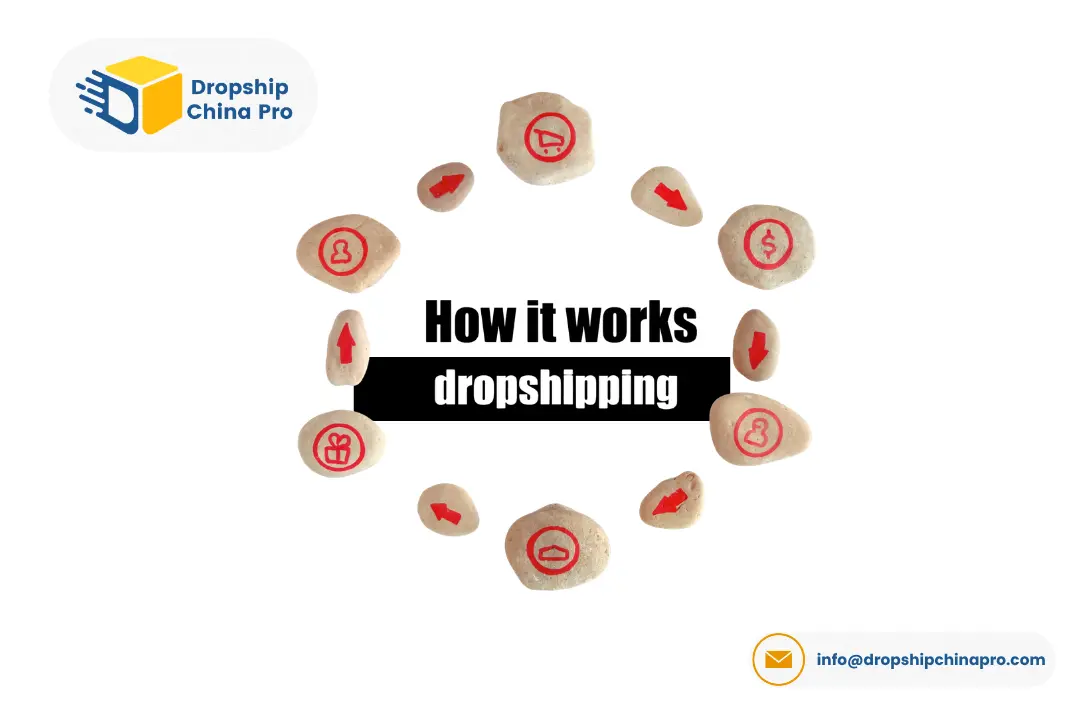
The operational flow is straightforward once the pieces are in place. A customer finds your listing on Amazon and places an order. You receive the order details and forward them to your supplier. The supplier ships the product to the customer in plain or your-branded packaging, without any reference to their name. Amazon tracks the delivery and the customer receives their order with your seller information on the documentation.
You need two things to make this work reliably:
- A Professional Seller account or an Individual account. The Individual plan costs $0.99 per item sold with no monthly fee. The Professional plan costs $39.99 per month and removes the per-item fee, unlocks advertising tools and provides access to detailed analytics. If you plan to sell more than 40 items per month, the Professional plan is typically more cost-effective.
- A supplier who understands Amazon’s requirements. This is not optional. A supplier who puts their own branding on packaging, includes third-party packing slips, or fails to ship within your promised timeline will directly affect your account health metrics. Vet suppliers specifically on their Amazon compliance experience before committing.
Starting Amazon Dropshipping with Minimal Capital
One of the most searched questions around this topic is how to start without a significant upfront investment. The honest answer is that Amazon dropshipping is genuinely low-capital to start compared to most product businesses.
The main costs at entry are:
- Amazon seller account: $0 (Individual) or $39.99 per month (Professional)
- Product samples: $50 to $200 to verify supplier quality before listing
- Initial listing optimization tools: optional, some free options exist
You do not pay for inventory upfront. You pay your supplier only after a customer has paid you on Amazon. This means your working capital requirement is close to zero for the first order, though you need to account for the gap between when Amazon releases your funds and when you pay your supplier. Amazon typically pays sellers every 14 days.
Amazon Dropshipping vs Amazon FBA — Key Differences
| Factor | Amazon Dropshipping (FBM) | Amazon FBA |
|---|---|---|
| Inventory upfront | None required | Required before listing |
| Who ships to customer | Your third-party supplier | Amazon’s warehouses |
| Prime badge eligibility | Not standard (Seller Fulfilled Prime available with requirements) | Yes, automatic |
| Startup capital needed | Low — $0.99 per item or $39.99/month plan | Medium to high — inventory purchase required |
| Referral fees | 8% to 15% per sale | 8% to 15% per sale |
| Fulfillment fees | Supplier shipping cost (variable) | From $3.45 per unit (Amazon FBA, 2026) |
| Inventory risk | None | Unsold stock costs storage fees |
| Typical net profit margin | 10% to 15% after fees and ads | 15% to 25% for optimised products |
| Best suited for | Testing products, low-capital entry, flexible catalog | Validated products with consistent demand and Prime buyers |
The real startup cost is time, not money. Building a compliant supplier relationship, writing quality listings, researching products with actual demand and learning Amazon’s interface all require investment of attention and effort before a single sale happens.
Amazon Fees for Dropshippers in 2026
Understanding the full fee stack is critical before you price products. The numbers look manageable individually, but compound quickly.
- Referral fees are Amazon’s primary charge on each sale. They range from 8% to 15%, depending on product category and remain unchanged for 2026. Electronics sit at 8%, while most general merchandise categories are at 15%. On a $40 product at 15%, that is $6 per sale before any other costs.
- Seller plan fee: $0.99 per item (Individual) or $39.99 per month (Professional). If you are selling more than 40 items monthly, Professional is cheaper.
- Fulfillment costs for FBM sellers: If you are fulfilling through a third-party supplier rather than Amazon’s own warehouses (FBA), you pay the referral fee and any shipping costs your supplier charges you. Amazon provides shipping credits to offset part of this for FBM sellers.
- FBA fees (optional): If you choose to pre-stock your most popular products in Amazon’s warehouses using a hybrid model, FBA fulfillment fees start at $3.45 per unit for small standard items and increased slightly in January 2026 (Jay Group, 2026).
A realistic margin calculation on a $40 product:
- Product cost: $15.00
- Amazon referral fee (15%): $6.00
- Shipping to customer: $4.50 (FBM, supplier-handled)
- Net margin before advertising: $14.50 (36%)
- After advertising spend: typically 10% to 15% net
Advertising is where most Amazon dropshippers underestimate costs. Sponsored Product campaigns are practically mandatory for new listings to gain visibility. Amazon PPC cost-per-click rates rose between 18% and 32% across categories in early 2026, with electronics averaging $1.12 per click (SQ Magazine, 2026). Many advertisers are now seeing average Advertising Cost of Sale above 30%, compared to the 15% to 25% target that most margin models assume. Factor in at least 10% to 15% of your sale price as advertising cost when building your margin model, and treat anything below that as optimistic.
Finding Suppliers That Meet Amazon’s Requirements

The supplier relationship is the foundation of a compliant Amazon dropshipping business. A supplier who cannot meet Amazon’s packaging and documentation requirements, or who ships inconsistently, will damage your account metrics regardless of how well-optimized your listings are.
The key questions when vetting a supplier for Amazon:
- Will they remove all their branding from shipments and documentation?
- Can they ship within the timeline your listing promises to customers?
- Do they provide tracking information automatically upon dispatch?
- Have they supplied Amazon FBM sellers before and understand the seller-of-record requirement?
- What is their process when an item is damaged or a customer requests a return?
Working with a sourcing partner who has established factory relationships, quality control processes and experience with Amazon’s requirements simplifies this significantly. For a structured approach to finding reliable suppliers for Amazon, see our dedicated guide on dropshipping suppliers for Amazon sellers, which covers vetting criteria in detail.
If you are sourcing from China, Dropship China Pro connects sellers with vetted suppliers and manages quality control and fulfillment through US and international warehouse partnerships. You can connect your store through our Shopify app, and our sourcing and fulfillment service covers the full supply chain from factory to customer.
What the Amazon Dropshipping Community Says
Reddit discussions about Amazon dropshipping are more honest than most guides published on the topic, and they are worth reading before you start.
A widely viewed thread in r/dropship titled “Amazon Dropshipping” with over 30 comments describes the competitive dynamics clearly. The most upvoted practical advice in that thread focuses on one point: the sellers who make consistent money on Amazon dropshipping are selling products that are not widely listed by established sellers already. Competing on the same listing as a seller with thousands of reviews and Amazon’s own inventory is not a viable strategy (Reddit, r/dropship, 2025).
A separate and heavily discussed thread in r/dropship titled “How does anyone make money doing drop shipping when…” gathered 70+ comments and addressed a core question many beginners have: how do you compete when customers can often find lower prices elsewhere. The top answer reflects what experienced Amazon sellers consistently recommend: sell something that is not found on Amazon, or source an existing category product from a supplier who provides better unit economics than your competitors are working with (Reddit, r/dropship, 2024).
Both threads converge on the same insight. Product selection and supplier economics, not platform access, determine whether Amazon dropshipping is profitable for a given seller.
The Honest Limitations
Amazon dropshipping works. It also has structural constraints that are worth understanding before investing significant time into it.
- You do not own the customer relationship. Amazon owns the buyer data. You cannot retarget customers, build an email list, or create repeat purchase flows. Every sale is effectively a one-time transaction from your marketing perspective.
- Margins are tighter than they appear. The 10% to 15% net margins cited by multiple sources in 2026 reflect the reality after referral fees, advertising costs and supplier pricing. Entry-level dropshippers often see lower margins until they optimize their ad spend and negotiate better supplier rates.
- Account health is fragile. A spike in late shipments, a wave of customer complaints, or a supplier compliance issue can trigger account review or suspension. Amazon’s automated systems act quickly and the appeals process is time-consuming.
- Competition increases for proven products. Any product that performs well on Amazon quickly attracts more sellers. Amazon now has 1.65 million active sellers globally, and third-party marketplace sales grew 15% in 2025 to reach $575 billion (AMZ Prep, 2026). Your competitive window on a successful product is limited unless you have a supply chain advantage that others cannot easily replicate. Small and medium businesses account for 58% of all Amazon sales, which means the competition you face on most listings comes from operators who are as lean and cost-conscious as you are (Thunderbit, 2026).
Understanding these constraints upfront is not a reason to avoid Amazon dropshipping. It is a reason to approach it with a realistic supplier setup and margin model rather than optimistic assumptions.

FAQs for Amazon Dropshipping
Is dropshipping allowed on Amazon?
Yes. Amazon explicitly permits dropshipping under its official Drop Shipping Policy, as long as you are the seller of record, remove third-party branding from all packaging and take responsibility for customer returns. Retail arbitrage, buying from another retailer and having them ship directly to your customer, is not permitted.
Do people dropship through Amazon?
Yes, extensively. Nearly 38% of Amazon orders are fulfilled by dropshippers as of 2026. It is one of the most established fulfillment models on the platform, used by both individual sellers and large-scale operations.
Is $100 enough to start Amazon dropshipping?
It can be enough to get started. The Individual seller plan costs $0.99 per item with no monthly fee, and you only pay your supplier after a customer pays you. The main early costs are product samples (typically $50 to $150) to verify quality before listing. You do not need to purchase inventory upfront. However, budget at least $50 to $100 for listing tools or initial advertising once you have products live, as new listings without any promotion rarely gain visibility organically.
Is $1,000 enough to start Amazon dropshipping?
Yes. $1,000 gives you a comfortable room to cover a Professional seller account for several months, multiple product samples across different suppliers and initial advertising spend to test which listings convert. This is a more realistic starting budget if you want to test properly, rather than learning through one product at a time.
What is the difference between Amazon dropshipping and Amazon FBA?
With FBA, you purchase inventory upfront and ship it to Amazon’s warehouses. Amazon stores it and ships orders on your behalf. You get Prime badge eligibility and faster delivery speeds, but you carry inventory risk. With dropshipping (FBM), your supplier ships directly to customers and you never hold stock. FBM has a lower upfront cost but typically lower visibility in search results and no Prime badge without meeting additional requirements.

Conclusion
Amazon dropshipping in 2026 is a legitimate and widely used business model. The platform’s traffic is real, the policy framework is clear and the low capital requirement makes it accessible for sellers at most stages.
What it requires is the same thing every sustainable Amazon business requires: a supply chain that is compliant, a pricing model that accounts for the full fee stack and a product selection strategy focused on where you can compete rather than where competition is already saturated.
The sellers who build lasting operations on Amazon through dropshipping are not the ones who found a shortcut. They are the ones who built reliable supplier relationships, optimized their listings around real demand and treated account health as a non-negotiable business metric.
References
- Amazon Seller Central. (2026). What is dropshipping? How does it work in 2026? sell.amazon.com
- Amazon Seller Central. (2026). Drop Shipping Policy. sellercentral.amazon.com
- Doba. (2026). A complete guide to dropshipping on Amazon.
- AutoDS. (2026). Amazon dropshipping policy and seller requirements for 2026. autods.com
- Branvas. (2026). Amazon dropshipping in 2026: The hidden cost for brand-builders.
- Jay Group. (2026). Amazon fulfillment fees updates: 2026.
- AMZ Prep. (2026). Amazon seller statistics 2026: 47 data points you need. amzprep.com
- SQ Magazine. (2026). Amazon statistics 2026: What the data reveals now. sqmagazine.co.uk
- Thunderbit. (2026). Amazon FBA statistics 2026: Success rates, seller insights and more.
- Reddit. (2025). Amazon Dropshipping — r/dropship.
- Reddit. (2024). How does anyone make money doing drop shipping when… — r/dropship.

Hi, I’m Yavuz. I help e-commerce businesses grow through strategic content. Here, I share insights on fulfillment solutions, 3PL partnerships, and digital marketing strategies based on real data and industry trends.