
Choosing the right payment processor is one of the most consequential decisions a dropshipper makes. Pick wrong and you risk frozen payouts, high fees eating into already-thin margins, or a wave of chargebacks that triggers an account suspension. Stripe is one of the most widely recognised names in online payments, but that does not automatically make it the right fit for every dropshipping business.
This guide breaks down what Stripe actually is, whether it allows dropshipping, what it costs, where it falls short and what your alternatives look like, so you can make an informed decision before connecting it to your store.

Key Takeaways
- Stripe does allow dropshipping, but it enforces strict policies around certain product categories and business types.
- The standard fee in the US is 2.9% + $0.30 per transaction, with additional charges for international cards and currency conversion.
- Chargebacks are the biggest risk for dropshippers on Stripe. A dispute rate above 0.75% can trigger account reviews or permanent bans.
- Stripe is best suited to dropshippers selling general-interest products to customers in the US, UK, or Europe.
- Pairing Stripe with a reliable fulfillment partner that offers fast, trackable shipping is the most effective way to keep chargeback rates low.
What Is Stripe?
Stripe is an Irish-American financial technology company founded in 2010 by brothers John and Patrick Collison. It functions as both a payment processor and a payment gateway, meaning it handles the full transaction flow from the moment a customer enters their card details to the point where the funds land in your bank account.
What made Stripe stand out when it launched, and what still drives its adoption today, is its developer-first approach. Where older processors required weeks of setup and integration work, Stripe offered a clean API that a developer could connect to a website in hours. That same infrastructure now powers payments for companies ranging from small Shopify stores to large platforms like Amazon and Booking.com (Stripe, 2025).
By 2024, Stripe processed over $1 trillion in total payment volume, making it one of the largest payment processors in the world (Bloomberg, 2024). It supports more than 135 currencies and is available to businesses registered in over 45 countries.
For e-commerce sellers, Stripe’s appeal comes from three things: transparent flat-rate pricing, support for a wide range of payment methods, and solid fraud detection tools built directly into the platform.

Does Stripe Allow Dropshipping?
Yes, Stripe allows dropshipping. If your business is registered in the US, UK, Canada, Australia, or most European countries, you can open a Stripe account and use it to process payments for a dropshipping store without any special exemptions or workarounds.
However, there is an important nuance. Stripe does not treat all dropshipping businesses the same way. Its automated risk systems flag accounts based on transaction patterns, dispute rates and product categories. A dropshipping business selling general consumer goods to customers in the US will have a very different experience from one selling high-ticket electronics or goods with long international shipping times.
Stripe’s restricted business list explicitly prohibits certain product categories that overlap with what some dropshippers sell. These include:
- Counterfeit or unauthorised branded goods
- Products that infringe intellectual property rights
- Drug paraphernalia and pseudo-pharmaceuticals
- Adult content and services
- Gambling products
- Multi-level marketing schemes
If your store sells general merchandise, homeware, pet products, fitness gear, or similar everyday items, none of these restrictions apply. The full restricted businesses list is published on Stripe’s website (Stripe, 2026).
One practical point worth knowing: Stripe gives priority to businesses registered in the United States and the United Kingdom when it comes to faster payouts and more straightforward onboarding. Sellers based in the Asia-Pacific region, particularly those operating without a US or UK entity, can face more friction during the account setup process.

How Stripe Works as a Payment Processor
When a customer checks out on your store, Stripe handles the entire payment flow in the background. It encrypts the card data, communicates with the customer’s bank to authorise the transaction and transfers the funds to your Stripe balance, typically within two business days for standard accounts.
For dropshipping stores, the relevant capabilities include:
- Card payments: Visa, Mastercard, American Express, and Discover
- Digital wallets: Apple Pay and Google Pay
- Buy now, pay later: Klarna, Afterpay and Affirm (available in select markets)
- Bank transfers (ACH): Available in the US at a lower fee rate
- Multi-currency support: Over 135 currencies with automatic conversion
Stripe integrates directly with Shopify, WooCommerce, Wix, and most major e-commerce platforms. On Shopify, using Stripe as a third-party payment gateway means Shopify adds its own transaction fee on top of Stripe’s rate, unless you are on a Shopify plan that waives it. If keeping transaction costs low is a priority, it is worth reviewing that in our guide to the best payment gateways for Shopify dropshippers.
Stripe vs PayPal: A Direct Comparison
Both Stripe and PayPal are widely used by dropshipping businesses, but they serve slightly different use cases. Here is how they compare on the metrics that matter most:
| Feature | Stripe | PayPal |
|---|---|---|
| Standard US fee | 2.9% + $0.30 | 2.9% + $0.30 |
| Dispute / chargeback fee | $15 | $20 |
| International card surcharge | +1.5% | +1.5% |
| Countries supported | 45+ | 200+ |
| Setup complexity | Moderate (developer-friendly) | Low (plug-and-play) |
| Checkout experience | Stays on your store | Redirects to PayPal |
| Monthly fee | None | None |
| Fraud tools | Stripe Radar (included) | Basic, built-in |
For most dropshippers just starting, PayPal is the simpler choice because of its lower setup friction and broader country support. As your store scales and you need more customisation or better checkout conversion, Stripe becomes a stronger option.
Stripe Fees for Dropshipping in 2026
Stripe’s pricing is transparent and does not include setup fees or monthly charges. You pay only when a transaction is processed. Here is a breakdown of the relevant fees for dropshipping operations in 2026 (Checkout Page, 2026):
| Transaction Type | Fee |
|---|---|
| Standard US card payment | 2.9% + $0.30 |
| International card surcharge | +1.5% |
| Currency conversion | +1% |
| ACH bank transfer (US) | 0.8%, capped at $5 |
| Dispute fee | $15 per dispute |
| Manually entered card | +0.5% |
| Refunds | Processing fee is not returned |
For dropshippers selling primarily to US customers using US-issued cards, the effective rate on a $50 order works out to roughly $1.75 per transaction. The costs compound quickly once you add international customers, currency conversion and any disputes.
If your store is processing high volumes, Stripe offers custom interchange-plus pricing for businesses above $100,000 per month. That threshold is worth keeping in mind as a milestone, not a starting point.
The Chargeback Problem: Stripe’s Biggest Risk for Dropshippers
This is where Stripe and dropshipping can clash, and it is the section most guides skip over.
Stripe flags accounts when dispute rates cross approximately 0.75% of transactions. This threshold is set by Visa and Mastercard, and Stripe enforces it proactively, often before you have breached the limit. An account review can pause your payouts temporarily. In more serious cases, Stripe can permanently close the account and hold the remaining balance for up to 120 days while pending disputes are resolved (Merchant Insiders, 2026).
The pattern shows up repeatedly in e-commerce communities. On the r/stripe subreddit, sellers report accounts suspended with no prior warning after a sudden spike in transaction volume, even when those orders were fully legitimate (Reddit, r/stripe, 2025). The automated nature of Stripe’s risk systems means that fast growth looks, to an algorithm, very similar to fraud.
For dropshippers, the chargebacks typically come from three sources:
- Long or unpredictable shipping times that prompt customers to dispute charges
- Product quality that does not match store listings
- Difficulty contacting customer support, which accelerates dispute filings
The practical lesson is that your shipping infrastructure and fulfillment reliability directly protect your Stripe account. The two are not separate problems.
A Practical Example: Managing Stripe as You Scale
Consider a scenario common in the dropshipping community: a seller running a general goods store with around 40 daily orders, sourcing products from China. Early on, Stripe processes payments without issue. As the store scales to 80 daily orders and shipping times extend to 15 to 20 days, a wave of “item not received” disputes starts arriving. The dispute rate reaches 0.9%, and Stripe sends a review notice, pausing payouts mid-month.
The fix in this situation is not switching payment processors. It is resolving the root cause: shipping time and tracking reliability. Sellers who move their most popular products into a fulfillment center with US-based stock can cut delivery times to 3 to 5 days and see chargeback rates fall below 0.3% within a few months.
The payment processor is the symptom; the supply chain is the diagnosis.

How to Set Up Stripe for Your Dropshipping Store
Setting up a Stripe account is straightforward for businesses registered in supported countries. Here is the core process:
- Go to stripe.com and create a free account using your business email
- Complete identity verification with your government-issued ID and business registration documents
- Enter your bank account details for payouts
- Navigate to your Shopify admin, go to Settings, then Payments, and select Stripe as your payment provider
- Authorise the connection and test with a small transaction before going live
If you are using Shopify, consider whether Shopify Payments makes more sense for your setup, since it eliminates Shopify’s third-party transaction fee. For stores selling internationally or needing greater flexibility, Stripe remains a strong choice.
Working with a Fulfillment Partner to Protect Your Payments
The fastest way to reduce chargebacks and protect your Stripe account is to ensure your customers actually receive their orders on time. That means having a reliable supply chain behind your store.
Dropship China Pro connects e-commerce sellers with vetted suppliers in China and manages fulfillment through warehouse partnerships in the US and other regions. If you run a Shopify store, you can connect directly through our Shopify app to streamline your order flow and keep shipping times predictable.
Stable, trackable fulfillment is not just good for customers. It is what keeps your payment processor account in good standing.
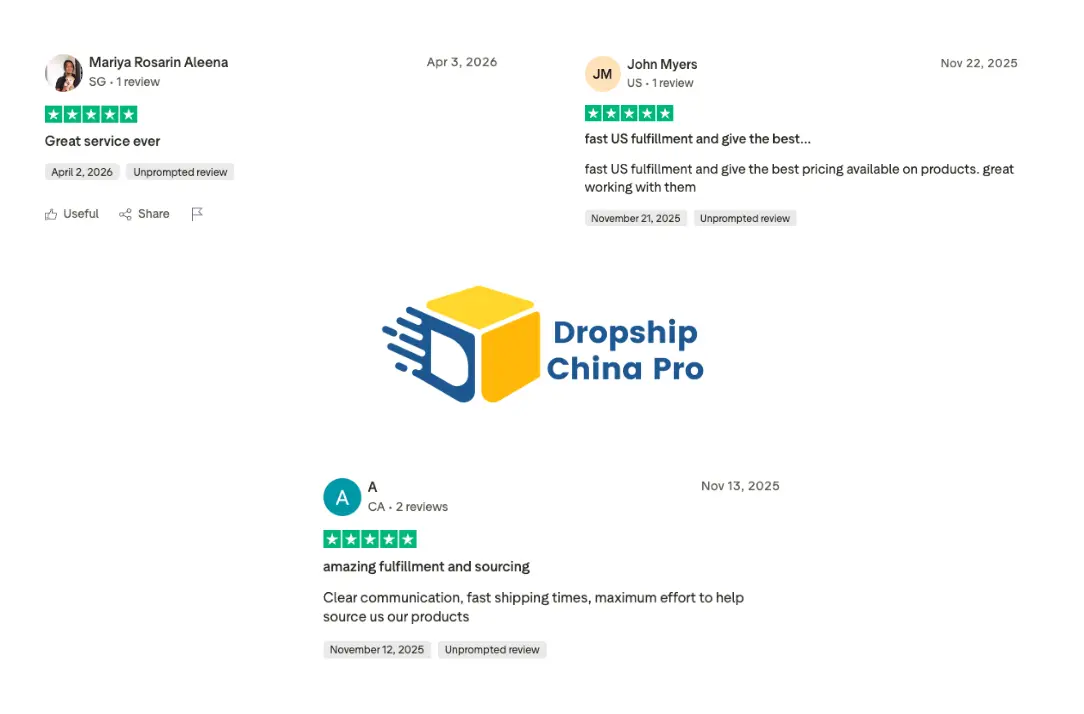
What Our Customers Say
Sellers who work with Dropship China Pro consistently highlight two things: communication quality and the practical impact on their operations. A Canadian seller who left a review in November 2025 specifically pointed to clear communication, fast shipping times and the team’s hands-on effort in product sourcing as the deciding factors in their experience. Around the same time, a US-based client noted the competitive product pricing alongside reliable US fulfillment speed as standout strengths. More recently, in April 2026, a Singapore-based seller rated the service five stars for overall quality. All three reviews were submitted unprompted on Trustpilot.
Frequently Asked Questions
What is a Stripe payment?
A Stripe payment refers to any transaction processed through Stripe’s infrastructure. When a customer pays in your store and Stripe is your processor, Stripe handles the card authorisation, fraud checks and fund transfer in real time. The customer sees only your checkout page.
Is Stripe a payment gateway or a payment processor?
Stripe functions as both. It acts as the payment gateway by securely transmitting card data between your store and the card networks. It also acts as the payment processor by communicating with the issuing bank and settling the funds. Most payment solutions separate these two roles; Stripe bundles them, which simplifies setup and reduces the number of third-party services you need.
How does Stripe payment processing work for international orders?
For international orders, Stripe charges an additional 1.5% on top of the standard rate for cards issued outside the US. If a currency conversion is also required, another 1% is added. For a dropshipping store with a significant portion of European or Australian customers, these additional costs are worth factoring into your product margins before pricing.
What does Stripe charge per transaction in 2026?
The standard US rate is 2.9% + $0.30 per successful online card transaction. For a $50 order, that is $1.75. Add the international card surcharge and currency conversion and the effective cost on a $50 cross-border sale rises to approximately $2.25 to $2.50, depending on the customer’s location.
Can Stripe freeze my dropshipping account?
Yes. Stripe can pause payouts or close accounts if dispute rates exceed acceptable thresholds, if transaction patterns trigger its automated fraud detection, or if the business is flagged for policy violations. New accounts are particularly vulnerable because they lack processing history. Maintaining clean dispute rates, providing clear delivery timelines and verifying your business documents upfront significantly reduces this risk.
What are the best alternatives to Stripe for dropshipping?
PayPal is the most common alternative, particularly for smaller stores or those selling to customers in countries where Stripe is not available. Other options include Shopify Payments, which removes Shopify’s transaction fee entirely, and 2Checkout, which supports a broader range of countries than Stripe. The right choice depends on where your customers are located and how complex your payment needs are.

Conclusion
Stripe is a capable and well-designed payment processor that works well for dropshipping businesses selling compliant products to customers in supported countries. Its transparent pricing, strong fraud tools and seamless platform integrations make it a legitimate choice for stores at most stages of growth.
The risk, as many sellers have discovered, is not Stripe itself. It is the intersection of Stripe’s automated risk management and the operational realities of dropshipping: long shipping times, variable product quality and limited customer touchpoints. Those operational factors drive chargebacks, and chargebacks are what get Stripe accounts suspended.
Address the supply chain first. Build in reliable tracking and realistic delivery expectations. When those fundamentals are in place, Stripe performs as advertised. If you are still comparing your options, our guide to the best payment gateways for Shopify dropshippers covers the full landscape side by side.
References
- Stripe. (2026). Restricted businesses. stripe.com/restricted-businesses
- Stripe. (2025). About Stripe. stripe.com
- Bloomberg. (2024). Stripe processes over $1 trillion in payment volume. Bloomberg Technology.
- Checkout Page. (2026). Stripe fees: 2026 rates and costs explained. checkoutpage.com
- Merchant Insiders. (2026). Stripe fees explained: Complete 2026 guide. merchantinsiders.com
- Reddit. (2025). r/stripe: Stripe froze my payments after enabling RDR. reddit.com/r/stripe
- Global Fee Calculator. (2026). How Stripe fees work.

Hi, I’m Yavuz. I help e-commerce businesses grow through strategic content. Here, I share insights on fulfillment solutions, 3PL partnerships, and digital marketing strategies based on real data and industry trends.