The most searched version of this question comes with an invisible assumption: that the goal is to spend as little as possible. That assumption is the reason most dropshipping stores fail.
The honest answer to how much it costs to start dropshipping sits somewhere between $700 for a lean organic launch and $2,000 for a properly funded testing operation. If you want to run a three-month product testing window with paid advertising, realistic cash flow reserves and enough margin for the inevitable learning losses, budget between $3,500 and $8,000 (Ship To The Moon, 2026).
What those numbers do not tell you is what the money is actually for. And that is the more important question.
Key Takeaways for the Cost to Start Dropshipping
- Starting dropshipping costs roughly $700 for a minimum lean launch or $1,000 to $2,000 for a properly funded start with room to test products and absorb early losses (TrueProfit, 2026; TopDawg, 2026).
- Advertising is the highest variable cost. Industry data shows 70 to 80% of product tests fail, which means most of your early ad spend is tuition, not revenue (DropBuild, 2026).
- The hidden costs that kill new stores are not platform fees. They are the return buffers, payment processor holds and wasted ad spend on unvalidated products that nobody mentions in startup cost guides.
- Branded and customized products carry margins of 35 to 45%. Generic products typically carry 15 to 20%. Where you source and how you position determines your long-term unit economics more than your starting budget.
- Budget for at least two to three months of consistent operation before expecting reliable profitability. Stores that fund only a single month of testing almost always run out of capital before they find a winning product.
The “Start for Free” Myth
Thousands of blog posts and YouTube videos claim you can start dropshipping for free. Technically, this is true in the same way that you can technically commute by walking barefoot. You can do it, but the tradeoffs are severe and the people making the claim rarely follow through with what happens next.
A Shopify trial period costs $1 for the first month. After that, the Basic plan is $39 per month. A domain costs around $14 per year. These costs exist from day one.
More importantly, a store with no advertising budget, no product samples and no cash reserves for returns is not a store that can survive contact with real customers. The “free” dropshipping stores that occasionally succeed do so because their founders substituted time for money on a scale most people are not willing to sustain. They created hundreds of pieces of organic content, tested products over six to twelve months without paid ads and worked essentially a second job building an audience before they had revenue.
That is a legitimate path. It is not free. The cost is paid in time instead of dollars, and time is not free either.
The Three Budget Levels
Rather than a single number, dropshipping costs fall into three realistic operating scenarios.
The minimum organic launch: approximately $700 to $900
This covers Shopify Basic for three months ($117), a domain ($14), product samples from two to three suppliers ($150), a review app ($30 for three months) and a basic email tool ($60 for three months). Marketing is handled entirely through organic TikTok and Instagram content. Revenue typically takes 30 to 90 days to appear. This path works for founders with strong content creation skills and patience for slow initial growth.
The standard funded launch: $1,000 to $2,000
This adds an initial paid advertising budget of $300 to $600 for testing two or three products on Meta or TikTok, along with slightly better tools and a small returns buffer. This is the most common starting point for sellers who want faster feedback on what products convert. Most beginners land here (AutoDS, 2026).
The properly capitalized testing operation: $3,500 to $8,000 over three months
This is what serious operators budget when they treat dropshipping as a real business from day one. It includes a meaningful advertising budget for testing five to eight products, working capital to cover payment processor holds (which can tie up 5 to 10% of your revenue for 30 to 90 days on new accounts), a 5 to 15% return buffer built into cash flow planning and professional branding from launch. This budget level dramatically improves the odds of making it past the first 90 days with something scalable (Ship To The Moon, 2026).
Three Dropshipping Budget Levels Compared
| Budget Level | Total Cost | What It Covers |
|---|---|---|
| Minimum organic launch | $700 to $900 | Shopify Basic (3 months), domain, product samples, basic apps. Marketing through organic social only. Slow growth, 30 to 90 days before revenue. |
| Standard funded launch | $1,000 to $2,000 | All of the above plus $300 to $600 in paid ad testing on Meta or TikTok, a small returns buffer and better tools. Most common starting point for new sellers. |
| Professional 3-month operation | $3,500 to $8,000 | Full ad testing budget for 5 to 8 products, working capital for payment processor holds, a 5 to 15% returns reserve, professional branding. Best odds of surviving past month 3. |
What Your Money Is Actually Buying
Most startup cost guides treat dropshipping expenses as a shopping list. Platform fee, domain, app, advertising. But that framing misses the more important question: what does each dollar of investment actually do for your store?
- Platform and tools: paying for conversion infrastructure. A $39 Shopify subscription is not an expense. It is the checkout, payment processing, inventory management and customer communication system that turns browsers into paying customers. Cutting this cost by using free or cheap alternatives is false economy when the conversion rate difference between a professional Shopify store and a budget alternative is measurable and significant.
- Product samples: paying for truth. Every sample you order is buying verified information about what your customers will actually receive. A $50 to $150 sample budget tells you whether the product matches its listing, whether the sizing is accurate and whether you are comfortable putting your brand on it. Sellers who skip samples are not saving money. They are deferring the cost of finding out the hard way, which always costs more.
- Advertising budget: paying for speed and data. Organic traffic builds slowly. Paid advertising buys speed. A $50-per-day test over three to five days tells you within two weeks whether a product converts, which is information that would take months to gather organically. Industry data shows 70 to 80% of product tests fail (DropBuild, 2026), which means this spend is not directly purchasing profit. It is purchasing the knowledge of what does not work, which is what clears the path to what does.
- Returns buffer: paying for resilience. Dropshipping return rates run between 5 and 15% depending on category. On a $100 average order value with a 10% return rate, every 100 orders generates 10 returns. If your margins are 25%, ten returns eliminate the profit from 40 sales. A cash reserve that accounts for this reality means a bad return week does not threaten the business’s ability to keep operating.
The Hidden Costs Nobody Talks About
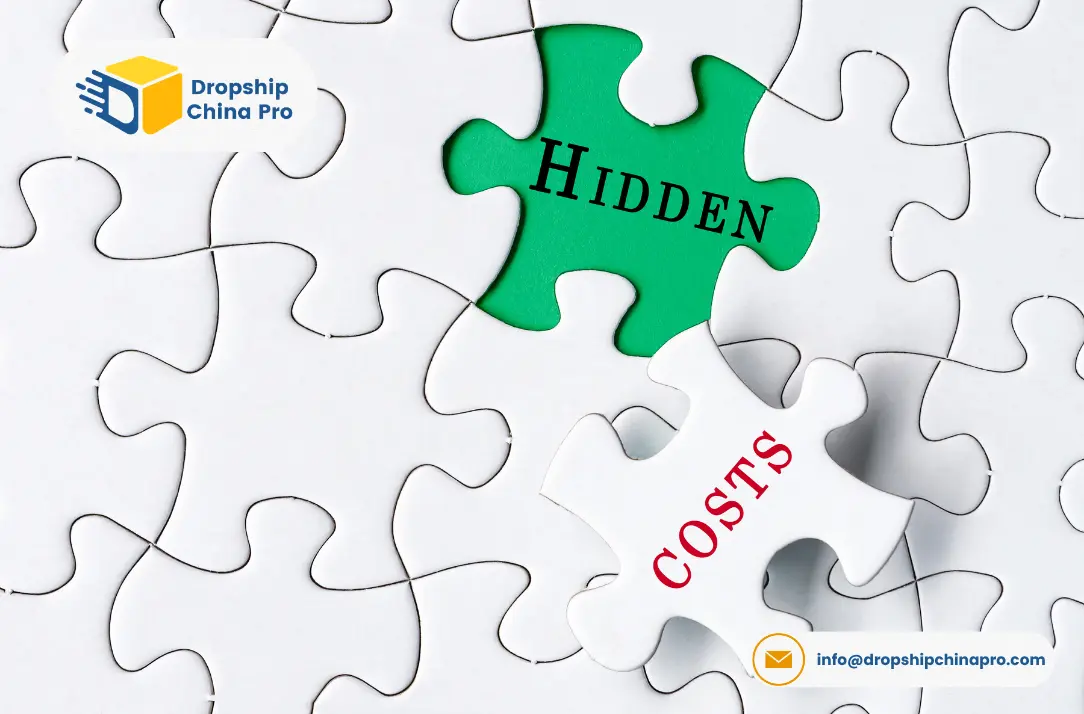
The standard startup cost breakdown covers obvious line items. The expenses that actually surprise and damage new dropshippers are rarely mentioned.
- Payment processor holds: Stripe, PayPal and Shopify Payments routinely hold a percentage of revenue from new accounts, sometimes 5 to 10% for 30 to 90 days, as a fraud and chargeback reserve. On $10,000 in monthly sales, that is $500 to $1,000 in cash that is sitting in a reserve rather than available to fund advertising or supplier payments. Not budgeting for this creates cash flow crises in months two and three for stores that are actually performing well.
- The learning tax on advertising: The first two to three months of running paid ads are primarily an education. CPMs have increased. iOS privacy changes have made audience targeting less precise. Creative fatigue sets in faster than it did three years ago. A realistic expectation is that the first $500 to $1,000 in advertising produces minimal positive return while you figure out what creative angles, targeting approaches and product positions actually work for your specific niche.
- Supplier mistake costs: Working with the wrong supplier early, whether due to quality issues, shipping delays, or compliance failures, costs money through returns, chargebacks and platform account warnings. Spending more on proper supplier vetting and samples upfront prevents costs that are multiples larger downstream.
John’s Story: What Getting the Investment Right Actually Looks Like
John is our long-term client. He started his first dropshipping store with $200. He had read every guide claiming you could start for next to nothing, and he was determined to prove it worked.
He spent twelve months testing products. Sixty-three products in total. Mostly generic homeware, phone accessories and pet gadgets sourced from marketplace platforms with minimal vetting. Each product test was budgeted at exactly the minimum: $30 to $50 in ads, a single supplier without samples, product descriptions copied directly from the supplier listing. His total spend over that year was approximately $3,200, most of it absorbed by advertising losses, returns and three chargeback disputes from a supplier who shipped inconsistent quality.
He nearly stopped. Then he had a conversation with a friend who had built a successful store around personalized and custom-engraved products: jewelry with initials, custom packaging with the buyer’s name, branded gift boxes designed specifically for the product. The margins were 38 to 42%. The return rate was 4%. Customers came back to order for anniversaries, birthdays and holidays. The repeat purchase rate was 22%.

John changed his approach entirely. He allocated $600 for proper supplier vetting and samples through a China-based sourcing partner, specifically looking for customized product capability. He ordered six samples before committing to a single listing. He invested in custom packaging and requested blind dropshipping from the first order. He allocated $800 for his initial ad testing budget rather than the $30-per-test drip he had been running.
Within six months, his store was generating $18,000 per month in revenue at a 39% gross margin. By month twelve, monthly revenue had reached $85,000. At the 18-month mark, John crossed a seven-figure annual run rate. He has since expanded to three product lines, all in the personalized and custom product space, all sourced through the same supplier relationship he built by investing properly from the start.
The year he spent testing $30 product after $30 product was not wasted. It showed him what underfunded, generic dropshipping produces. The 18 months after that showed him what happens when the investment is made correctly and the product has genuine differentiation.
The cost of starting dropshipping is not what kills most stores. The approach to that cost is.
Where to Spend vs Where to Save
Not every dollar of dropshipping startup cost has the same return. Some spending is foundational. Some is optional. Knowing which is which prevents both over-spending on vanity items and under-spending on the things that determine outcomes.
Spend properly here:
- Product samples before any listing goes live
- Supplier vetting, whether through your own research or a sourcing partner
- Advertising budget for product testing, not cut short before you have real data
- A returns buffer in your cash flow planning
- Custom or branded packaging once a product is validated
Save here without high cost:
- Premium Shopify themes (the free Shopify themes convert well for most niches)
- Expensive dropshipping courses before you have practical experience
- High-end apps before your store has enough traffic to need them
- A complex multi-product store before you have one validated winner
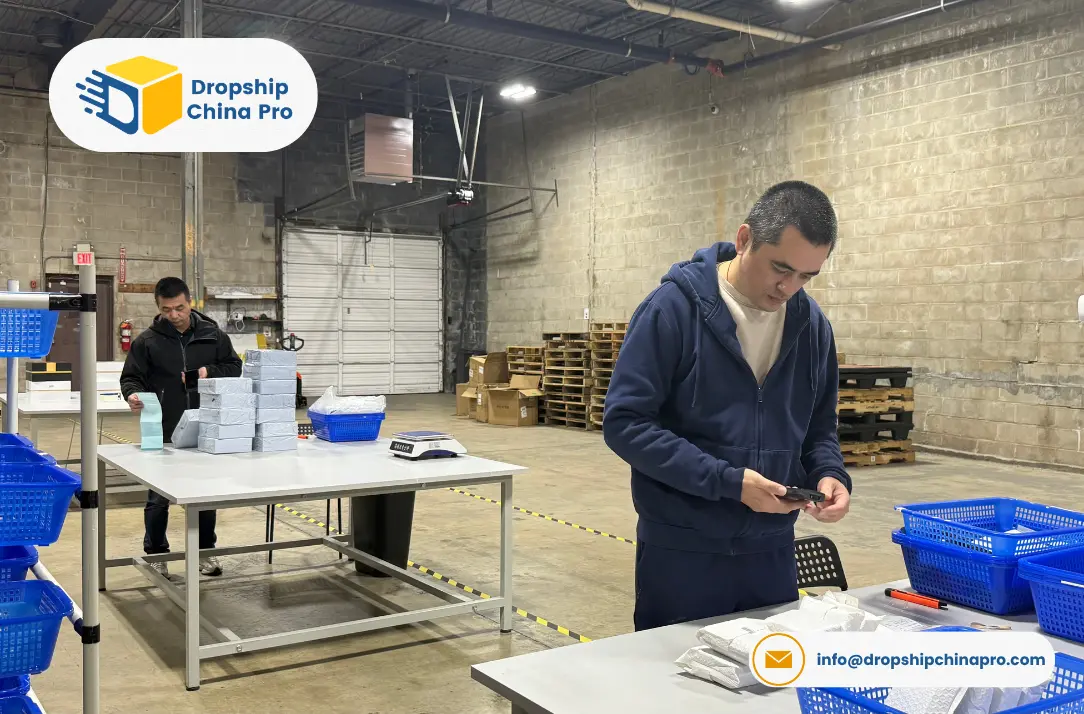
If you are sourcing from China and want to combine supplier reliability, quality control and fulfillment with no minimum order requirement, Dropship China Pro handles the full supply chain from sourcing through US and international warehouse delivery. Connect your Shopify store through our Shopify app or explore our sourcing and fulfillment service to see what working with an established partner looks like.
Where to Spend vs Where to Save
| Cost Item | Decision | Why |
|---|---|---|
| Product samples | Spend properly | Skipping samples defers the cost of quality problems into returns and chargebacks, which always cost more. |
| Ad testing budget | Spend properly | Cutting ad spend too low produces no usable data. Budget enough to run each product test fully before judging results. |
| Supplier vetting | Spend properly | A bad supplier costs multiples more than proper vetting. This is the most important early investment. |
| Returns buffer in cash flow | Spend properly | Return rates of 5 to 15% are normal. Stores without cash reserves for returns face a crisis every bad week. |
| Shopify theme | Save | Free Shopify themes convert well for most niches. A premium theme adds no meaningful conversion lift before you have validated traffic. |
| Dropshipping courses | Save or defer | Most paid course content is available free. Spend this budget on ad testing instead. Learn from doing, not from watching. |
| Advanced apps before traction | Save | Subscription apps compound into significant monthly costs. Add them when you have the traffic and sales volume to justify them. |
| Custom branded packaging (validated products) | Spend when ready | Not needed on day one, but becomes one of the highest-ROI investments once a product has consistent sales and you are building repeat purchase behavior. |
FAQs for the Cost to Start Dropshipping
How much does it cost to start dropshipping in 2026?
A minimum organic launch costs approximately $700 to $900, covering platform, domain, samples and basic tools. A funded start with paid advertising runs $1,000 to $2,000. A properly capitalized three-month testing operation including advertising, returns buffer and working capital ranges from $3,500 to $8,000. The right number depends on how fast you want to move and how much risk you can absorb while testing products.
Can you start dropshipping for free?
You can technically launch a store using free trials and zero advertising budget, but growth will be extremely slow and most stores run out of motivation before they find a winning product. The real costs of dropshipping: advertising, returns and supplier sampling, exist regardless of how you start. Deferring them does not eliminate them.
What is the biggest cost in dropshipping?
Advertising is the biggest variable cost for most stores. Beginners typically budget $300 to $500 per month minimum for product testing, while more aggressive testing can run $1,000 to $1,200 per month. The key insight is that most of this spend is learning investment, not direct revenue generation. Treating it as tuition rather than waste changes how you interpret early results.
How long before a dropshipping store is profitable?
Some stores generate sales within two to four weeks. Most require 30 to 60 days of product testing and marketing optimization before finding a consistently converting product. Budget for at least two to three months of operation before expecting reliable profitability. Stores that stop before hitting that window rarely know whether they had a fundable business or not.
Is dropshipping cheaper than other ecommerce models?
Yes, significantly. Traditional retail requires inventory investment, warehousing costs and logistics infrastructure. Dropshipping requires none of these upfront. Starting a Subway franchise costs over $200,000. Starting a dropshipping business costs $700 to $2,000 (Dropified, 2026). The lower capital requirement is the model’s primary structural advantage over every other form of product-based business.
Conclusion
The question of how much it costs to start dropshipping has a short answer and a more important one. The short answer is $700 to $2,000 depending on your approach. The more important answer is that the distribution of that investment matters more than the total amount.
Stores that spend correctly on supplier vetting, product samples and an adequate advertising testing window consistently outperform stores that spend the same money trying to cut every cost to the minimum. John’s story is a version of the experience thousands of dropshippers have had: the months spent being cheap cost more in total than months spent investing correctly from the start.
The barrier to entry in dropshipping is low by design. Use that advantage to start properly, not to start small.
References
- TrueProfit. (2026). How much does it realistically cost to start dropshipping in 2026? trueprofit.io
- AutoDS. (2026). How much does it cost to start a dropshipping business in 2026? autods.com
- TopDawg. (2026). How much does it cost to start dropshipping in 2026?
- Ship To The Moon. (2026). Dropshipping startup cost in 2026: Real 3-month budget breakdown.
- DropBuild. (2026). How much does it cost to start dropshipping? Full breakdown for 2026.
- Dropified. (2026). How much does it cost to start dropshipping in 2026?
Hi, I’m Yavuz. I help e-commerce businesses grow through strategic content. Here, I share insights on fulfillment solutions, 3PL partnerships, and digital marketing strategies based on real data and industry trends.