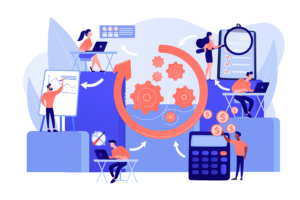

Scaling a dropshipping store to six figures a month is less about finding one lucky product and more about building systems that hold up when order volume climbs. The stores that reach $100,000 or more in monthly revenue almost always share the same foundation: a validated product with healthy margins, fulfillment that handles volume cleanly, automated operations and disciplined ad scaling.
Most stores stall well before that point, and rarely because demand runs out. They stall because something breaks under pressure. Margins that looked fine at thirty orders a day vanish at three hundred. A supplier that was reliable at low volume starts shipping late. Ad costs climb faster than revenue. Scaling exposes every weak link at once.
This guide walks through what it takes to scale to six figures a month in 2026, in the order that actually matters. If you are still building the foundation, our guide on how to build an ecommerce dropshipping business covers the setup this all sits on top of.

Key Takeaways for How to Scale Dropshipping to 6 Figures a Month
- Scaling to six figures comes from systems and margins working together, not from a single viral product.
- The global dropshipping market is worth around $543.53 billion in 2026 and makes up roughly 6.5 percent of all ecommerce, so execution is what separates the stores that scale from the ones that stall (SellersCommerce, 2026).
- Fulfillment is the most common bottleneck at scale. 84 percent of sellers say finding reliable suppliers is their hardest problem, and that only multiplies as order volume grows (Carro, 2026).
- Profitable ad scaling depends on knowing your numbers. You cannot raise budgets safely until you know your break-even return on ad spend.
- Repeatable six-figure months come from retention and brand, not just from buying more traffic.
How Do You Scale a Dropshipping Business to Six Figures a Month?
To scale a dropshipping business to six figures a month, you need five things working together:
- A validated product with healthy margins
- A supplier and fulfillment setup that handles volume without errors
- Automated operations
- Profitable, structured ad scaling
- A retention engine that turns first-time buyers into repeat customers
Six figures a month usually means several hundred orders a day, which is the point where any weakness becomes impossible to ignore. The order of operations matters. Fix your economics and fulfillment first, automate second, then scale ads on top of a foundation that can carry the weight. Pouring budget into a store that breaks at volume just scales your losses.
1. Confirm Your Economics Before You Scale Anything
The first question is not how to get more sales. It is whether more sales would actually make you money. Scaling a store with thin margins just loses money faster, and plenty of operators learn this only after they have already raised their ad spend.
Break-Even ROAS by Margin
| Margin Before Ad Spend | Break-Even ROAS |
|---|---|
| 30% | 3.3x |
| 40% | 2.5x |
| 50% | 2.0x |
| 60% | 1.7x |
Before you scale, know your real margin after every cost:
- Product cost
- Shipping
- Payment processing fees
- Returns and refunds
- Ad spend
Typical net margins sit around 15 to 20 percent, with the strongest stores reaching close to 30 percent (SellersCommerce, 2026). From that real margin, calculate your break-even return on ad spend, the point where an extra advertising dollar stops earning a profit. That single number decides how hard you can push.
Cash flow is the other half. At higher volume, you pay suppliers and ad platforms before sales fully land, and payment processors often hold a reserve. Knowing how your processor handles holds and payouts keeps a cash crunch from hitting right as momentum builds. Our guide to the best payment gateways for Shopify dropshippers covers how different processors treat reserves and rolling payouts.
2. Lock In a Winning Product and a Product Range

You cannot scale a product the market does not want, and you will not reach six figures chasing one viral item after another. The stores that scale find durable demand, validate it with real sales data, then build a range around it.
A winning product for scaling tends to share a few traits:
- It solves a real problem or fills a clear desire
- It carries enough perceived value to support a healthy margin
- It is not something customers can grab easily at a local store
- Its demand holds up over months rather than spiking and vanishing
Building a range matters because it raises average order value and gives customers a reason to return, which is what makes six-figure months repeatable. Once demand is proven, sourcing quality versions at a price that protects your margin becomes the priority, and that is where a dedicated sourcing partner earns its keep. Our China product sourcing guide for ecommerce breaks down how to source reliably at volume.
3. Get Your Supplier and Fulfillment Ready for Volume
This is the layer most stores underestimate, and the one that sinks the most scaling attempts.
Why Fulfillment Breaks at Scale
The supplier problems that are a minor annoyance at low volume turn into a flood once orders multiply: late shipments, wrong items, returns and chargebacks. Already, 84 percent of sellers name finding reliable suppliers as their single hardest challenge, and 62 percent of customers expect delivery within three days (Carro, 2026).
The math is unforgiving. If a small share of orders ship late or wrong at thirty orders a day, you can manage it by hand. At three hundred orders a day, that same share becomes dozens of unhappy customers daily, a spike in support tickets and a wave of refunds that eats the margin you scaled to capture. Return rate, reviews and ad account health all suffer at once.
What to Look For in a Fulfillment Setup
The way through is to stop juggling individual marketplace sellers and move to a setup built for volume:
- Vetted suppliers you can rely on at scale
- Real quality control before products ship
- Warehouses positioned to deliver fast
- Integration that lets orders flow without manual work
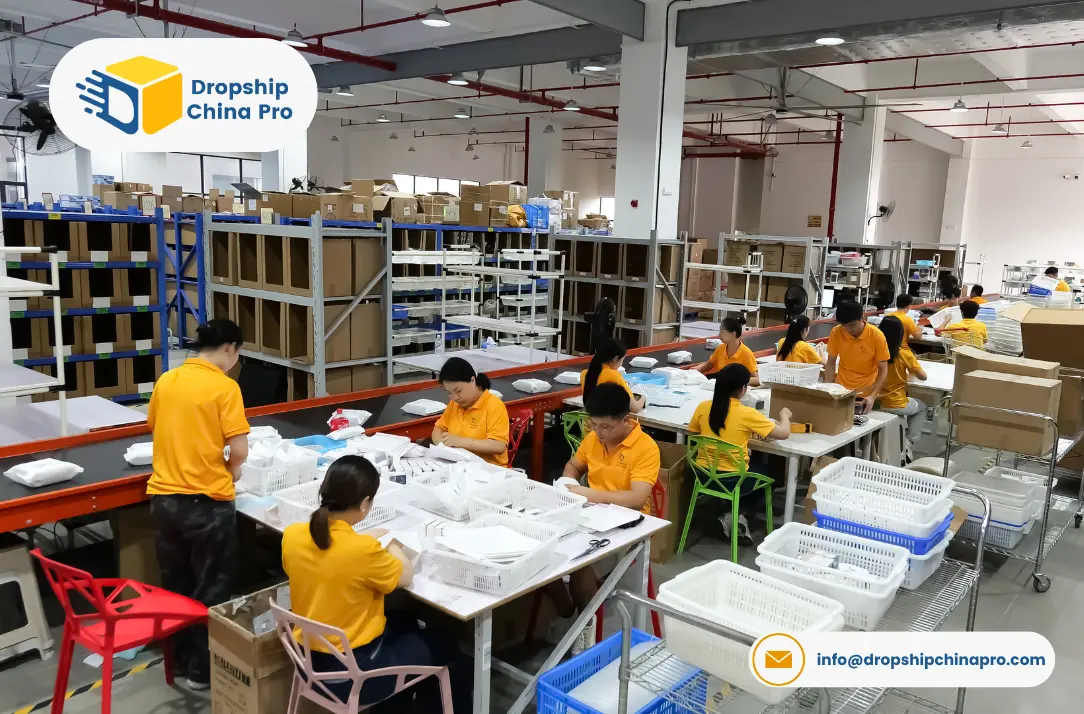
Dropship China Pro provides vetted suppliers, in-house quality control and fulfillment through US and international warehouses, the kind of foundation that holds up when volume climbs rather than buckling under it. If your bottleneck is the supplier side specifically, our dropshipping supplier service is built to take that risk off the table.
Get this layer right before you raise ad spend, not after. At six figures a month, fast and reliable fulfillment is the difference between a brand customers trust and a store drowning in complaints.
4. Automate Your Operations

You cannot run several hundred orders a day on manual processes, and trying to is how operators burn out right as their store takes off. Automation is what lets a small team handle big volume.
Two areas matter most:
- Order fulfillment: your store should sync directly with your supplier so orders flow through without manual entry, with automatic status and tracking updates for you and your customer.
- Customer service: a mix of help desk tools, saved responses for common questions and a virtual assistant keeps response times fast without eating your day.
The majority of high-volume sellers automate order processing for exactly this reason, and they report far fewer errors than operators still working by hand. The goal is to free your attention for the work that drives growth: product, marketing and strategy.
5. Scale Your Ads Profitably
Scaling is largely a marketing push, but the difference between scaling revenue and scaling losses is discipline. The stores that reach six figures raise budgets in a controlled way against a known break-even ROAS.
Paid social still drives the bulk of dropshipping traffic, with 68 percent of stores getting most of their visitors from Meta ads (Carro, 2026). A practical approach looks like this:
- Scale proven winners gradually rather than all at once
- Give the platform time to stabilize after each budget increase
- Watch your break-even ROAS closely and cut what stops being profitable
- Diversify beyond one channel so a single ad account does not control your revenue
Leaning entirely on one platform leaves you exposed to a rejected account or a sudden cost jump. Adding TikTok, which keeps growing as a commerce channel in 2026, along with SEO and email, gives you traffic that does not all rise and fall together. Our guide to the best dropshipping marketing techniques covers the full channel mix working this year.
6. Build a Team and Delegate

At six figures a month, the work outgrows one person. Handling product research, ad management, customer service, creative and bookkeeping alone caps your growth and drains you.
Start by delegating the repeatable roles:
- Customer service
- Order monitoring
- Basic creative production
- Bookkeeping
That frees you to focus on product strategy and scaling decisions, where your judgment has the highest return. A useful thread on the Shopify community forums lays out a simple daily rhythm for this kind of focused execution, from product research and competitor analysis to ad optimization and customer service on a set schedule (Shopify Community, 2025). Consistent daily execution across the right tasks is what compounds into six-figure months.
7. Turn Buyers Into Repeat Customers
Acquisition gets you the first sale. Retention is what makes six-figure months repeatable instead of a one-off spike. Buying more traffic every month with no retention engine is a leaky bucket.
The highest-return moves here are:
- Email and SMS flows that welcome new buyers, recover abandoned carts and win back past customers
- A recognizable brand and a genuinely good buying experience that set you apart when competitors sell the same products
Branding sits underneath all of it. A strong brand lifts customer lifetime value and lets you spend more to acquire customers than your competitors can. Our branded dropshipping guide covers how to build that edge.
The Scaling Layers and What Breaks Without Each
| Scaling Layer | Priority Action | Risk If Ignored |
|---|---|---|
| Economics | Know your real margins and break-even ROAS | Scaling multiplies losses instead of profit |
| Product | Validate demand and build a product range | Revenue spikes then collapses |
| Fulfillment | Vetted suppliers, quality control and fast delivery | Returns, refunds and damaged reviews |
| Automation | Sync orders and automate customer service | Errors and burnout at volume |
| Ad Scaling | Raise budgets gradually against break-even ROAS | Costs outrun revenue |
| Retention | Email, SMS and brand building | Constant, costly re-acquisition |
A Real Scaling Story
One Dropship China Pro client running a home and lifestyle store hit a familiar wall while scaling. Their ads were working and orders were climbing, but their previous supplier could not keep pace, and late shipments and inconsistent quality drove a steady stream of refunds and negative reviews. Moving fulfillment to a vetted, quality-controlled setup with faster delivery stabilized their operations almost immediately. Return rates dropped, reviews recovered and with reliable fulfillment behind them, they could scale ad spend without the constant firefighting that had capped their growth.
This pattern shows up again and again in the feedback dropshippers leave on Trustpilot. The sellers who scale successfully tend to describe the same turning point: the moment fulfillment stopped holding them back and started letting them grow.
Ready to Scale Without the Fulfillment Bottleneck?
Reliable fulfillment is the foundation that lets everything else scale. If supplier problems, slow shipping, or rising return rates are getting in the way of your growth, Dropship China Pro can take that weight off your plate with vetted suppliers, quality control and fast fulfillment from US and international warehouses. Connect your store through our Shopify app and build your scaling on a foundation that holds.
FAQs for Scaling a Dropshipping Business
How much revenue is six figures a month in dropshipping?
Six figures a month means $100,000 or more in monthly revenue. Depending on your average order value, that usually works out to somewhere between roughly one hundred and several hundred orders a day. It is a volume that exposes any weakness in your margins, fulfillment, or operations, which is why systems matter more than any single tactic at this level.
How long does it take to scale a dropshipping store to six figures?
There is no fixed timeline, and anyone promising one is guessing. Some stores reach six-figure months within a year, while others take longer or never get there. The pace depends on product validation, margin health, fulfillment reliability and how disciplined your ad scaling is. Stores that fix their economics and fulfillment before scaling generally get there faster and hold it more reliably.
What is the biggest obstacle to scaling a dropshipping business?
Fulfillment is the most common obstacle. Most returns, complaints and chargebacks trace back to supplier problems, and those problems multiply as order volume grows. With 84 percent of sellers naming reliable suppliers as their hardest challenge, the operators who solve fulfillment early remove the single biggest thing that caps growth for everyone else.
Do I need to hold inventory to scale dropshipping?
No. You can scale to six figures a month without holding inventory yourself, which is the core advantage of the model. What you do need is a fulfillment partner that can handle volume reliably, maintain quality control and deliver fast. The work shifts from managing stock to choosing the right fulfillment setup and the right products.
How much ad budget do you need to scale to six figures a month?
It depends entirely on your margins and break-even return on ad spend rather than a fixed figure. A store with strong margins and good retention can scale on a smaller budget than a store with thin margins, because it earns more from each customer over time. The right move is to scale budget gradually against your break-even ROAS, not to commit to a set number before you know your economics.
Conclusion
Scaling a dropshipping business to six figures a month rewards operators who treat it as a real business with real systems. The stores that get there are not the ones with the luckiest product. They are the ones whose economics, fulfillment, automation and marketing all hold up under the weight of higher volume.
If there is one place to start, it is the foundation. Confirm your margins, then make your fulfillment bulletproof. Those two fixes are what let you scale ads without scaling your problems. Get them right, build retention on top and six-figure months stop being a spike you got lucky with and start being a level you can hold.
References
- Carro. (2026). 80+ ecommerce and dropshipping statistics for 2026.
- SellersCommerce. (2026). Detailed dropshipping statistics in 2026. sellerscommerce.com
- Shopify Community. (2025). Advice for a student with a lot of time. community.shopify.com

Hi, I’m Yavuz. I help e-commerce businesses grow through strategic content and SEO. Here, I share insights on fulfillment solutions, 3PL partnerships, and digital marketing strategies based on real data and industry trends.